
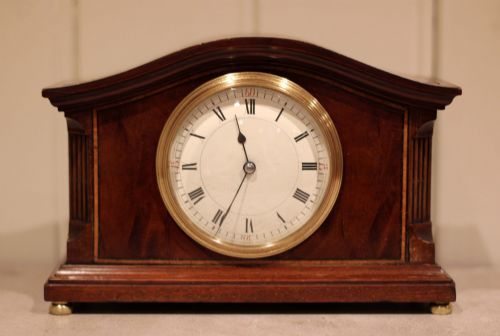


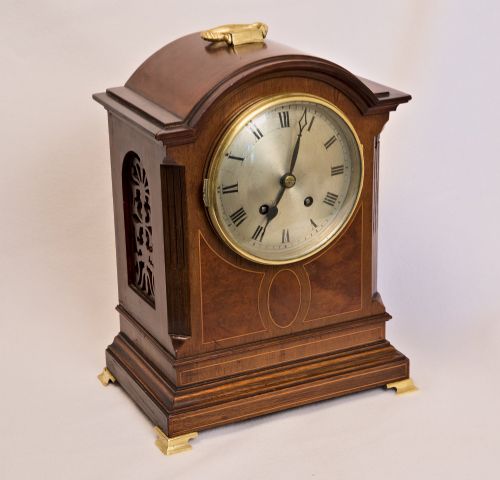


Traditional Brass Shelf Clock
Traditional brass shelf clock designs combine metal dials and clockwork movements inside timber or brass cases.
Traditional Brass Shelf Clock
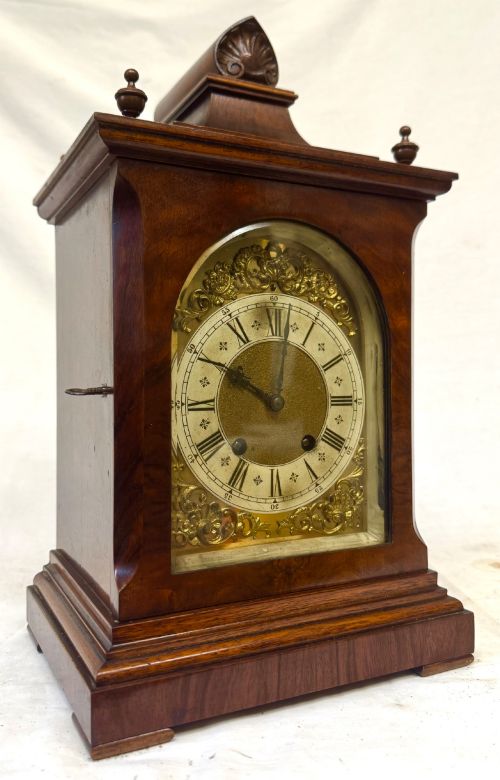
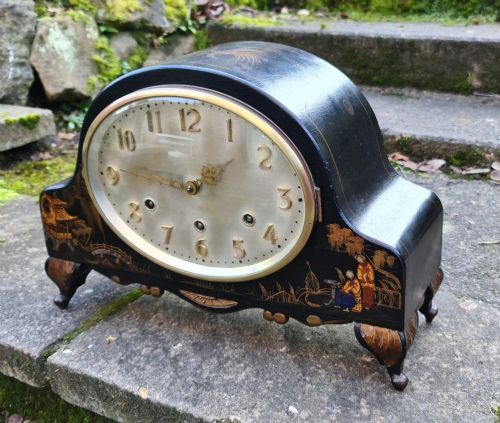
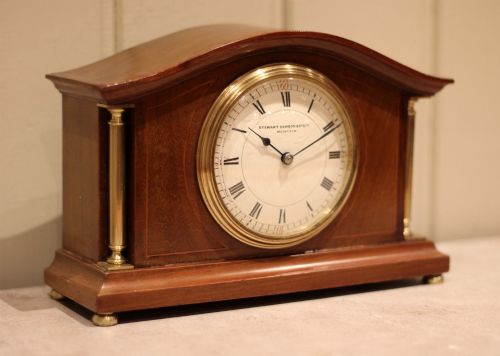
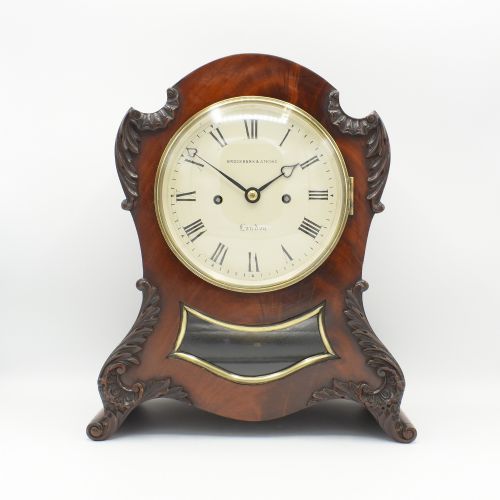
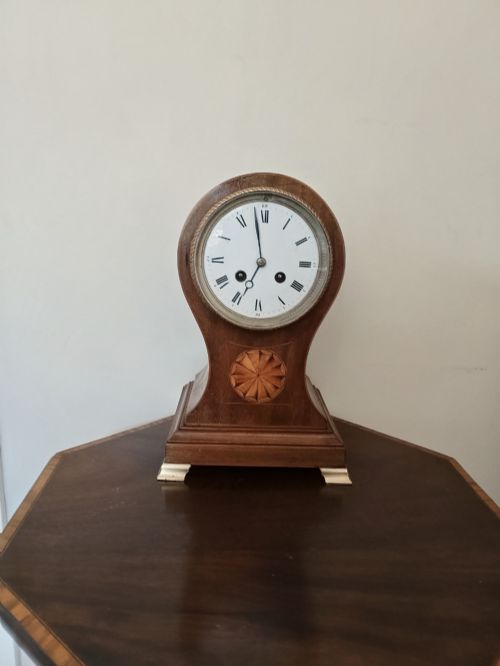
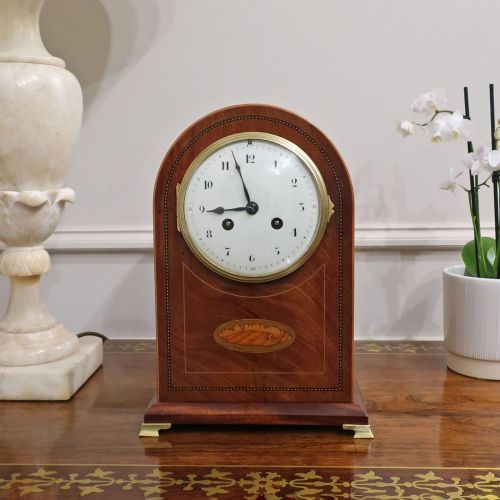
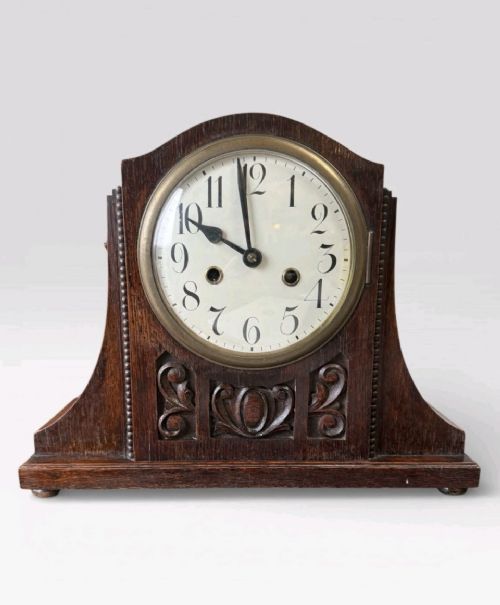
A traditional brass shelf clock sits upon a mantelpiece, bracket, or shelf, displaying time through a brass dial surrounded by a decorative case. The listings show forms ranging from heavy marble bodies and pagoda tops to balloon shapes and carriage clock housings.
The periods span from the Georgian and Regency eras through the Victorian and Edwardian decades into Art Deco and mid-century examples. Mahogany, oak, walnut, and ebonised wood frequently frame the brass elements alongside glass panels and enamel details.
Materials and construction methods
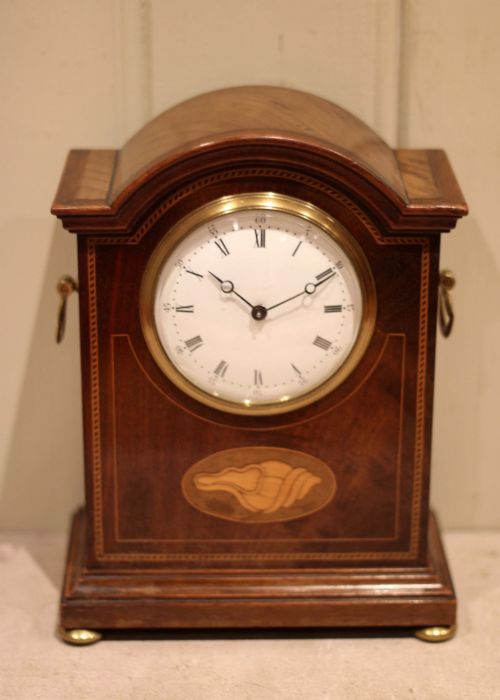
Cases utilise solid and veneered timbers including mahogany, walnut, oak, and satinwood, occasionally enhanced with marquetry inlay or faux tortoiseshell. Brass provides the structural dial plates, bezels, and movement components, while glass protects the face.
Movements rely on mechanical gear assemblies driven by springs or weights, housed securely within the timber or marble structures. Enamel dials carry the numerals, paired with delicate hands behind bevelled or flat glass plates.
Even poppies find their way onto clocks, appearing inlaid across Edwardian mahogany timbers.
Distinctions in craftsmanship
Quality rests in the precision of the mechanical movement, the crispness of the brass engraving on the dial, and the depth of figure in the timber case. Finer examples display meticulous marquetry, superior cast mounts, and robust eight-day movements.
Simpler timepieces offer basic timekeeping without striking trains, whilst more complex bracket clocks incorporate striking mechanisms and architectural timber designs such as pagoda tops or inlaid motifs.
Lenzkirch·Brockbanks and Atkins·Piggin Norwich·Barrett London·Jas Whitelaw of Edinburgh·Walker and Hall·L Epee France·Desbois and Wheeler
The Traditional Brass Shelf Clock Glossary
- Bracket clock
- A portable timekeeper originally designed to sit on a wall bracket or shelf, often featuring a brass dial and a carrying handle.
- Fusee
- A conical pulley inside the clock mechanism that equalises the diminishing power of the mainspring as it unwinds.
- Timepiece
- A clock that measures and indicates time without incorporating a striking or chiming mechanism.
- Carriage clock
- A small, spring-driven portable timepiece developed for travellers, fitted with glass panels and a brass case.
Traditional Brass Shelf Clock: Frequently Asked Questions
What is a traditional brass shelf clock?
A traditional brass shelf clock is a mechanical timepiece designed for interior display, featuring a prominent brass dial housed within a timber, brass, or marble case.
These pieces draw on styles spanning the Victorian, Edwardian, and Art Deco periods, combining functional clockwork with decorative cabinetry.
How do you wind a shelf clock?
Most mechanical shelf clocks utilise a winding key inserted into apertures on the dial face to tension the internal springs or lift the driving weights.
Careful rotation engages the gear train to power the movement for single-day or eight-day durations depending on the specific mechanism.
Where should a mantel clock be placed?
Mantel and shelf clocks rest safely on stable horizontal surfaces such as fireplace mantels, wooden brackets, sideboards, or tabletops.
Positioning them away from direct sunlight and damp environments helps preserve the timber veneers and delicate brasswork.
How are different periods identified?
Periods are recognised through a combination of case architecture, timber selection, dial treatment, and stylistic motifs such as Regency curves or Edwardian inlay.
Makers' signatures, engraved names on brass dials, and specific structural silhouettes further anchor pieces to the nineteenth or early twentieth century.