





Traditional Brass Scales
Traditional brass scales are functional measuring instruments built from gleaming metal, offering an authentic touch of heritage utility to a modern interior.
Traditional Brass Scales
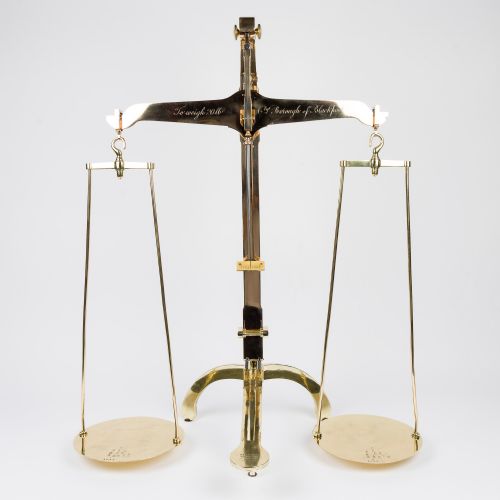
When you search for traditional brass scales, you encounter a range of functional weighing apparatus originating from the nineteenth and early twentieth centuries. These pieces encompass delicate postal balances, apothecary sets, and robust grocers scales designed for commercial or domestic use.
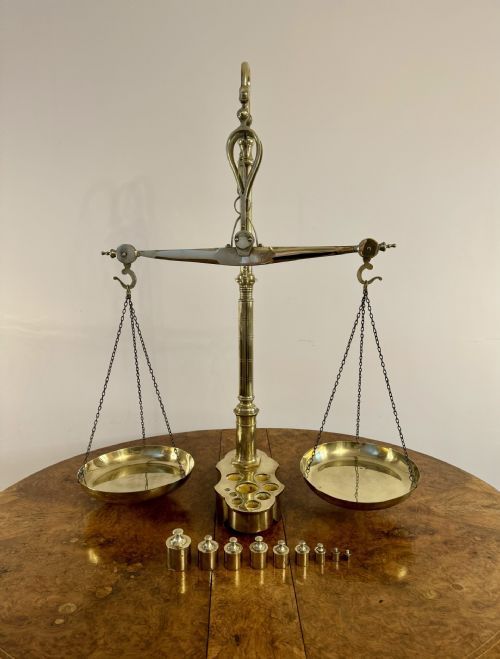
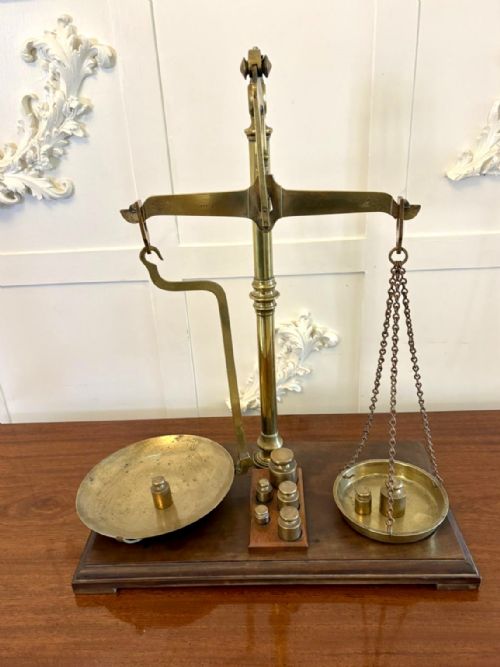
The versions most frequently met on this page date from the Victorian and Edwardian eras, often mounted on mahogany or hardwood bases. They range from small letter scales complete with matched weights to large beam scales utilised in trade.
Beyond standard tabletop balances, the selection includes specialist pieces such as copper vegetable garden scales and Dutch colonial stick balances. Each object retains the utilitarian character of its period while serving as a striking decorative focal point.
How they were made
These instruments rely on the combination of cast and polished brass components, frequently assembled upon seasoned mahogany, oak, or hardwood plinths. Iron and wrought iron elements provide necessary structural support in larger floor-standing or hanging configurations.
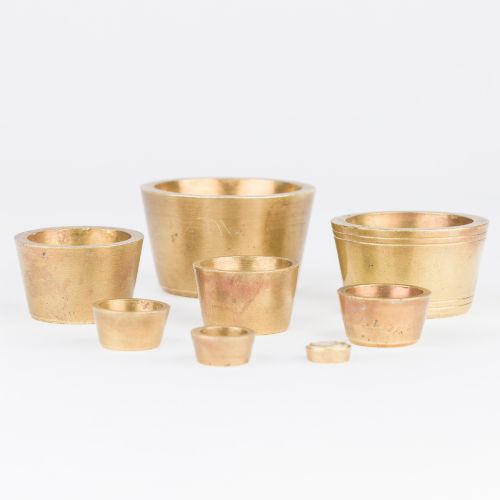
Maker precision is evident in the balanced beams, graduated scale plates, and finely stamped brass Troy ounce weights. Many designs incorporate fitted wooden compartments or marble accents to house individual weights securely alongside the main balance.
Traditional Brass Scales Retail Price Guide 2026
Typical asking prices for traditional brass scales among the pieces listed under this phrase on Sellingantiques today, from the lower quarter to the upper quarter. They describe what is for sale here now, not the wider market.
Listings feature brass scales paired with mahogany, oak, marble, and wrought iron, spanning the Victorian, Edwardian, and mid-twentieth century periods.
What varies in quality
The distinction between standard utility pieces and finer examples often lies in the crispness of the maker markings and the structural integrity of the wooden bases. Commercial scales from established firms exhibit heavier gauge brass and more robust beam construction than domestic letter balances.
Completeness dictates a higher tier of quality, particularly when a set retains its original matching weights and unpolished patination. The integration of materials such as carved mahogany or inset marble elevates the object from a simple tool to a considered piece of craftsmanship.
Day & Millward·Parnall & Sons of Bristol·Bartlett & Sons
The Traditional Brass Scales Glossary
- Beam scale
- A weighing device consisting of a central pivoting lever with suspended pans at each end. This classic configuration forms the basis of most traditional balances.
- Troy ounce
- A system of units of mass traditionally used for precious metals and apothecaries' goods. Sets of weights in this measurement frequently accompany period scales.
- Postal scales
- Compact balances designed specifically for weighing letters and parcels to determine correct postage rates. They often feature tiered platforms and brass weight sets.
- Apothecary balance
- A sensitive instrument utilised by pharmacists for measuring precise quantities of medical ingredients. These typically feature small, enclosed pans and fine adjustment screws.
- Free hanging balance
- A scale suspended from a central hook rather than mounted on a rigid base. This style relies on manual suspension to achieve equilibrium during weighing.
Traditional Brass Scales: Frequently Asked Questions
How do traditional brass scales work?
These instruments operate on the principle of mechanical equilibrium, using a central fulcrum to balance the weight of an object against calibrated metal standards. The user places the item on one pan and adds known weights to the other until the pointer rests at the centre.
Most period designs rely on visible brass beams and pans rather than internal springs. This direct mechanical movement ensures accurate measurement through simple physics.
Can I still use antique scales for weighing?
While many surviving examples remain mechanically sound, historical scales are generally acquired for display rather than precise modern kitchen use. Over decades, pivots can wear and calibration may drift away from official standards.
If you choose to test them, use light items and handle the brass pans with care to preserve their original finish and alignment.
Where were postal scales used?
Compact postal balances were standard fixtures in nineteenth-century offices, libraries, and wealthy domestic writing rooms. Their primary function was ensuring correspondence met exact weight thresholds before heading to the post office.
Their small footprint made them suitable for any desktop, combining daily administrative utility with polished brass presentation.
What is the difference between beam and grocers scales?
Beam scales generally refer to lighter, more delicate balances used for letters, apothecary goods, or fine domestic tasks. Grocers scales are heavy-duty commercial instruments built to withstand the demands of a bustling nineteenth-century shop.
Grocers versions often feature larger iron bases and robust brass scoops capable of handling substantial produce quantities.