



Traditional Brass Poker
A traditional brass poker brings warmth to the hearth, offering a sturdy hand tool designed to tend coal fires with period style.
Traditional Brass Poker
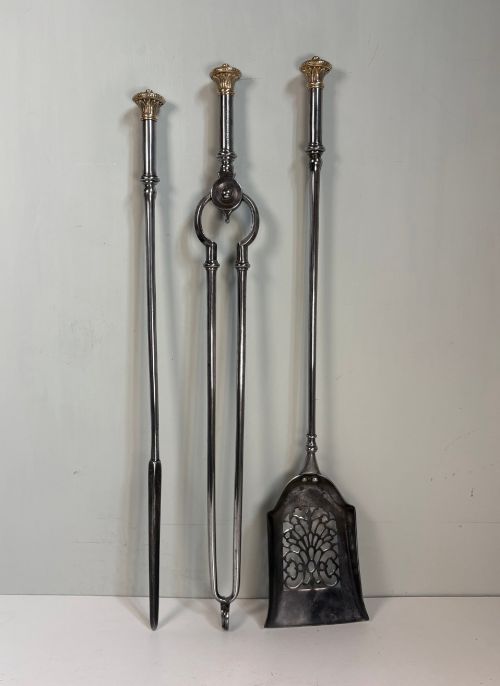
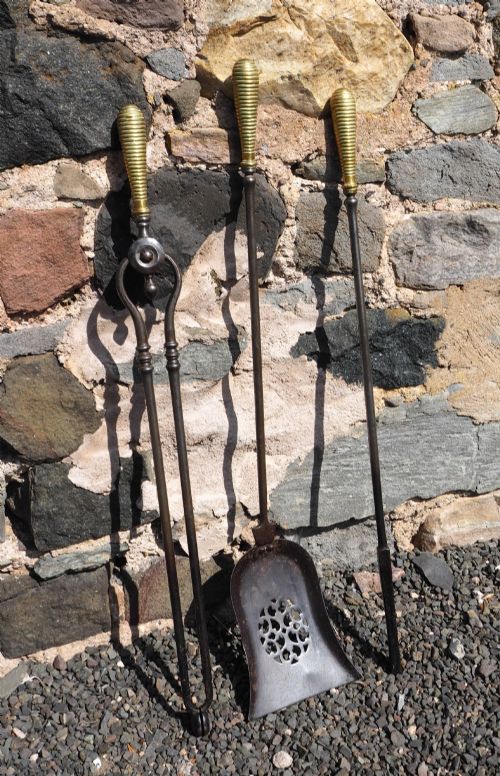
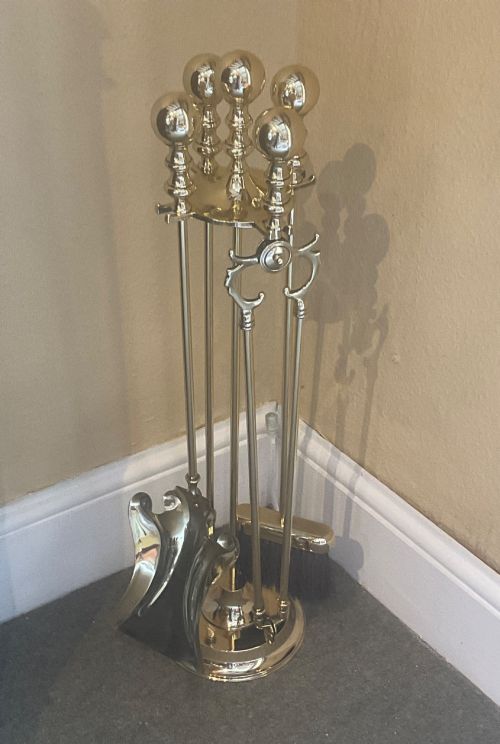
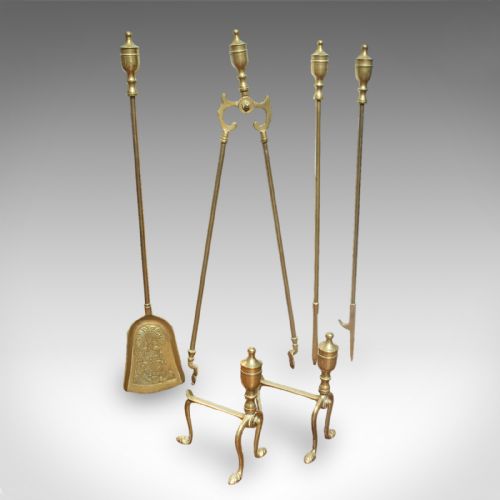
A traditional brass poker forms part of a wider array of fireplace accessories, frequently appearing within matching companion sets or fire irons alongside shovels and tongs. You will most commonly encounter examples dating from the Victorian and Edwardian eras, though earlier pieces stretch back to the eighteenth century.
These items serve practical duties by stirring and managing fuel within the grate while doubling as decorative elements for the hearth. They often sit alongside fire dogs, fenders, and coal buckets in period settings.
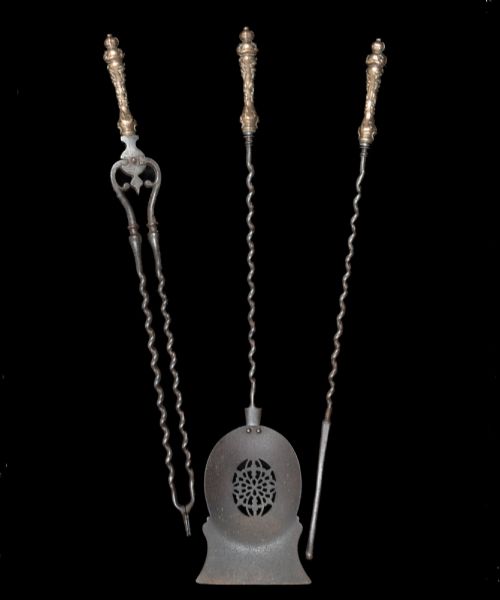
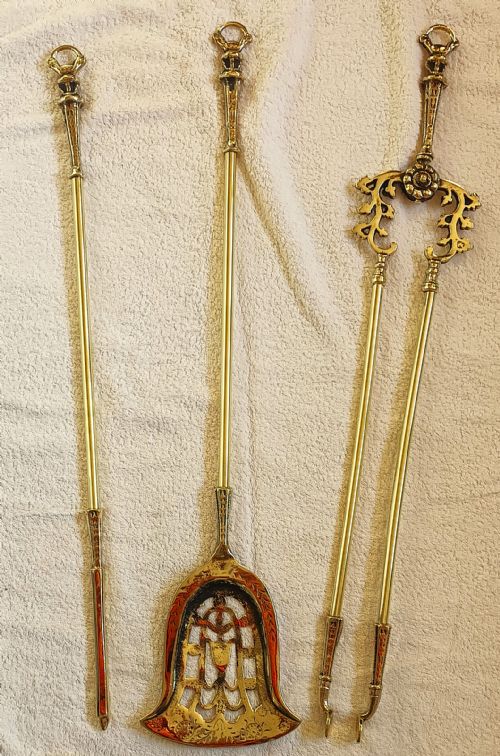
Design influences range from straightforward English traditional forms to ornate Rococo Revival patterns and linear Arts and Crafts styles. Handles may feature detailed rope twist motifs, starburst designs, or simple turned grips.
Materials and construction methods
Makers utilised resilient metals, combining bright brass with strong steel or iron shafts to ensure the tool could withstand intense heat and heavy use at the fireplace. Gilt metal and gunmetal also appear in specific iterations.
Craftsmen shaped the metal through forging and casting, sometimes incorporating wooden elements or decorative brass ornamentation. Surface finishes vary from polished brass to patinated bronze tones.
Listings feature items spanning the eighteenth, nineteenth, and twentieth centuries, incorporating materials such as brass, steel, iron, gunmetal, and wood.
Distinctions in manufacture and preservation
Superior examples demonstrate crisp casting detail, particularly on decorative handles featuring rope twist or starburst patterns, alongside robust joins between the brass grip and the steel shaft. Lesser pieces show softer casting lines and thinner gauge metal.
The integrity of the metalwork defines the tier, with higher quality sets retaining their original matching elements, balanced proportions, and clean surface finishes without excessive pitting.
The Traditional Brass Poker Glossary
- Companion set
- A matched collection of fireplace tools, usually including a poker, tongs, and shovel, designed to hang together on a stand.
- Fire irons
- The collective term for the essential metal tools used to tend a domestic fire, comprising pokers, shovels, and tongs.
- Rococo Revival
- A nineteenth-century design style characterised by asymmetrical scrollwork, naturalistic motifs, and elaborate flowing ornamentation.
- Rope twist
- A decorative spiral carving or casting resembling the texture of braided cord, frequently seen on tool handles.
Traditional Brass Poker: Frequently Asked Questions
How do I clean a brass poker?
Use a soft cloth and mild soapy water to remove surface soot and dust from the metal. Avoid harsh chemical abrasive cleaners that strip away the aged character.
Dry the metal thoroughly after cleaning to prevent spotting and maintain the polished or patinated surface finish.
Are these pokers meant for regular fires?
These historical tools were built for daily domestic hearth use, combining iron shafts with brass elements to handle solid fuel.
While functional, many owners choose to use them primarily as decorative fireplace accessories to preserve their antique condition.
What comes in a companion set?
A standard set typically includes a poker for moving fuel, tongs for handling logs or coal, and a shovel for clearing ash.
Some collections also incorporate a stand or feature matching fire dogs designed to sit at the front of the hearth.
How to date a brass poker?
Examine the manufacturing technique, stylistic clues such as Rococo revival curves or Arts and Crafts simplicity, and the choice of companion metals like steel or iron.
Victorian and Edwardian examples often show distinct handle treatments like rope twist patterns or starburst motifs.