

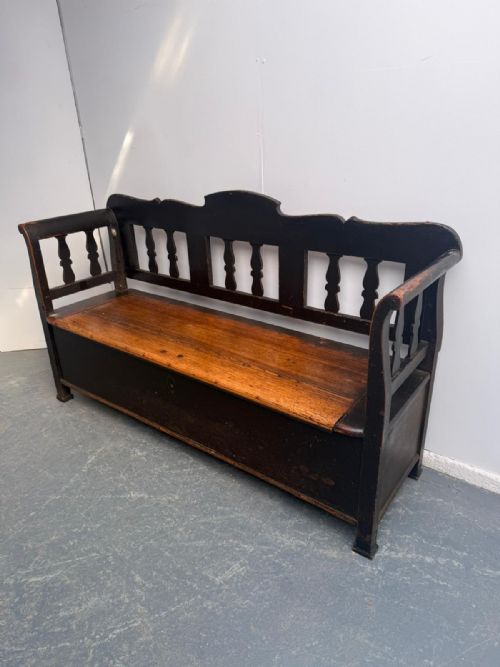
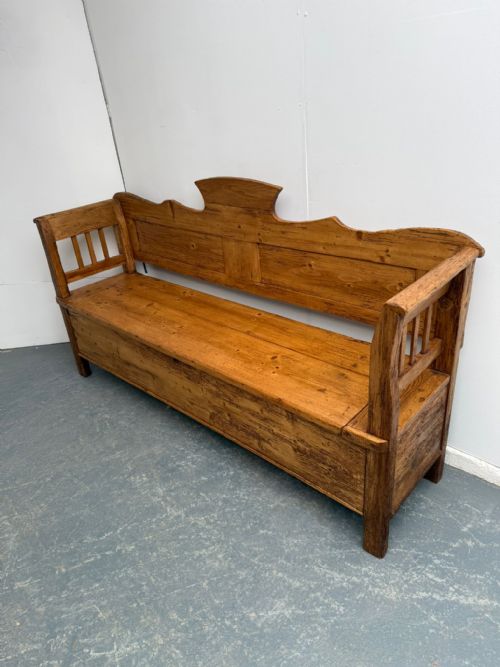
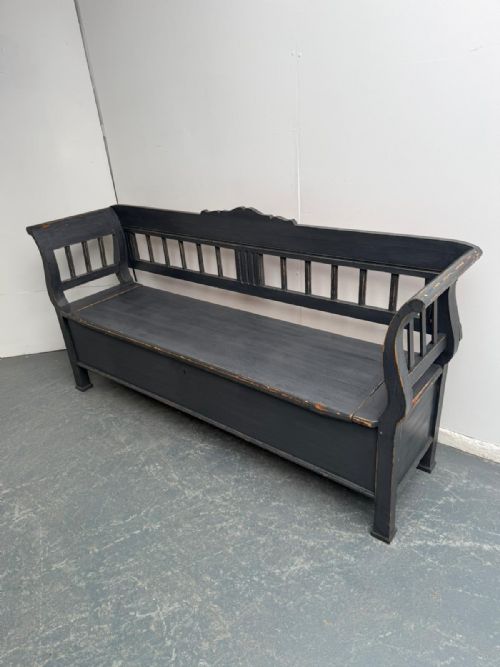
Traditional Box Settle
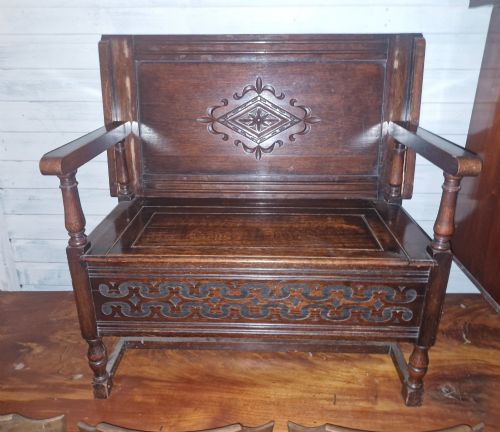
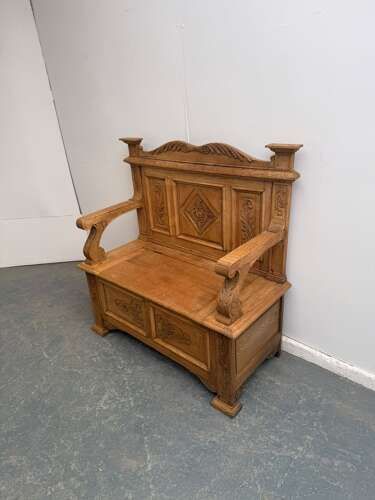
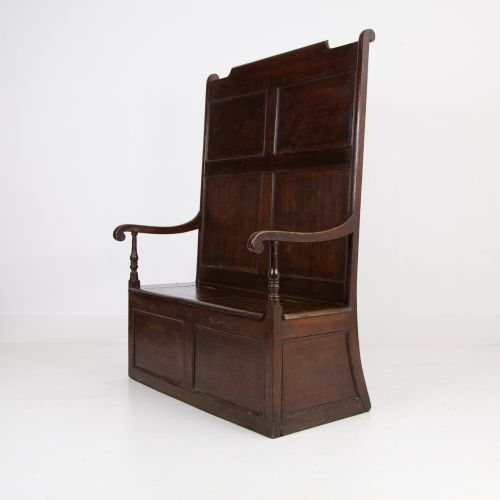
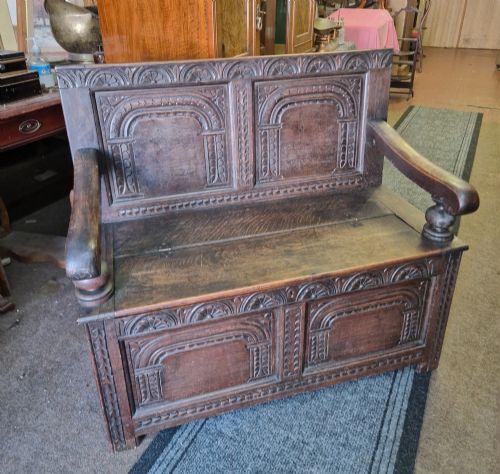
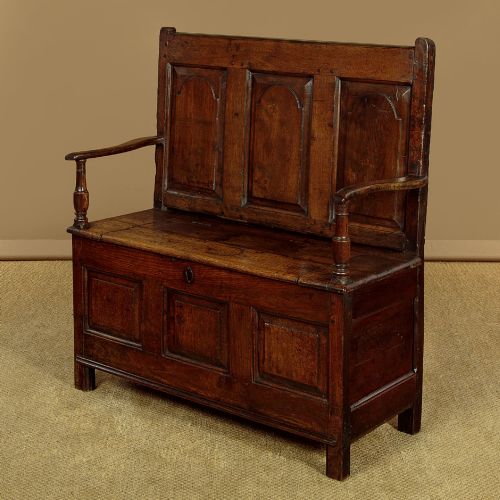
A traditional box settle combines high-backed shelter from draughts with practical storage beneath the seat, making it the ultimate piece of functional country furniture.
Traditional Box Settle
When you search for a traditional box settle, you are looking at sturdy wooden seating designed to keep out cold hall draughts while storing household goods beneath the hinged lid. These pieces appear across several centuries, originating in rural farmhouses and provincial halls.
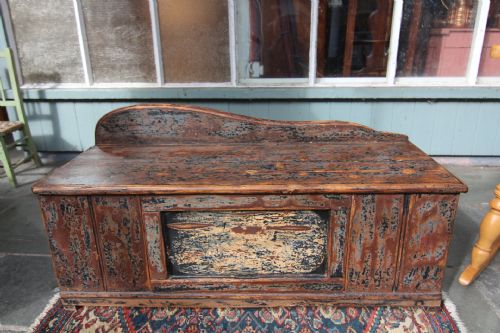
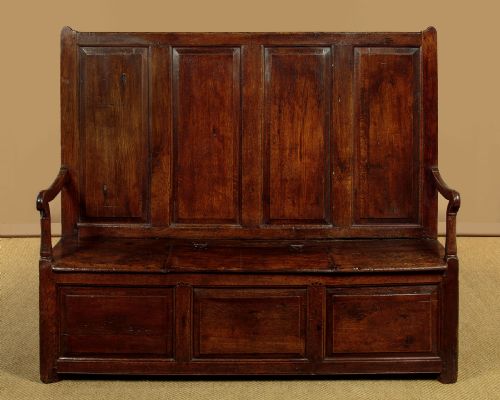
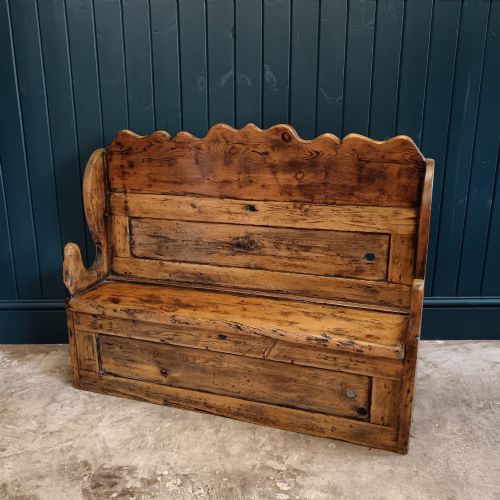
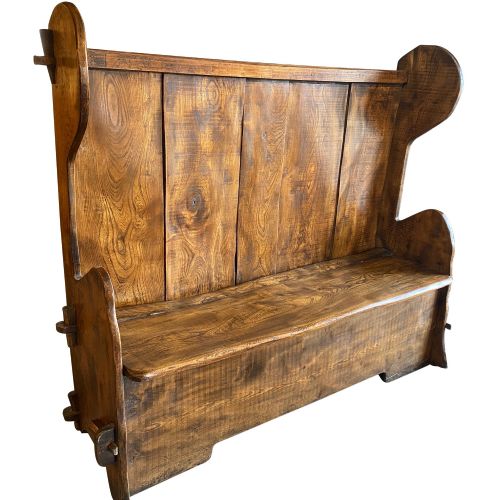
The versions most frequently met on this page include solid pine and oak examples dating from the eighteenth and nineteenth centuries. Many of these hail from regional British traditions or European country workshops, often featuring panelled backs, arms, and deep storage boxes.
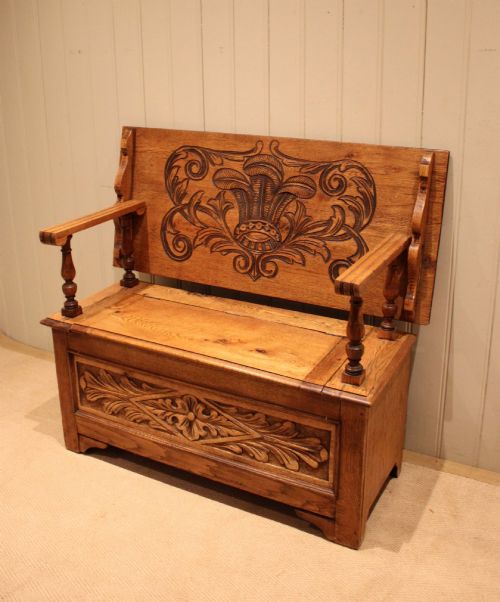
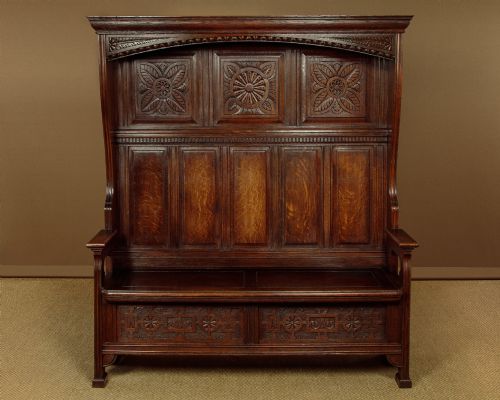
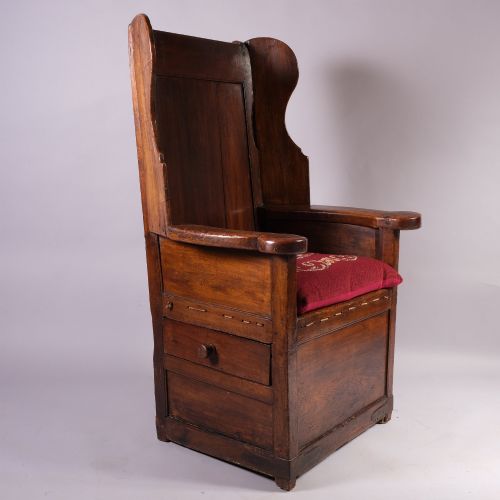
Forms range from compact hall seats and small two-seaters to longer three-seater benches and substantial canopy-topped designs. Alongside standard wooden benches, variations include lambing chairs and folding monks benches that double as tables.
What varies in quality
The distinction between standard provincial utility furniture and finer pieces lies in the choice of timber and the sophistication of the joinery. Dense, figured oak or well-selected mahogany panels demonstrate a higher grade of craftsmanship than everyday pine built strictly for farm use.
Proportion and structural integrity also determine the standing of a piece, particularly the preservation of the original base box and hinged lid mechanism. Subtle details such as carved crests, panel mouldings, and untouched original painted surfaces elevate certain examples above plain vernacular items.
A few antique examples come with built-in storage specifically designed for curing bacon or hiding muddy farming boots.
The Traditional Box Settle Glossary
- Box settle
- A wooden bench featuring a high back and enclosed storage space beneath the hinged seat. This design protected sitters from cold floor draughts.
- Lambing chair
- An enclosed wooden armchair, frequently featuring solid panelled wings and a box base. It was traditionally used by shepherds or positioned near hearths for warmth.
- Monks bench
- A convertible wooden piece featuring a folding back that transforms from a high-backed seat into a flat table top. It incorporates a storage box beneath the seat.
- Bacon settle
- A long wooden storage bench historically fitted with internal racks or rails beneath the seat or within the back. These were used in rural larders for curing and storing meat.
Traditional Box Settle: Frequently Asked Questions
What is a traditional box settle used for?
These pieces served as multi-purpose furniture in historical homes, providing a sheltered seat near the fireplace to block cold floor drafts. The enclosed space beneath the hinged lid doubled as secure storage for blankets, boots, or household dry goods.
Today, they function as practical hallway furniture or boot room seating. The deep box remains useful for hiding everyday clutter while offering a sturdy bench for putting on shoes.
How do I tell an 18th-century settle apart from a 19th-century one?
Eighteenth-century examples generally display pegged joinery, hand-planed timber boards, and vernacular styling characteristic of regional country workshops. Oak and elm are the dominant woods found in these earlier, heavier pieces.
Nineteenth-century versions often utilise pine or softer woods, sometimes showing machine-sawn elements alongside traditional handcrafting. They frequently carry painted finishes rather than exposed waxed grain, reflecting Victorian and Edwardian revival tastes.
Where were traditional box settles placed in the home?
Historically, they stood in the main hall near the entrance door to stop cold air from sweeping through the living quarters. They were also positioned close to the kitchen hearth where the high solid back kept out draughts.
In modern rooms, they fit well against large hallway walls or within spacious country kitchens. Their linear form makes them suitable for placement alongside dining tables or beneath coat hooks.
How should I care for a waxed wooden settle?
Maintain the timber by applying a quality beeswax sparingly with a soft cloth, then buffing to a gentle sheen. Avoid placing the wood near direct heat sources or in strong sunlight, which can dry out and split old boards.
Dust the carved crevices and panel mouldings regularly with a dry brush. Keep painted surfaces clean by wiping gently with a slightly damp cloth without using harsh chemical cleaners.