





Early Victorian Bench
An early victorian bench brings solid timber and honest nineteenth century utility into a hallway, garden or room.
Early Victorian Bench
When you search for an early victorian bench, you encounter substantial seating shaped by nineteenth century domestic and outdoor needs. The pieces span utilitarian oak hall benches, painted pine settles and robust cast iron garden seats.
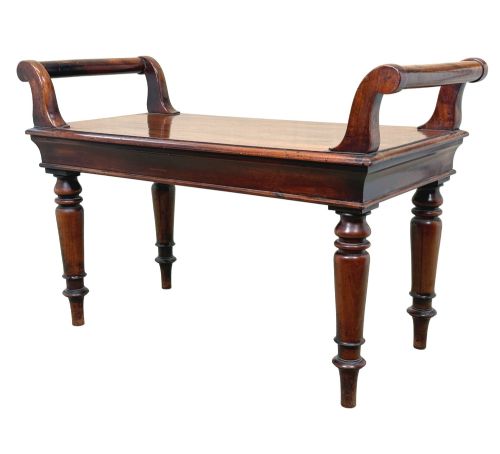
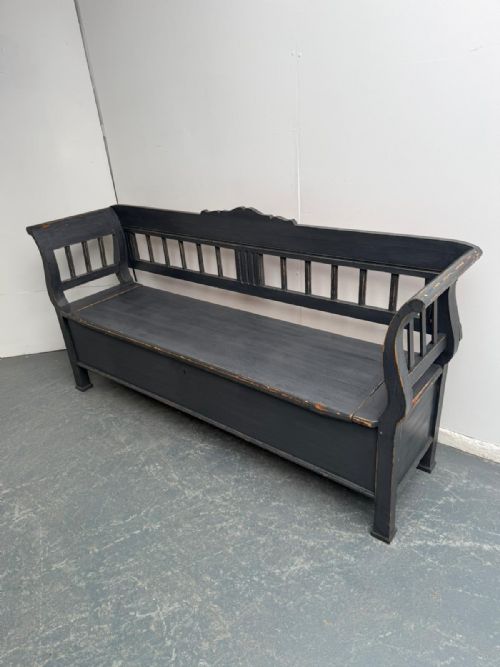
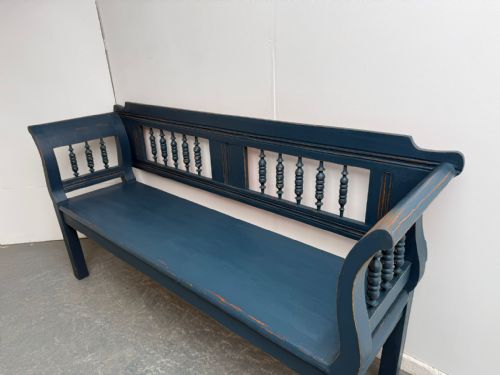
Mahogany window seats and rosewood conversation pieces appear alongside country pine and folk art variants from Hungary. Hall benches dominate the selection, designed to sit against a wall in an entrance passage or corridor.
The materials reflect both formal reception rooms and vernacular country use. You find everything from austere domestic seating to ornate garden furniture built to withstand the elements.
Materials and construction methods
Makers relied heavily on dense hardwoods like mahogany and oak, supplemented by pine for painted country furniture and settles. Joinery techniques prioritised rigidity, utilising traditional framing methods to support regular weight.
Cast iron emerges in garden seating, cast with intricate decorative patterns designed for outdoor durability. Surface finishes range from natural wax on hardwoods to applied grey and blue paint on folk art pieces.
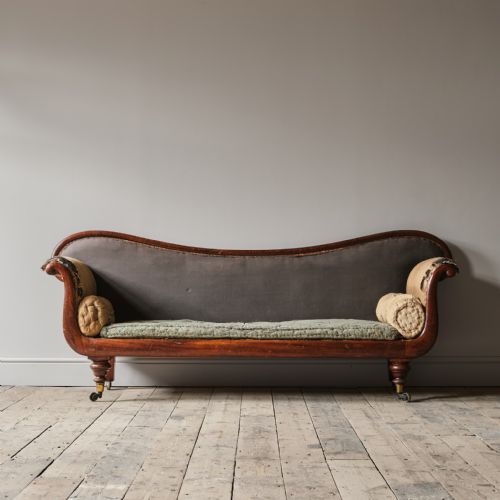
Upholstered variants incorporate fabric, textile and brass detailing over internal padding. Rosewood and giltwood appear in more refined interior sofas and window seats requiring finer cabinet work.
Listings feature woods such as mahogany, oak, rosewood and pine, alongside cast iron, brass and applied paint finishes.
Distinguishing quality in nineteenth century seating
The distinction between standard utility items and superior examples lies in timber selection and carving depth. High quality pieces display carefully matched grain, substantial stock thickness and crisp, hand-cut joinery rather than hasty assembly.
Decorative elements reveal the maker's hand, from restrained classical mouldings on mahogany hall benches to elaborate cast iron tracery on garden seats. Surface preservation also dictates standing, with original paint or untouched waxed patination holding greater interest than modern restoration.
The Early Victorian Bench Glossary
- Hall bench
- A narrow wooden seat designed for an entrance hall, often incorporating storage beneath the lid or carved back panels.
- Settle
- A high-backed wooden bench with solid arms and a closed base intended to block draughts in older domestic spaces.
- Conversation seat
- A multi-directional upholstered seat allowing two people to sit facing opposite directions while remaining adjacent.
- Window seat
- A low bench proportioned specifically to sit within the recess of a window frame.
- Cast iron
- An iron-carbon alloy poured into moulds to create rigid, highly detailed garden furniture frames.
Early Victorian Bench: Frequently Asked Questions
Where should I put an early victorian bench?
These benches suit entrance halls, narrow corridors or large landings where linear seating works best. Cast iron versions belong outdoors in gardens or courtyards.
Inside the home, a wooden hall bench provides a practical spot for putting on shoes while establishing a period focal point against a plain wall.
How do I care for antique wood benches?
Keep wooden seating away from direct heat sources and rapid temperature shifts to prevent timber splitting or joint shrinkage. Feed dry surfaces with appropriate wax rather than modern silicone polishes.
Regular dusting with a soft cloth maintains the finish without harming the historic patination accumulated over generations.
Are these benches comfortable for daily sitting?
Most wooden hall benches and settles offer firm, upright support rather than deep lounging comfort. They were designed for short periods of sitting in hallways or dining spaces.
If you require softer seating, look for upholstered window seats or conversation pieces padded with fabric and textiles.
How do I identify an early victorian piece?
Look for timber selection, construction methods and decorative motifs consistent with the mid nineteenth century. Oak and mahogany dominate the formal interior pieces, while cast iron marks the garden variants.
Proportions tend to be heavier and more robust than later Edwardian reproductions, reflecting the structural demands of the period.