





Traditional Baluch Carpet
These pieces known as a traditional baluch carpet are tribal wool floor coverings valued for their rich nomadic patterns and deep historical roots.
Traditional Baluch Carpet
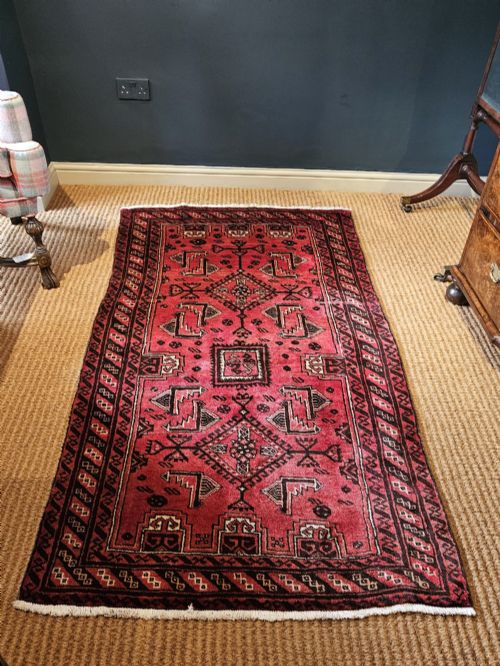
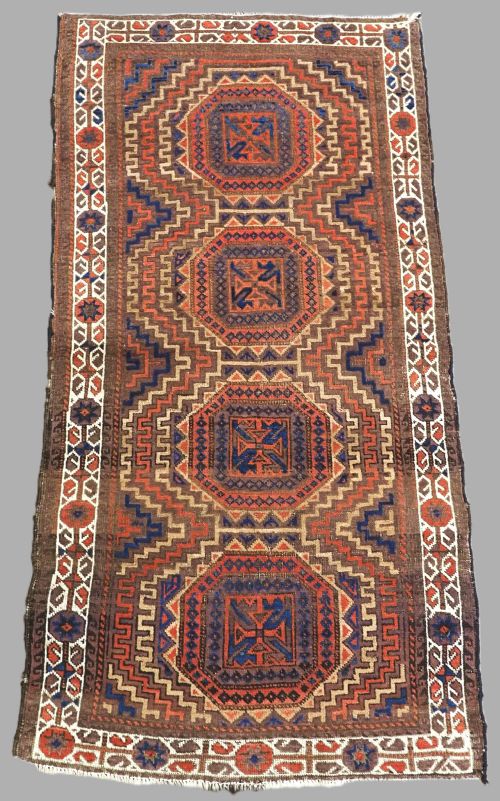
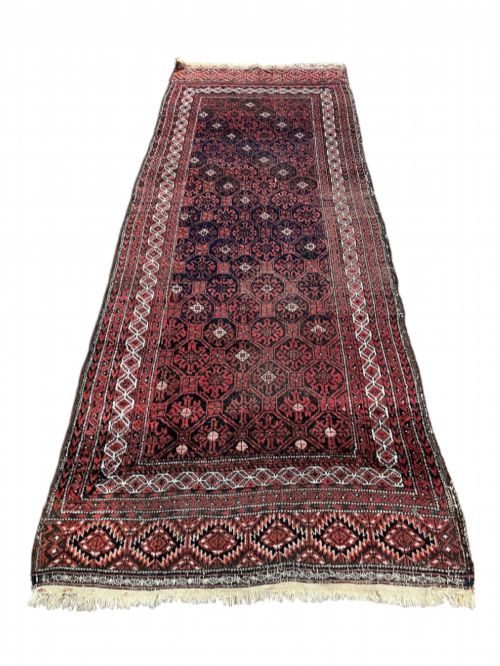
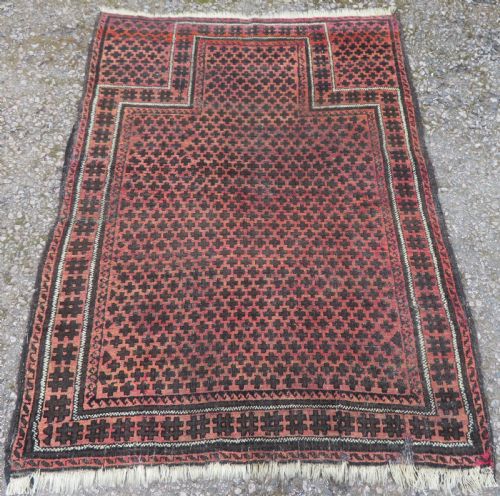
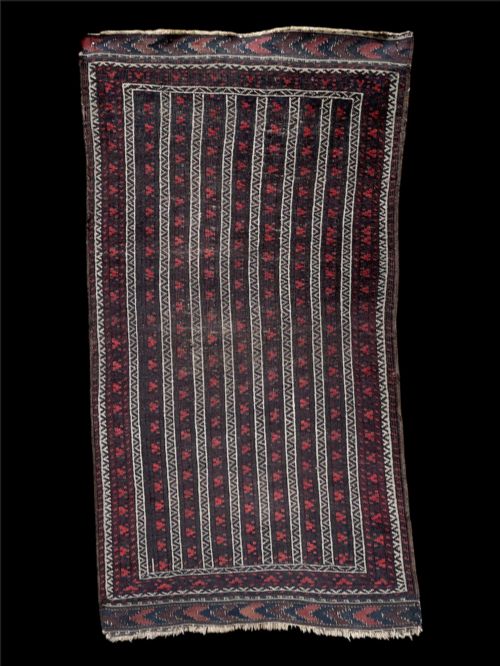
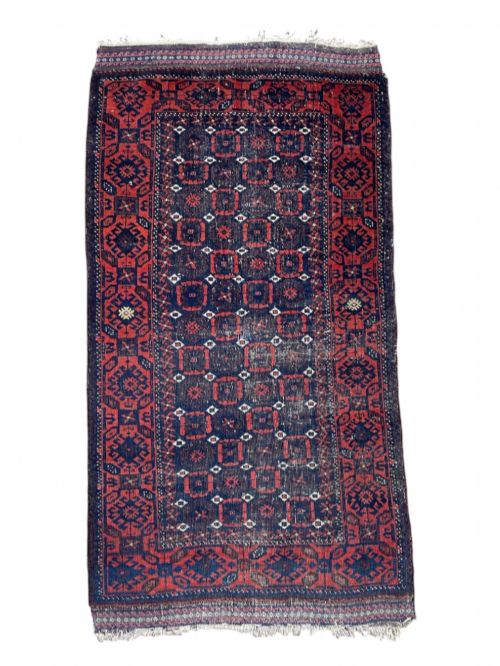
A traditional baluch carpet represents the weaving traditions of nomadic and village groups from regions spanning Afghanistan, Persia, and Khorasan. When searching for a traditional baluch carpet, collectors encounter formats ranging from main carpets and long runners to small prayer rugs and flatwoven kilims.
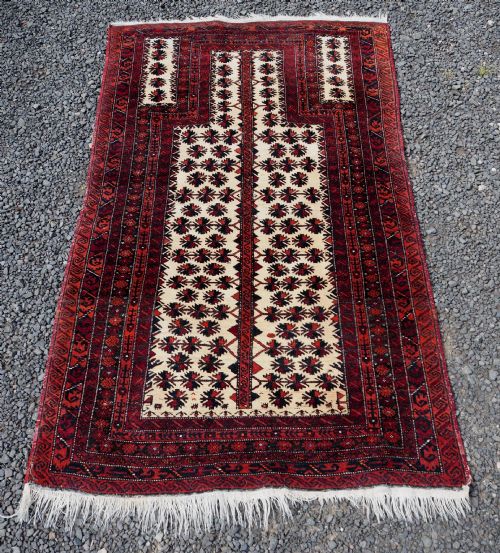
The surviving pieces on this page span from the nineteenth century into the early twentieth century, capturing distinct tribal aesthetics. Common structural formats include double mihrab prayer niches, repetitive gul motifs, and intricate border designs rooted in regional heritage.
How They Were Made
Weavers constructed these textiles predominantly using hand-spun wool, cotton, and occasional goat hair or camel wool foundations. Natural dyes provided the deep, muted colour palettes characteristic of these tribal works.
Techniques relied on hand-weaving methods passed through generations in villages and tribal encampments. Artisans utilised dense knotting structures to ensure durability for everyday floor use.
Listings feature various formats including geometric runners, square area rugs, and prayer rugs dating from the nineteenth and early twentieth centuries.
What Varies in Quality
Quality depends heavily on the fineness of the weave and the precision of the tribal motifs. Tightly knotted structures provide greater longevity and sharper pattern definition.
The choice of materials and dye purity also influence the overall character of the textile. Examples incorporating camel wool or resilient natural dyes display distinct depth and textural variation.
Timuri·Mushwani·Mahdad Khani·Salar Khani·Chakhansur
The Traditional Baluch Carpet Glossary
- Mihrab
- The prayer arch design found on rugs intended for devotional use. This architectural motif often incorporates floral or geometric fills.
- Gul
- A medallion pattern or repeating octagonal motif used extensively in tribal weaving. These symbols often identify specific regional groups.
- Kilim
- A flatwoven textile produced without a pile. These pieces serve as versatile coverings or bags.
- Herati
- A repeating floral pattern featuring a central rosette surrounded by leaves. This design appears frequently across Persian and tribal carpets.
- Runner
- A long, narrow carpet format designed for hallways or corridors. These pieces accommodate restricted spatial dimensions.
Traditional Baluch Carpet: Frequently Asked Questions
How old are these carpets?
The pieces seen here generally date from the nineteenth century up through the early decades of the twentieth century. Production periods often reflect traditional tribal styles preserved across generations.
Specific dates are estimated by examining material wear, dye types, and structural characteristics typical of historical weaving centres.
Where were they made?
Originating across a wide geographic expanse, these textiles come from regions in Afghanistan, eastern Persia, and Khorasan. Nomadic and village weavers produced them within specific tribal territories.
Local access to materials and distinct regional motifs heavily influenced the final appearance of each rug.
How do I care for wool rugs?
Regular gentle vacuuming without a rotating brush helps remove embedded dust from the wool pile. Professional cleaning suited for antique textiles preserves the natural fibres and dyes.
Keeping the carpet away from direct, harsh sunlight prevents premature fading of the traditional natural colours.