




Traditional Architectural Watercolour
Traditional architectural watercolour works bring historic buildings and streetscapes to life on paper through skilled pigment application.
Traditional Architectural Watercolour
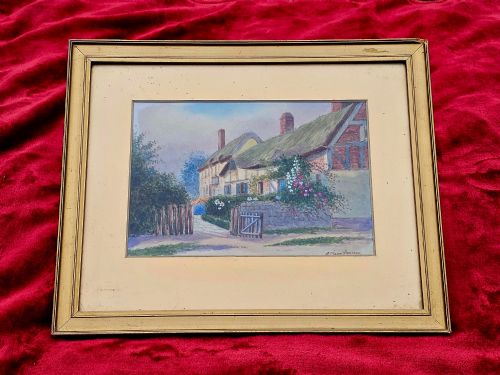
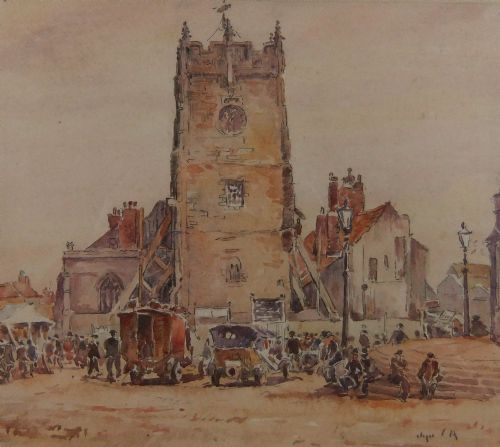
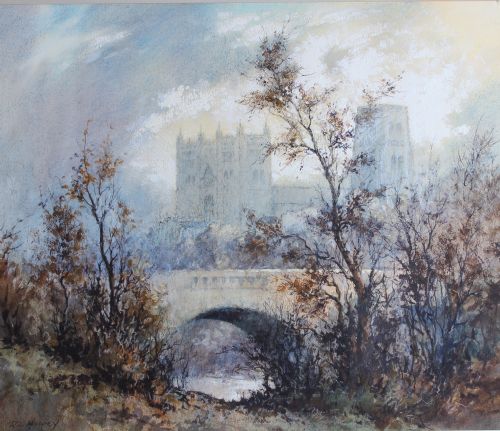
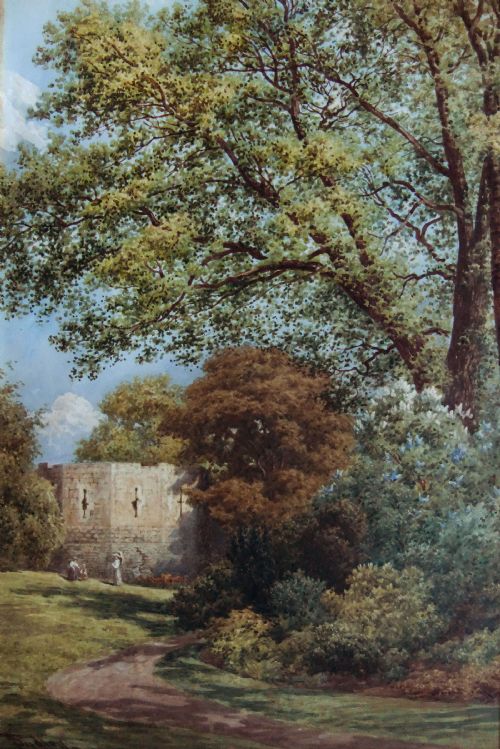
Traditional architectural watercolour paintings capture historic buildings, townscapes, and coastal scenes across various decades.
The pieces on this page span from the Victorian and Edwardian eras into the mid-twentieth century.
Subjects range from British village streets and cathedrals to continental scenes in Rome and Bruges.
Materials and technique
Artists utilise watercolour pigment and ink applied to paper surfaces to build up detailed architectural forms.
Works are frequently housed behind glass within wooden or gilt wood frames to protect the delicate medium.
The listings feature works created on paper using watercolour pigment and ink, spanning from the nineteenth century to the mid-twentieth century.
Separating the ordinary from the exceptional
Quality rests in the precision of the draughtsmanship and the handling of light across stonework and facades.
The strength of the composition and the condition of the pigment determine the standing of each piece.
A. Marie Parsons·John Smith Atherton·Robert Leslie Howey·Louie Stanley Maurice Prince·Tom Dudley·GH Thompson·Ettore Ascenzi·John J. Hamer·Annie L. Lee·Cuthbert Crossley·Fred Lawson·John Thirttle
The Traditional Architectural Watercolour Glossary
- Topographical
- Depicting a specific locality with accuracy and detail. This approach forms the foundation of architectural records.
- Gilt wood frame
- A wooden housing coated in gold leaf or metallic paint. It enhances the visual weight of the watercolour.
- Edwardian
- Pertaining to the reign of King Edward VII from nineteen hundred to nineteen ten. Pieces from this period often display specific stylistic traits.
- Watercolour pigment
- Colouring matter suspended in a water-soluble binder. It allows for transparent washes and fine line work.
Traditional Architectural Watercolour: Frequently Asked Questions
How do I care for a watercolour painting?
Keep the artwork away from direct sunlight to prevent the pigments from fading over time.
Ensure the room maintains stable humidity levels to protect both the paper and the wooden frame.
Are these paintings original works?
Every listed piece is an original watercolour painting created by hand rather than a modern reproduction.
Signatures and inscriptions on the paper frequently help verify the origin of the artwork.
What periods do these watercolours cover?
The collection spans from the late nineteenth century through the Edwardian era and into the mid-twentieth century.
Stylistic shifts reflect the changing artistic approaches of each successive decade.
How are architectural watercolours framed?
Most works utilise traditional wooden frames, sometimes with gilt finishes, paired with protective glass.
Original framing often remains intact, adding context to the age of the piece.