



Brown Tones Landscape Art
Brown tones landscape art gathers works that capture natural and rural scenes through earthy palettes.
Brown Tones Landscape Art
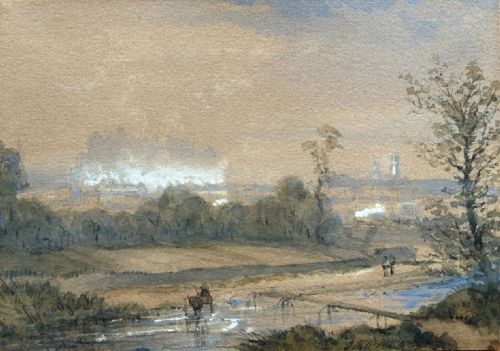
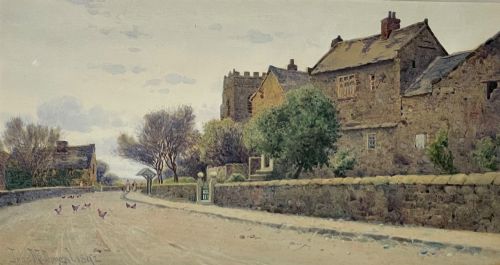
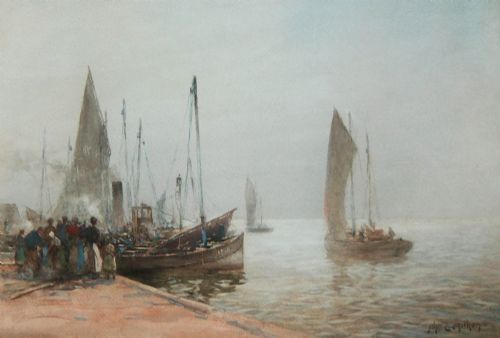
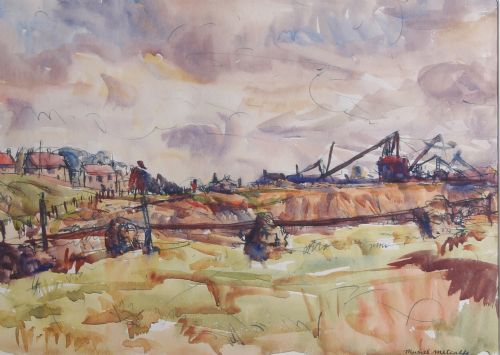
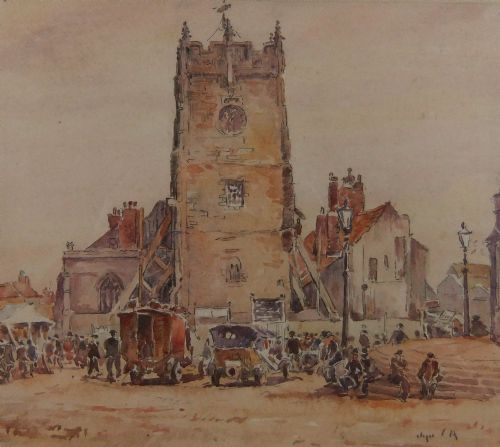
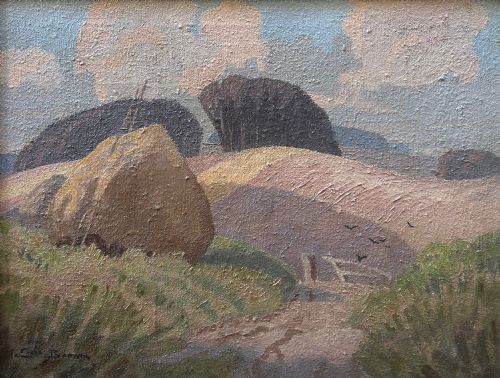
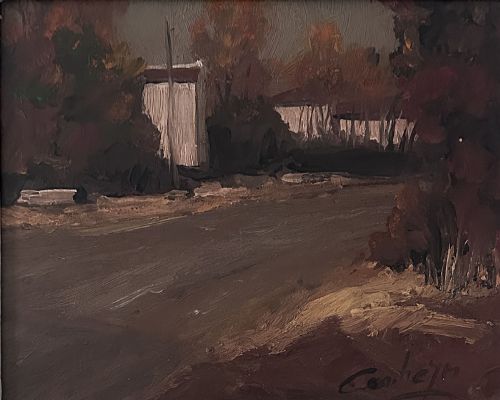
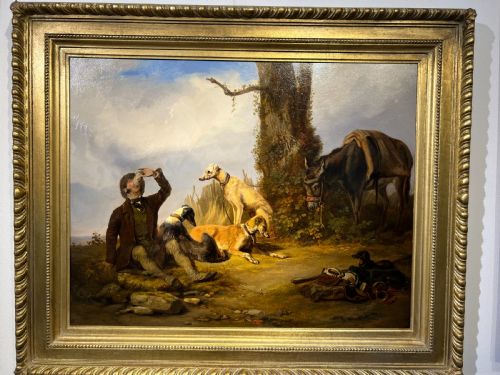
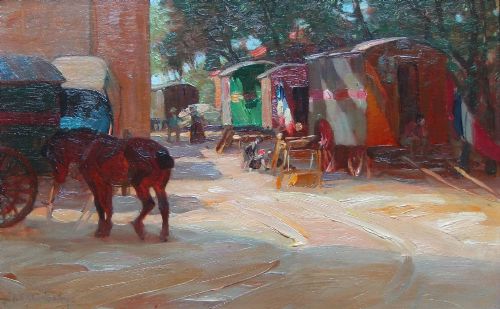
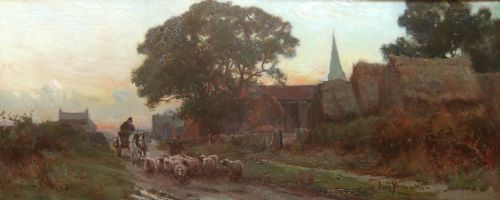
Brown tones landscape art encompasses paintings and watercolours depicting rural views, coastal scenes and pastoral life. The selections span the nineteenth century through the mid-twentieth century, including works from British, Scottish, Dutch and French artists.
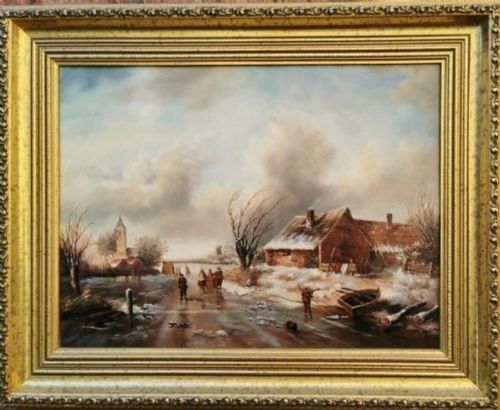
Buyers will encounter original oil paintings on canvas and wood panel alongside detailed watercolour paintings on paper. These works frequently depict agricultural scenes, harbours, moorlands and village architecture.
The aesthetic relies heavily on muted earth colours, ochres and deep siennas to create atmospheric depictions of fields, rivers and hills. Many examples bear signatures from regional artists active across Britain and continental Europe.
Materials and construction
Artists painted primarily with oil or watercolour, applying pigment to stretched canvas, prepared wood panels or heavy paper. Wood panels offer a rigid support favoured in earlier periods, while canvas allows for larger compositions.
Framed works frequently utilise timber surrounds that complement the darker pigments and restrained tonal ranges typical of these rural compositions.
Several canvases manage to make ducks look surprisingly menacing.
Factors of quality
Quality rests upon the artist's handling of light and shadow within a restricted palette, distinguishing skilled brushwork from mechanical reproduction. Stronger pieces demonstrate confident draughtsmanship and atmospheric depth.
Condition of the original paint layer or watercolour wash remains vital, with preference given to works retaining their original surface and contemporary framing.
John R Prentice·Tom Campbell·John McDougal·James E Aitken·Muriel Metcalfe·John Smith Atherton·Eric Brown·Sir Edwin Henry Landseer·Paul Ehrenberg·Owen Bowen·Alfred George Morgan·Gyrth Russell·Raimond Louis Lecourt·W E Evans·John Atkinson·William Greaves·H Wallace·John Frederick Herring·Louie Stanley Maurice Prince·John Syer·Frank Hyde·Pierre Emmanuel Dielmans·Fred Stead·William Manners·Paul Jones
The Brown Tones Landscape Art Glossary
- Oil paint
- A slow-drying medium consisting of pigments suspended in a drying oil, usually linseed. This medium allows for rich blending and textured impasto application.
- Watercolour
- A paint consisting of water-soluble pigments used on paper supports. It provides translucent washes that capture delicate atmospheric effects.
- Wood panel
- A rigid flat support made from timber used by artists before canvas became dominant. Panels provide a stable surface for detailed brushwork.
- Impasto
- Paint applied thickly to a canvas or panel so that the brush or palette knife marks remain visible. This technique adds tactile depth to landscape elements.
Brown Tones Landscape Art: Frequently Asked Questions
What periods do these landscapes come from?
The works originate largely from the Victorian era and the early twentieth century, extending through the nineteen-fifties and sixties.
Selections include nineteenth-century watercolours and oils alongside later modernist interpretations.
How should I hang a dark landscape?
Position the piece where it receives adequate natural light to reveal the subtle tonal shifts within the brown and ochre pigments.
Pairing the work with neutral wall colours helps the restrained palette of the composition stand out.
Are these paintings signed by the artist?
Many of the works feature visible signatures or attributions to named painters from British and European schools.
Signatures often appear in the lower corners of the canvas or paper support.
What subjects are common in these works?
Common subjects include pastoral farmyards, Highland hills, coastal harbours and river valleys.
Figures of labourers, farm animals and working horses frequently populate the rural scenery.