




Tortoiseshell Trinket Box
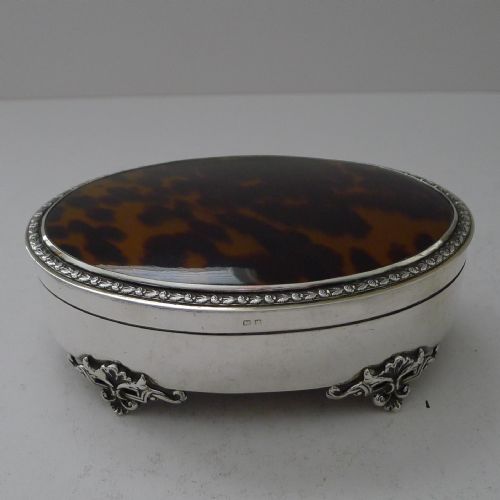
A tortoiseshell trinket box brings together the rich, amber warmth of organic shell and the gleam of sterling silver or gold.
Tortoiseshell Trinket Box
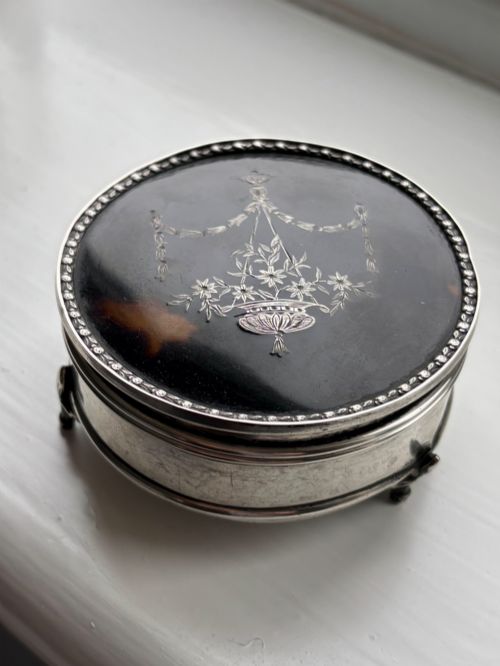
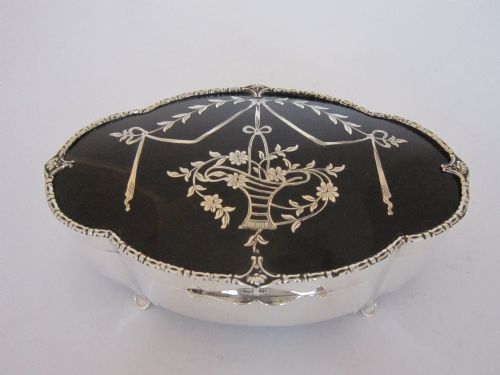
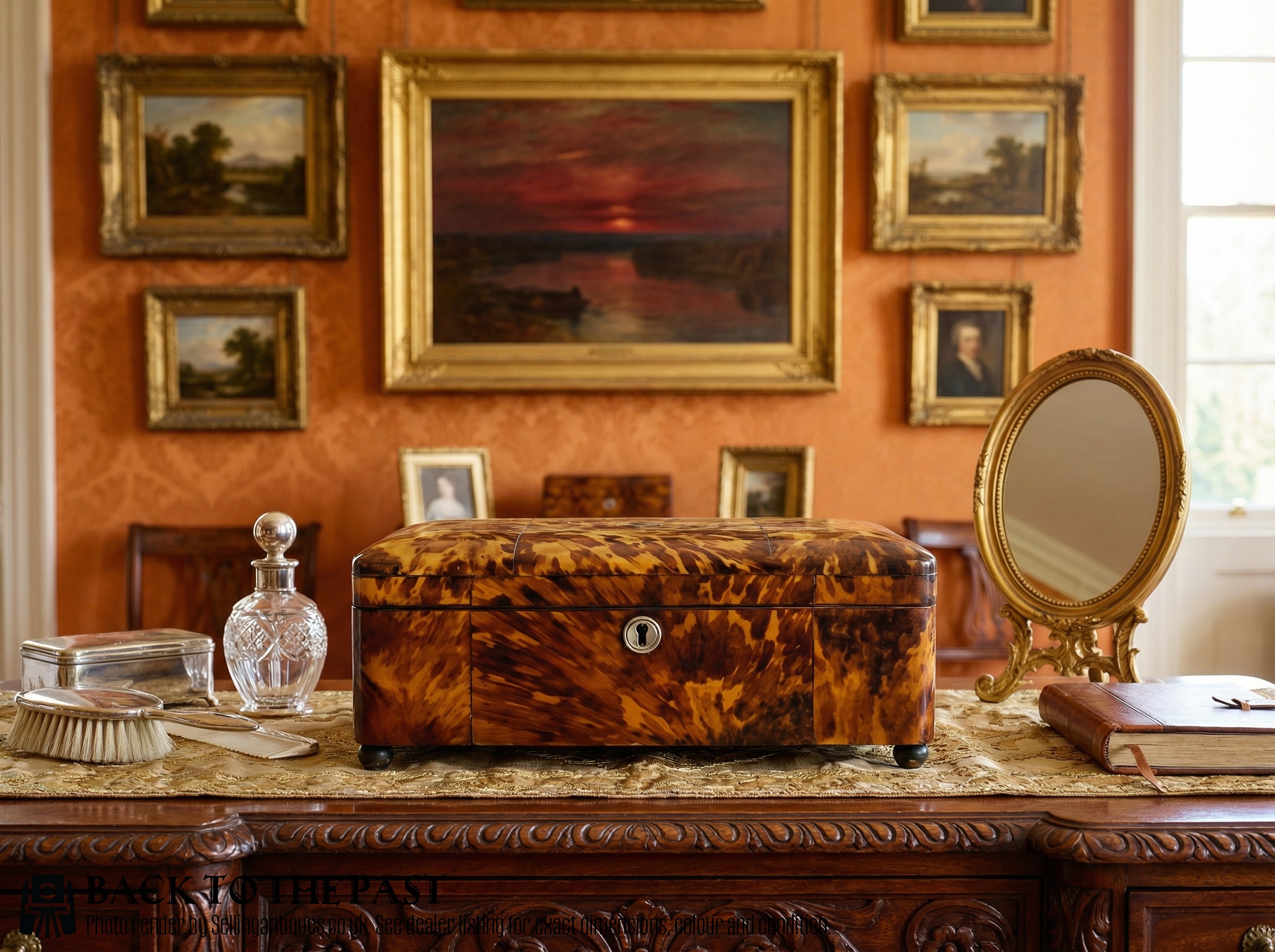
A tortoiseshell trinket box is a small lidded container designed to hold personal valuables, jewellery, or snuff on a dressing table or desk. The pieces found here span the Georgian, Victorian, and Edwardian eras, with a strong representation of early twentieth-century silver-mounted items.
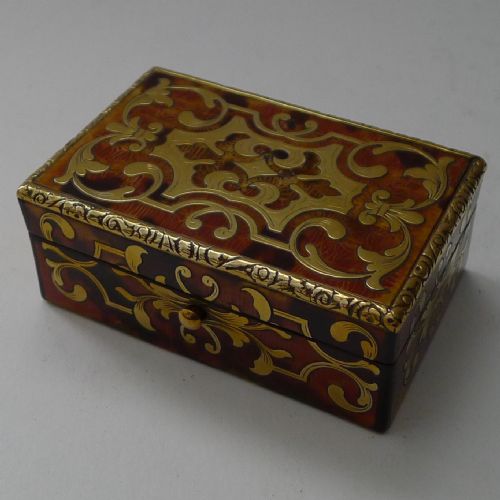
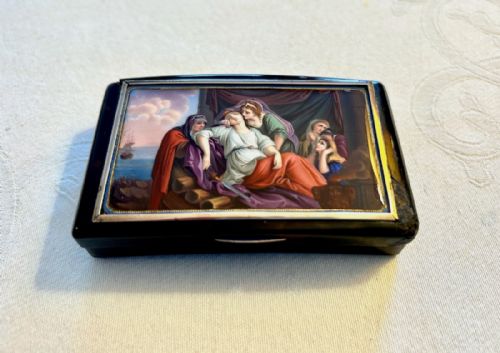
Forms range from compact pocket snuff boxes to larger fitted dressing table boxes, tea caddies, and table caskets. Alongside genuine marine turtle shell, the selection includes pieces executed in faux tortoiseshell, blonde shell, and ornate Boulle work.
Origins stretch from English workshops to French, Swiss, Dutch Colonial, and Scottish makers, demonstrating a wide geographical reach across the eighteenth and nineteenth centuries.
Materials and construction
Natural tortoiseshell scales were softened in boiling water and pressed into iron moulds or fused together under heat to achieve the desired shape for a box body or lid. Craftsmen frequently backed the translucent shell with metallic foil or painted surfaces to enhance the depth of the amber and brown patterning.
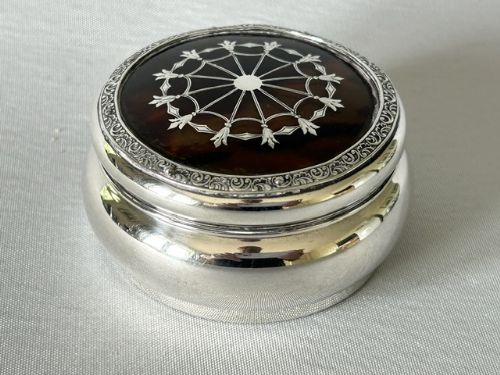
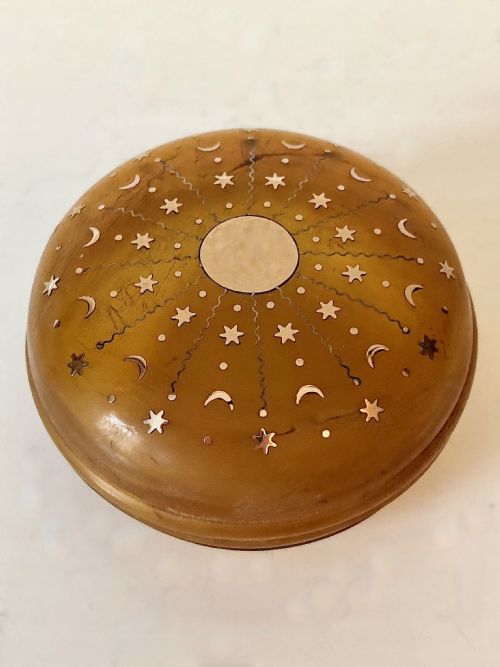
Precious metals such as sterling silver, gold, and brass provided structural mounts, hinges, and borders. Pique work involved embedding tiny gold or silver pins into the shell to form delicate floral or geometric motifs.
Secondary framing structures utilise timber cores including amboyna, birch, and general treen, while glass and crystal components appear in vanity jars and fitted compartments.
Tortoiseshell Trinket Box Retail Price Guide 2026
Typical asking prices for tortoiseshell trinket box among the pieces listed under this phrase on Sellingantiques today, from the lower quarter to the upper quarter. They describe what is for sale here now, not the wider market.
Listings feature items spanning the eighteenth, nineteenth, and early twentieth centuries, constructed from tortoiseshell, sterling silver, gold, brass, and assorted timbers.
Differences in quality
Quality rests upon the clarity and richness of the shell's natural figuring, alongside the crispness of any inlaid pique work. Uniformity in colour and the absence of clumsy repairs set superior examples apart from standard production.
The integration between organic shell and metal mounts dictates overall refinement. Fine boxes display tight, flush joints where sterling silver hinges meet the tortoiseshell panels without gaps or stress fractures.
Ollivant & Botsford·Asprey & Co·Lund Of Cornhill·William Comyns·Edward Souter Barnsley·Mappin & Webb
The Tortoiseshell Trinket Box Glossary
- Pique work
- A decorative technique involving tiny gold or silver pins or strips inlaid directly into tortoiseshell. This meticulous method creates shimmering patterns across the surface of lids and panels.
- Boulle
- An elaborate form of marquetry using brass and tortoiseshell developed in seventeenth-century France. The technique appears on nineteenth-century decorative caskets and boxes.
- Treen
- Small handmade wooden items produced from local or exotic timbers. Many early nineteenth-century snuff and trinket boxes rely on a turned wooden core combined with shell panels.
- Snuff box
- A small pocket container designed to hold powdered tobacco. These diminutive items often feature hinged lids and intricate internal foil linings.
- Faux tortoiseshell
- A simulated material usually created from horn, celluloid, or painted surfaces to mimic genuine shell. It offers the distinctive dappled pattern at a different cost point.
Tortoiseshell Trinket Box: Frequently Asked Questions
How old is my tortoiseshell box?
Dating relies heavily on hallmarks stamped onto the silver mounts, which indicate specific assay offices and years of production. Stylistic cues such as Edwardian symmetry or Georgian proportions also help narrow down the decade of manufacture.
Unmarked pieces require closer inspection of construction methods, hinges, and underlying wood or brass framing to determine their exact historical period.
How do I care for tortoiseshell?
Organic shell requires stable humidity and protection from direct sunlight, which can fade the amber tones and dry out the material. Gentle dusting with a soft, dry cloth is sufficient for routine maintenance.
Avoid submerging the box in water or using harsh chemical polishes, as moisture damages both the delicate silver mounts and the historical adhesives holding the panels together.
What is pique work?
Pique work is a meticulous decorative process where artisans press tiny gold or silver wire and pins into softened tortoiseshell. These metallic elements form intricate floral motifs and geometric borders.
Pieces featuring dense pique inlay demand exceptional precision from the maker, as the shell can easily crack during the heated insertion process.
Are these boxes made of real shell?
The selection includes both genuine marine tortoiseshell and simulated alternatives like horn or early plastics. Natural shell displays organic clouding and depth under magnification.
Faux versions often exhibit uniform repeat patterns or lack the distinct three-dimensional warmth found in genuine animal scutes.