




Tortoiseshell Table Clock
A tortoiseshell table clock brings rich pattern and polished metal to a desk or mantel, channelling centuries of French and English design.
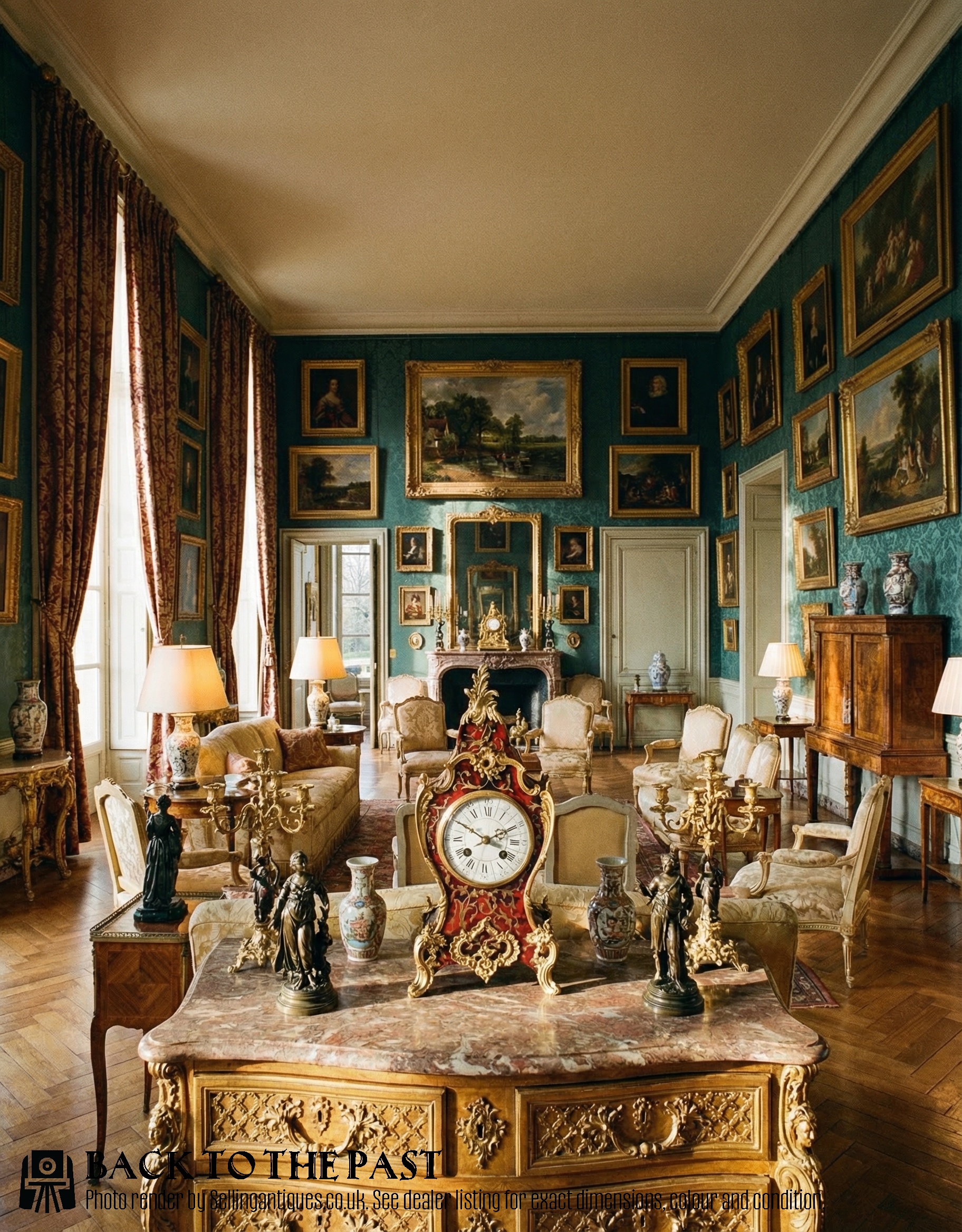
Tortoiseshell Table Clock
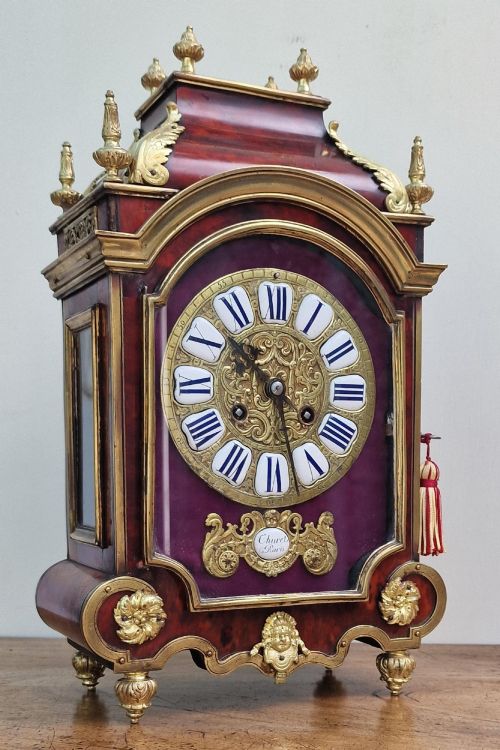
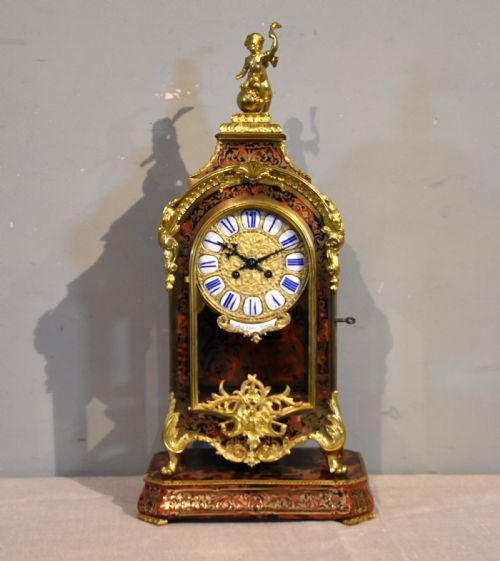
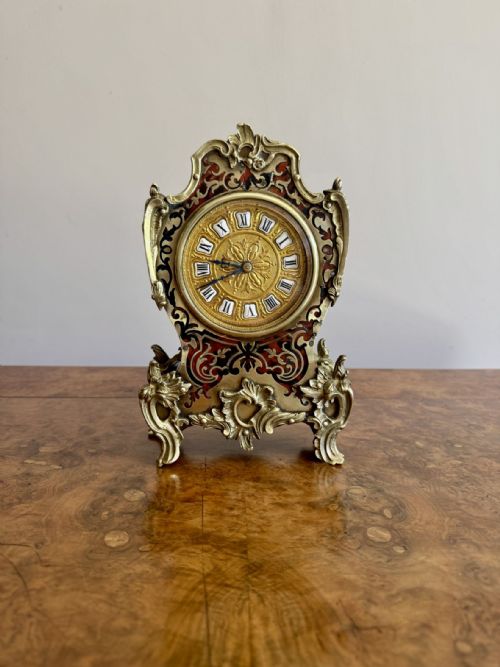
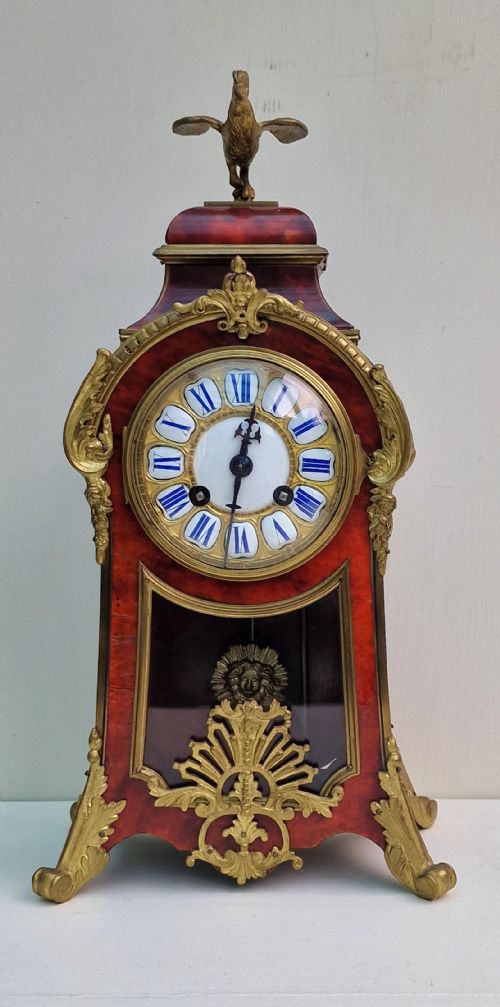
A tortoiseshell table clock is an intricate timepiece designed for domestic interiors, frequently taking the form of a mantel clock, desk clock or bracket clock. These pieces span the nineteenth century into the Edwardian era, incorporating Victorian and Regency examples alongside revivalist aesthetics.
Materials and construction
Workers applied thin plates of tortoiseshell or its faux alternative over wooden carcases, often combining organic shell with cut brass inlay in the Boulle technique. Ormolu mounts, gilt bronze details and enamel dials provide structural contrast and visual weight to the housings.
Mechanical movements inside these pieces range from eight-day French mechanisms to fusee movements by notable London makers, driving the hands behind glass bezels and protected by hinged brass or bronze cases.
One petite boudoir clock carries a sporting record, having been presented by Sporting Sketches.
Distinctions in quality
Quality rests upon the precision of the brass inlay against the tortoiseshell and the crispness of the cast ormolu mounts. Finer examples display meticulous hand-chasing on the metalwork and well-preserved marquetry without lifting or extensive losses.
The sophistication of the internal movement and the signature of the maker separate standard decorative items from superior horological examples. Original matching brackets and well-maintained enamel dials further elevate the standing of a piece.
Thuret·William Comyns·Samuel Marti·J Batson And Son·William Hardy London·Payne London·Vincenti
The Tortoiseshell Table Clock Glossary
- Boulle
- A method of marquetry using contrasting panels of tortoiseshell and cut brass, named after the cabinetmaker André-Charles Boulle. This technique defines many French timepieces from the nineteenth century.
- Ormolu
- Gilt bronze mounts applied to furniture and clock cases for decoration and edge protection. The process involves treating bronze with a gold amalgam before firing.
- Fusee
- A conical pulley connected to the mainspring by a cord or chain, designed to equalise the force of the spring as it unwinds. This mechanism improves the timekeeping accuracy of mechanical clocks.
- Bracket clock
- A portable clock originally designed to sit upon a dedicated wall bracket or shelf. Many retain their matching architectural supports.
Tortoiseshell Table Clock: Frequently Asked Questions
How do I wind my tortoiseshell clock?
Winding requires a key matched to the square arbor on the enamel dial. Turn the key gently until resistance signals the spring is fully tensioned.
Care should be taken not to overwind the movement, as this can damage the internal mechanisms.
Where should I place a mantel clock?
Mantel clocks sit securely on flat surfaces such as tabletops, desks, or firm shelves away from direct sunlight. Stable placement ensures the pendulum beats evenly.
Environmental fluctuations should be minimised to protect the tortoiseshell veneer and wooden carcase from warping.
How do I identify a Regency clock?
Regency timepieces often exhibit clean architectural lines influenced by classical antiquity and British craftsmanship. They frequently utilise single fusee movements by London makers.
Materials such as ormolu, brass and mahogany complement the tortoiseshell elements without heavy revivalist ornamentation.