

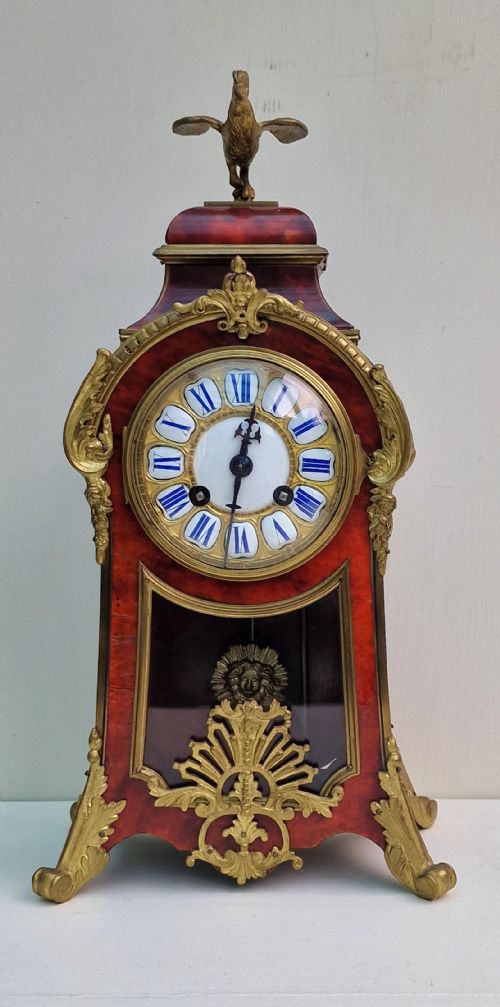
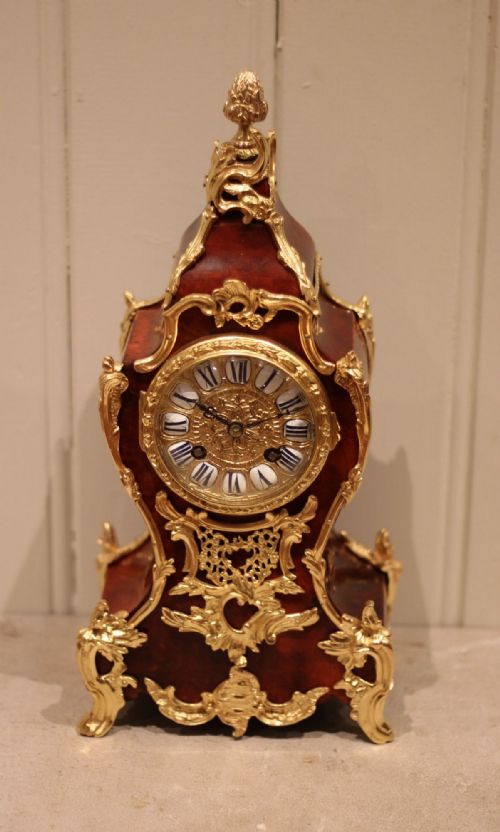


Ormolu Boulle Clock
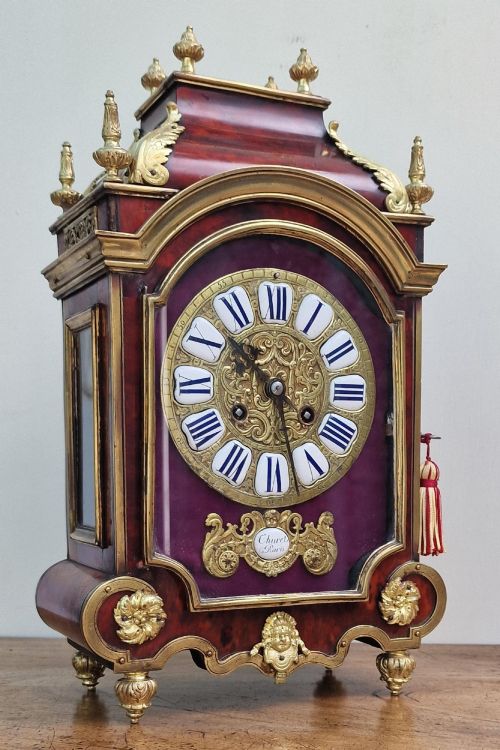
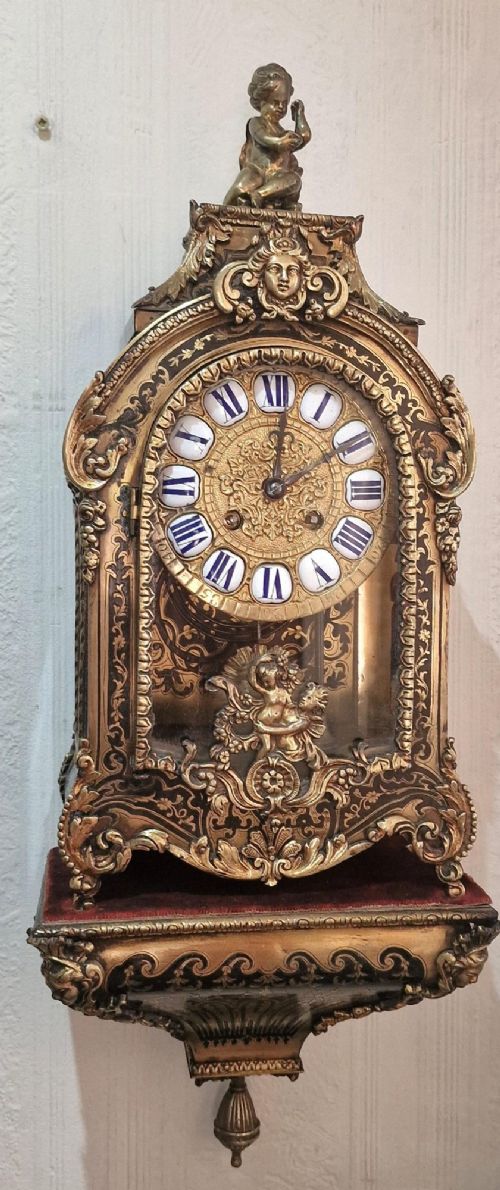
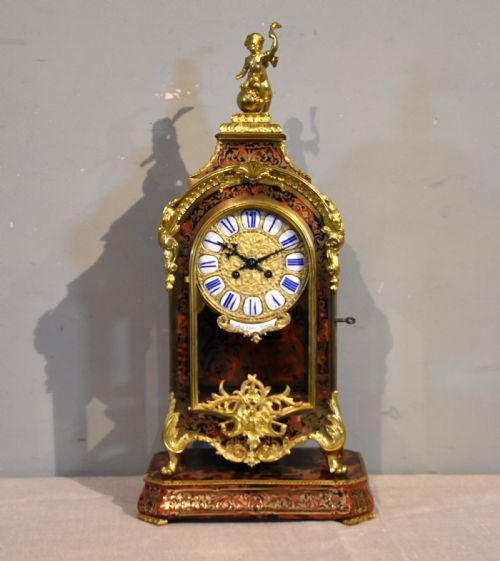
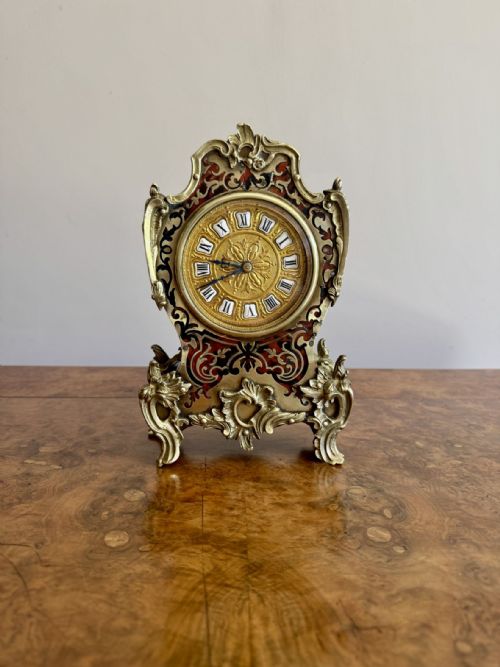
When you encounter an ormolu boulle clock, you are looking at nineteenth-century French timepieces defined by tortoiseshell veneer, inlaid brass work, and gilt bronze mounts.
Ormolu Boulle Clock
An ormolu boulle clock is a domestic timepiece that combines intricate brass and tortoiseshell marquetry with cast gilt bronze mounts. These pieces emerge predominantly from nineteenth-century France, spanning periods from the Victorian era back to Napoleonic revivals of earlier court styles.
The version you are most likely to meet on this page is the mantel clock, often accompanied by a matching wall bracket or standing on a fitted wooden base. They take various forms, from waisted architectural bodies to large bracket clocks with enamel numerals and detailed dial faces.
How they were made
Maker workshops constructed these clocks using a wooden carcass veneered in tortoiseshell, most commonly in traditional dark tones alongside rarer green or red variations. Craftsmen then inlaid sheets of brass and sometimes pewter using the Boulle technique, cutting contrasting patterns of metal and shell simultaneously.
The assembled wooden cases received heavy embellishment through ormolu, applying gilt bronze mounts cast in forms such as classical figures, angels, and scrolling foliage. Movements inside these cases utilised eight-day mechanisms and sometimes fusee or quarter-striking functions.
Listings feature items spanning the nineteenth century, incorporating Victorian interpretations alongside Napoleon III designs.
What varies in quality
The calibre of the marquetry sets examples apart, depending on how tightly the cut brass and tortoiseshell fit together and the complexity of the scrolling patterns. Crisp execution in the brass inlay indicates a workshop with high technical capability.
Thuret·Henri Marc·Samuel Marti·A.D. Mougin·Payne London
The Ormolu Boulle Clock Glossary
- Boulle
- A marquetry technique using tortoiseshell and brass cut together in counter-changed patterns. This decorative method is named after André-Charles Boulle, cabinetmaker to Louis XIV.
- Ormolu
- Gilt bronze applied as decorative mounts to furniture and clock cases. The technique involves treating a metal object with a gold amalgam before heating to leave a gold layer.
- Bracket clock
- A portable clock designed to sit upon a matching wall-mounted shelf or bracket. Many examples retain their original supporting fixtures.
- Fusee
- A conical pulley used within mechanical clocks to maintain even drive force as the mainspring unwinds. This mechanism improves timekeeping accuracy over the course of the running period.
- Enamel numerals
- Individual chapter rings or cartouches painted on a vitreous enamel surface. These numbers are commonly found encircling the dial face of nineteenth-century French clocks.
Ormolu Boulle Clock: Frequently Asked Questions
What is an ormolu boulle clock?
An ormolu boulle clock is a nineteenth-century French timepiece decorated with tortoiseshell veneer, brass inlay, and cast gilt bronze mounts. These objects reflect historical design revivals spanning the reigns of Louis XIV and Louis XV.
They function as both precise timekeepers and sculptural decorative art for the interior. The combination of reflective shell and bright metal gives them a distinct visual presence.
How do you wind these clocks?
Most pieces utilise an eight-day mechanical movement accessed via a glazed door at the front or a removable back panel. A specific winding key turns the arbors to tension the internal springs.
Care must be taken not to overwind the mechanism to preserve the vintage springs. Many examples feature pendulum regulation accessed through the main case door.
Where should I place a bracket clock?
Bracket clocks look best positioned on stable surfaces or mounted securely to a wall using their paired wooden bracket. Because of their weight and protruding ormolu mounts, they require a sturdy foundation away from heavy vibrations.
Keeping them out of direct sunlight prevents the tortoiseshell veneer and coloured stains from fading over time. Adequate clearance allows pendulum movement and striking mechanisms to function without obstruction.
How do I identify the period?
Stylistic cues such as heavy Rococo scrollwork or Louis XIV symmetry point towards specific nineteenth-century revival movements. The presence of maker signatures on the dial or movement backplate often narrows down the production date.
Materials like green or red stained tortoiseshell and the complexity of the brass inlay help distinguish earlier nineteenth-century examples from later adaptations. Examining the cast ormolu mounts reveals details characteristic of Victorian manufacturing periods.