
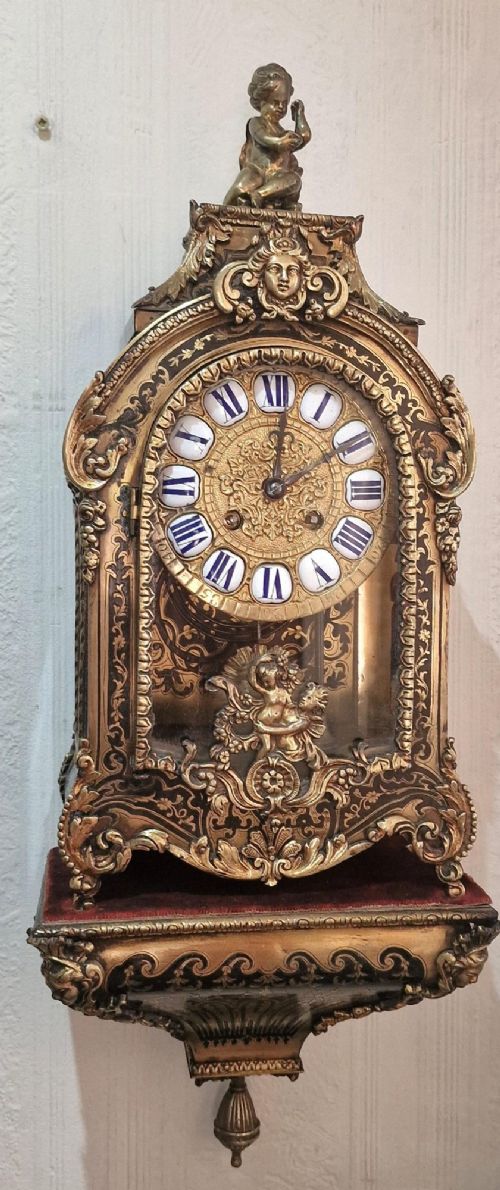
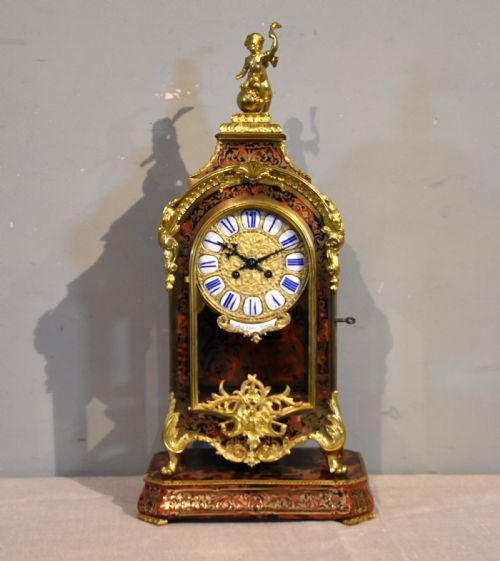
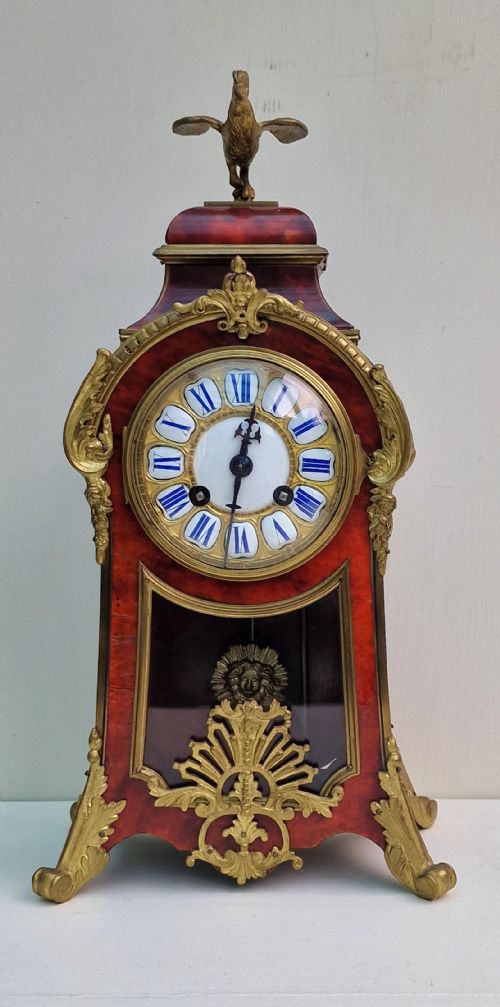
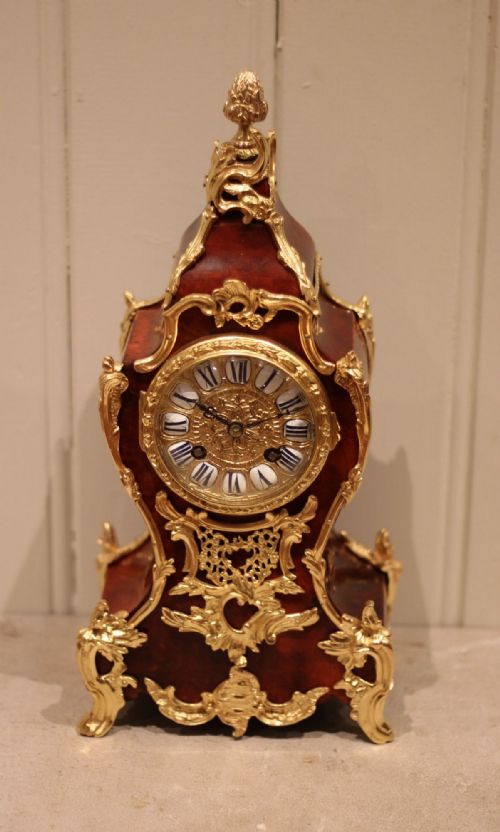


Rococo Boulle Mantel Clock
These rococo boulle mantel clocks bring together tortoiseshell, cut brass and gilt bronze to anchor a room.
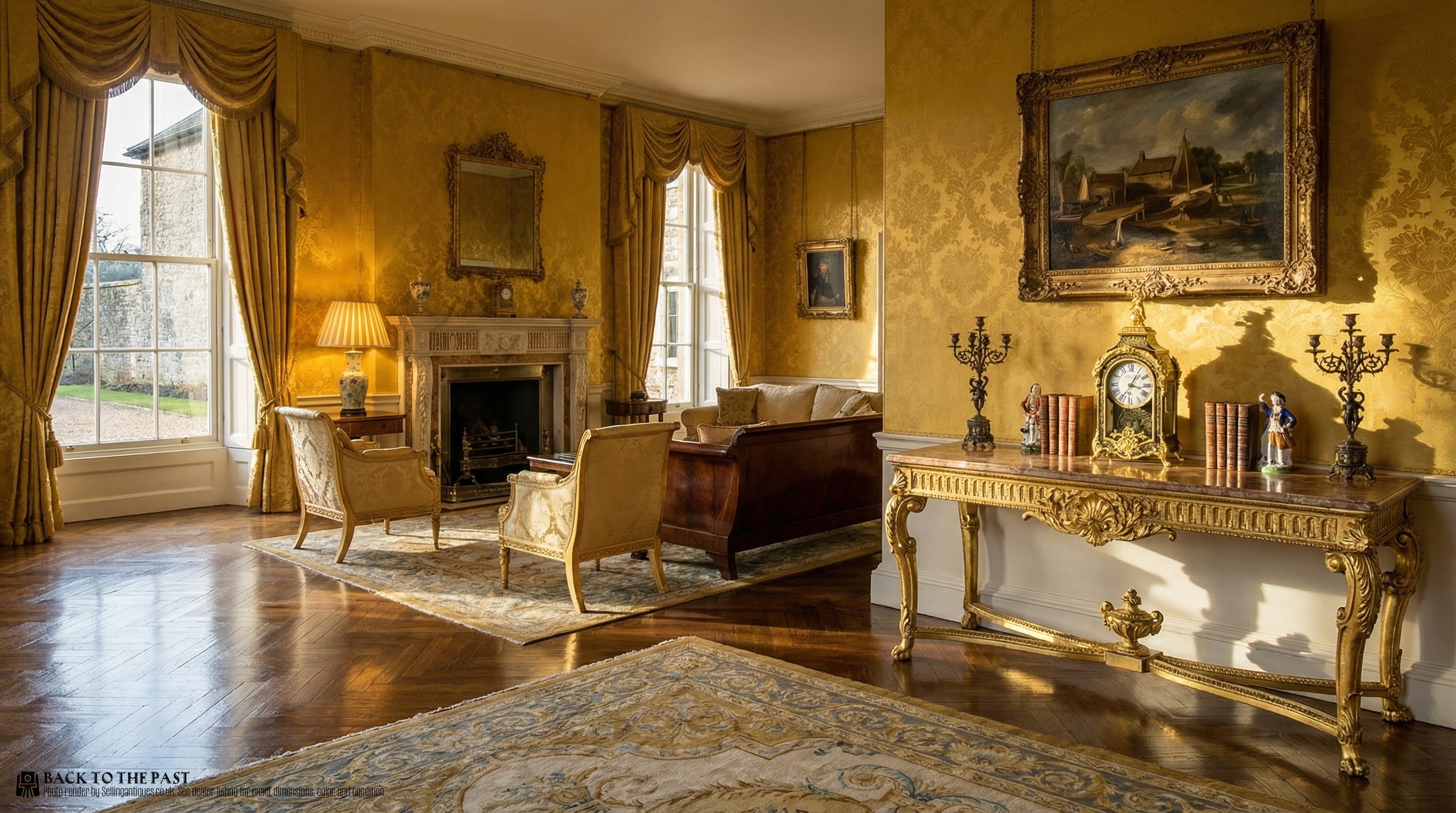
Rococo Boulle Mantel Clock
A rococo boulle mantel clock combines ornate French revival styling with tortoiseshell and brass marquetry, often housing an enamel dial. The examples found here range from nineteenth century Victorian pieces to twentieth century interpretations, including waisted forms and bracket clocks.
Makers such as A.D. Mougin and Payne London appear among these nineteenth century examples, alongside unsigned French mantel clocks and bracket clocks with matching wall supports. Most pieces draw on Louis XIV, Louis XV and French rococo revival aesthetics.
How they were made
The technique relies on tortoiseshell, sometimes green or faux, paired with cut brass inlay to create intricate marquetry patterns across the wooden carcass. Gilt bronze and ormolu mounts punctuate the design, while glass covers the enamel dial and single chain fusee movements drive the timekeeping.
Craftsmen shaped stained wood and stained horn to build waisted mantel clock bodies and matching wall brackets, applying polished brass and rich tortoiseshell veneers by hand.
Listings span the nineteenth century, including Victorian examples from 1880 to 1900, alongside later twentieth century pieces up to 1960.
What varies in quality
The crispness of the cut brass inlay against the tortoiseshell sets the finer pieces apart from simpler variants. Richness in the gilding of the bronze mounts and the finesse of the enamel dials further distinguish the work.
The presence of a signed movement, such as those by Payne London or A.D. Mougin, alongside an original matching wall bracket, elevates an individual mantel clock.
A.D. Mougin·Payne London
The Rococo Boulle Mantel Clock Glossary
- Boulle
- A method of marquetry using tortoiseshell and brass inlaid together, named after André-Charles Boulle. It creates a striking contrast of dark shell and shining metal.
- Ormolu
- Gilded bronze applied to furniture and clock cases during the eighteenth and nineteenth centuries. The technique gives a rich, golden finish to decorative mounts.
- Fusee
- A conical pulley used in clock movements to maintain even tension as the mainspring unwinds. This mechanism improves timekeeping accuracy across the power reserve.
- Bracket clock
- A portable clock designed to sit upon a wall bracket or a dedicated shelf. Many historical examples include the matching bracket for wall mounting.
Rococo Boulle Mantel Clock: Frequently Asked Questions
Where should I place a mantel clock?
These clocks sit well on a drawing room mantelpiece, a sideboard or a dedicated wall bracket. Their tortoiseshell and ormolu surfaces catch the light in formal rooms.
Ensure the surface is level so the pendulum swings evenly. Keep them away from direct sunlight to protect the tortoiseshell and wood.
How do I wind the movement?
Use the appropriate key to wind the clock through the dial holes at the correct interval. Take care not to overwind the mainspring.
Handle the key smoothly and stop as soon as you feel resistance. Consult the specific movement type, such as a fusee, to understand its winding cycle.
Are these clocks French or English?
Most of these clocks follow French rococo and Louis XV revival styles, often originating from Parisian workshops. Some feature movements or retailer signatures from London.
Design influences crossed the Channel frequently during the nineteenth century. Examining the dial, movement signatures and brasswork helps clarify the origin.
How do I care for tortoiseshell?
Dust the tortoiseshell and brass inlay gently with a soft, dry cloth. Avoid chemical cleaning agents and harsh polishes.
Keep the clock away from excessive heat and humidity to prevent the tortoiseshell from warping or lifting. Stable room conditions preserve the marquetry.