
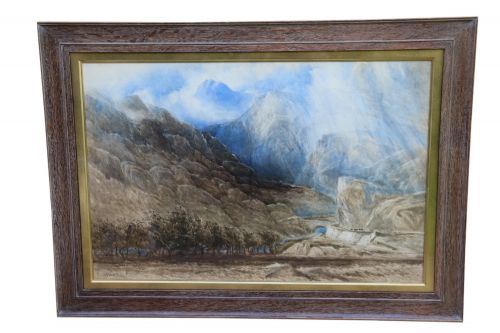


Topographical Landscape Art
Topographical landscape art records specific places with precision, offering a direct view of historical towns, rivers, and monuments as artists observed them.
Topographical Landscape Art
Topographical landscape art captures recognisable locations, ranging from Welsh river passes and northern castles to international cityscapes and ancient monuments. These works function as visual records of specific geography, documenting buildings, topography, and landmarks with deliberate accuracy.
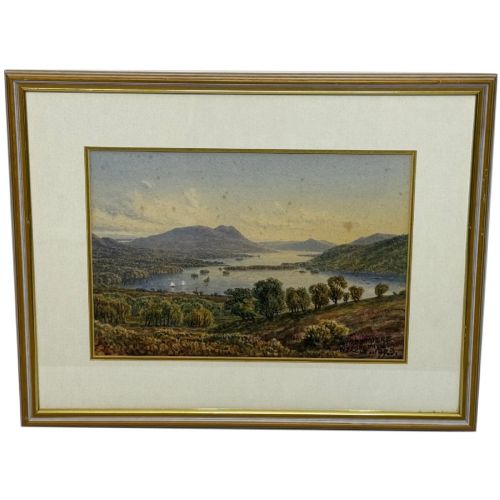
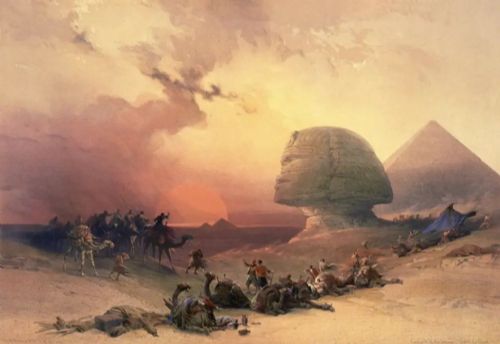
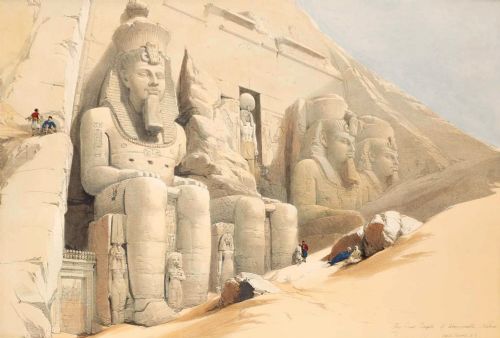
The pieces available on this page span several centuries, with a strong representation of nineteenth-century watercolours, pencil sketches, and period engravings. Creators document familiar scenes such as the River Thames, London views, and regional English towns alongside international vistas from the Middle East and Europe.
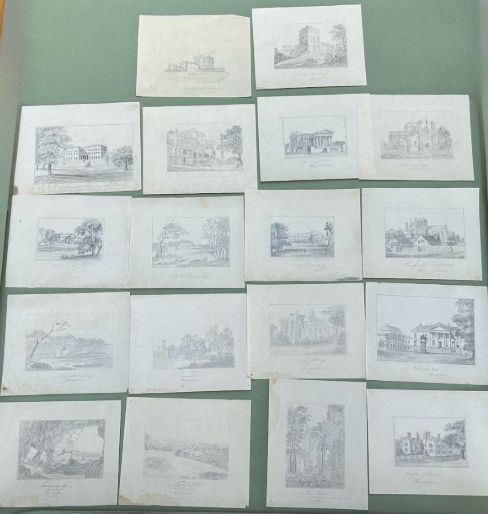
Works appear in various formats, including framed prints, oil paintings, individual watercolours, and grouped sets of views. Stylistic approaches range from strict British realism and Georgian folk art to Victorian orientalism and delicate ink drawings.
Materials and Techniques
Artists utilise paper and card as the primary foundation for works executed in watercolour, ink, pencil, and wash. Many sheets receive additional definition through careful pen work or monochrome wash before the application of watercolour pigment or hand tinting.
Printed topographical works rely on techniques such as etching, lithography, and aquatint engraving upon paper. Publishers then frequently apply hand colouring to monochrome printed plates to enhance architectural details and natural scenery.
Painted works on firmer supports employ oil on canvas or oil on board, framed behind glass in wooden mouldings, occasionally with gilt wood surrounds. These heavier compositions record substantial architectural subjects like castles, cathedrals, and coastal piers.
Nineteenth-century artists occasionally sketched bustling city streets while dodging horse-drawn carriages and wandering seagulls.
Distinctions in Quality
The precision of the draughtsmanship separates routine topographical records from superior works. Finer examples display confident pencil lines, exact architectural perspective, and controlled washes that define masonry and foliage without heavy overworking.
The depth of historical and geographical information adds weight to a piece. Works that capture named structures, specific military positions, or documented landmarks with verifiable local accuracy hold greater documentary interest than generalised scenic views.
The integration of the medium determines the visual success of the finished piece. Hand-coloured prints and tinted lithographs demonstrate quality through the delicacy of the added pigment, whereas watercolours rely on the preservation of clear, unmuddy tones across the paper.
David Roberts·Thomas Cooper Moore·Joseph Farrington·Tom Dudley·Herbert John Finn
The Topographical Landscape Art Glossary
- Aquatint
- An intaglio printmaking technique that produces areas of tone resembling watercolour washes. It was frequently used in the eighteenth and nineteenth centuries for illustrated books of views.
- Hand-coloured
- A monochrome print or engraving that has received subsequent washes of watercolour by hand. This process added realism and decorative appeal to published topographical views.
- Wash
- A thin, semi-transparent layer of watercolour paint or diluted ink applied evenly across paper. It provides tonal depth and shadow in architectural and landscape drawings.
- Lithography
- A planographic printing method utilising a flat stone or metal plate. It allowed artists and publishers to reproduce line drawings and topographical sketches in multiple copies.
Topographical Landscape Art: Frequently Asked Questions
What is topographical landscape art?
Topographical landscape art consists of drawings, paintings, and prints that depict actual locations, buildings, and natural scenery with accurate detail.
Unlike purely imaginative landscapes, these works serve as historical records of specific towns, monuments, and regions.
How were these artworks originally used?
Many of these pieces served as records for travellers, illustrations for geographical publications, or framed decorations for domestic interiors.
Sets of prints and watercolours allowed collectors to study distant cities and familiar countryside without travelling.
How do I live with paper-based watercolours?
Works on paper require careful placement away from direct sunlight to prevent the fading of watercolour pigments and inks.
Framing behind conservation-grade glass helps protect delicate paper supports and hand-coloured details from environmental moisture.
How do I tell watercolours and prints apart?
Watercolours show direct brushwork, varying pigment thickness, and individual hand application directly onto the paper surface.
Prints and engravings display repeating dot patterns, plate marks, or uniform ink lines that indicate mechanical or press reproduction.