
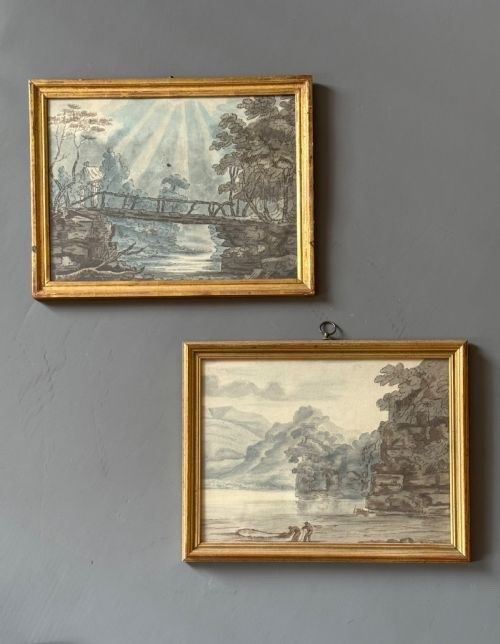
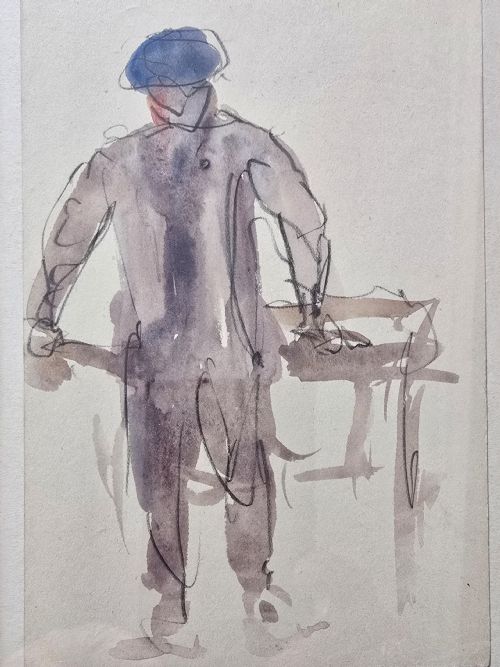


Grey Wash Artwork
Grey wash artwork captures tone and light through monochrome watercolour and ink, offering subtle depth for discerning interiors.
Grey Wash Artwork
Grey wash artwork encompasses original drawings, paintings, and framed sketches executed in monochrome tones. When exploring grey wash artwork, buyers encounter Georgian landscapes, Victorian scenes, and mid-century compositions.
The selections on this page span the eighteenth century to the mid-twentieth century. Works range from English pastoral views and marine subjects to Irish and Chinese modernist pieces.
Materials and execution
Artists utilise ink and watercolour pigment diluted to varying grey washes on paper supports. Pen outlines often define the underlying structure before fluid washes build shadow and form.
Many historical examples feature traditional framing in wood and gilt wood behind glass for protection. The application demands precision, as monochrome washes leave no room for correction.
Distinctions in quality
Quality rests upon the sureness of the draughtsmanship and the subtlety of tonal gradation within the wash. Superior examples capture atmospheric depth and movement with economy of line.
Condition of the paper and stability of the pigment dictate lasting appeal. Strong provenance and attribution to recorded hands elevate specific works above anonymous pieces.
Michael Healy·Tom Clough·Stanley Orchart·Edward Dayes·Thomas Rowlandson·Ya Ming·William J Hodgson·Johan Noah Bemmel·Rowland H Hill·Peter Tillemans
The Grey Wash Artwork Glossary
- Wash
- A thin, transparent layer of diluted watercolour or ink applied to paper to create tone or shadow. It forms the primary medium in monochrome tonal drawings.
- Draughtsmanship
- The artist's skill in drawing lines and structure. Fine draughtsmanship underpins the success of historical sketches.
- Monochrome
- Execution in a single colour, typically shades of grey, sepia, or black. This restriction highlights form and light over chromatic variety.
- Provenance
- The documented history of ownership of an artwork. Clear provenance verifies authenticity and age.
Grey Wash Artwork: Frequently Asked Questions
How should I hang grey wash artwork?
Position these works away from direct sunlight to prevent fading of the delicate ink and watercolour pigments. Use conservation framing with UV-protective glass to safeguard the paper.
Keep them in rooms with stable humidity levels to protect the antique paper supports from warping or foxing over time.
What is the difference between a sketch and a painting?
Sketches rely primarily on linear ink work with minimal wash applied for quick notation of a scene. Paintings utilise broader washes of pigment to build full tonal compositions.
Many historical pieces combine both techniques, featuring ink outlines finished with fluid grey wash.
How do I date an antique drawing?
Examine the paper characteristics, watermark evidence, and the style of the clothing or architecture depicted in the scene. Stylistic conventions of the period offer reliable clues.
Signatures, inscriptions, and documented attribution to known artists help narrow the date of execution.
Are these works original?
Yes, the selections consist of hand-drawn and painted original works rather than modern reproductions or prints. Each piece represents a unique historical creation on paper.
Artists applied ink and watercolour directly by hand during the periods indicated in the listings.