




Victorian Topographical Painting
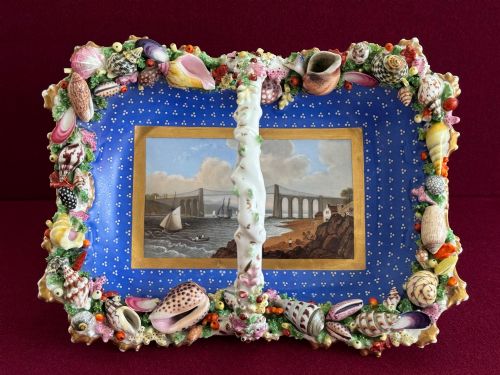
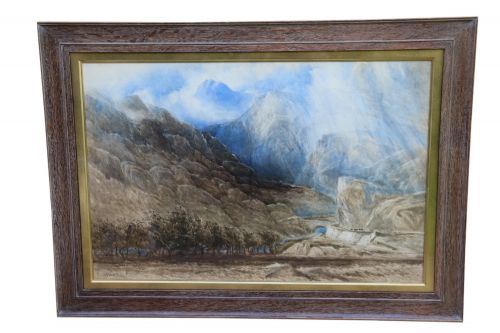
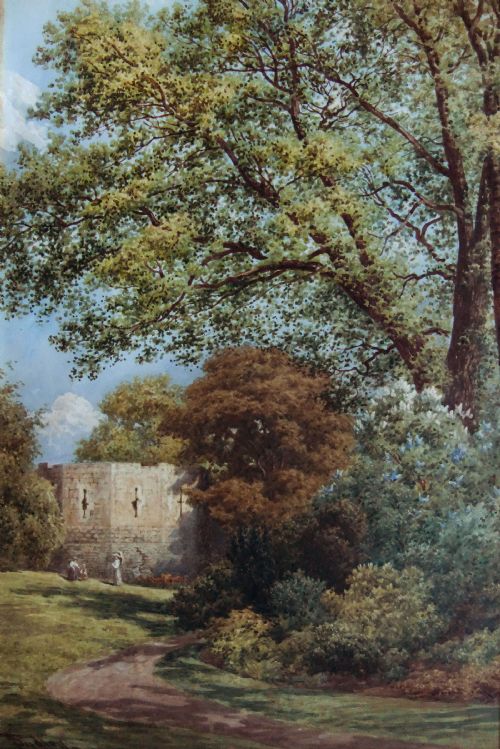
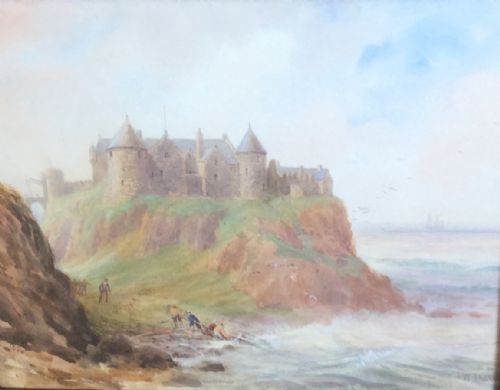
These Victorian topographical painting examples capture identifiable places, from Welsh passes to London riverbanks, rendered in watercolours and oils to record specific locations.
Victorian Topographical Painting
A Victorian topographical painting records a specific real-world location, focusing on accurate depiction of buildings, streets, rivers, and regional landmarks rather than imaginary compositions. When exploring Victorian topographical painting, buyers encounter works depicting named scenes such as Nottingham Castle, York, Norwich Cathedral, and the Houses of Parliament.
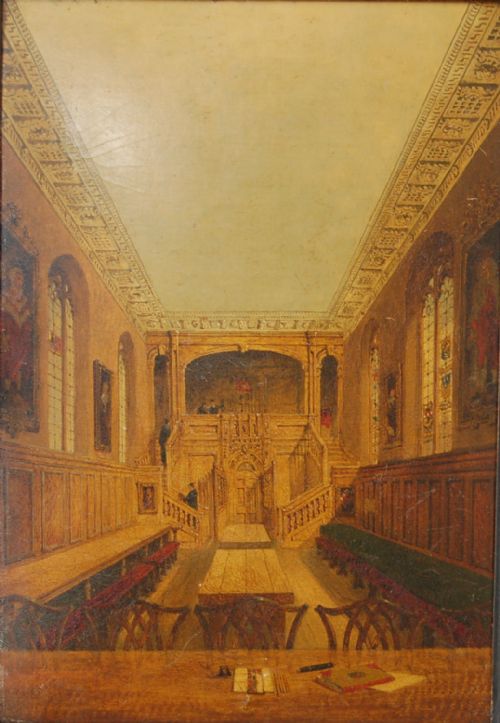
The pieces on this page span watercolours on paper and board alongside oil paintings on board and canvas, capturing views across Britain and beyond. Subjects range from architectural studies and coastal piers to bustling cityscapes and quiet college halls.
While most examples date from the nineteenth century, the selection includes works created across several decades bridging the late nineteenth and early twentieth centuries. These paintings served as visual records before the dominance of photography, satisfying a demand for accurate topographical views.
Materials and technique
Artists relied primarily on watercolour pigment applied to paper or board, often building up intricate architectural details with fine brushwork. Others worked in oil paint upon board or canvas, capturing the play of light across stone facades and water.
Finished works were typically housed behind glass within wooden frames, frequently enhanced with gilt mouldings to complement the domestic interiors of the period. The combination of watercolour on paper with protective framing ensured these detailed regional views survived down the decades.
Several artists clearly stood in the damp British weather for hours just to paint seagulls hovering over Parliament.
Evaluating quality
Quality rests upon the precision of the draughtsmanship and the artist's ability to render complex perspective, particularly in architectural subjects like cathedrals and bridges. Stronger examples display confident brush control and a clear sense of atmosphere that lifts the view above a mere architectural diagram.
The distinction between standard works and finer pieces also involves the strength of provenance, where named artists with documented exhibition records command greater attention. Condition remains important, with stable pigments and minimal fading preserving the intended visual impact of the scene.
Henry Martin Pope·Thomas Cooper Moore·A. G. Hayward·Tom Dudley·Jane Vivian·William A. Macdonald·George De Paris·Herbert John Finn·Joseph William Carey·Joseph Murray Ince
The Victorian Topographical Painting Glossary
- Watercolour
- A paint consisting of soluble pigment suspended in a water-based solution, traditionally applied to paper. It is the dominant medium found in this selection.
- Gilt
- A thin layer of gold leaf applied to wood framing. It provides a traditional decorative border for many period paintings.
- Board
- A rigid substrate used instead of canvas for mounting paintings or watercolours. It offers a stable flat surface for detailed architectural work.
- Provenance
- The documented history of ownership and authorship connected to an artwork. It establishes the authenticity and origin of the piece.
Victorian Topographical Painting: Frequently Asked Questions
What is a topographical painting?
A topographical painting depicts a specific, recognizable real-world location, such as a named town, river, or building, with an emphasis on accurate detail.
Unlike purely imaginative landscapes, these works function almost as historical and geographical records of places as they appeared to the artist.
How do I care for a watercolour?
Watercolours are sensitive to prolonged exposure to direct sunlight, which can cause pigments to fade over time.
Display them away from bright windows in rooms with stable humidity, and ensure they remain protected behind glass within their frames.
Are these paintings original works?
The pieces listed are original hand-painted works created directly by artists using watercolours, oils, or pigments on paper, board, or canvas.
They are distinct from mass-produced prints or mechanical reproductions, carrying individual brushstrokes and the artist's direct touch.