



Tin Glazed Earthenware Pair
A tin glazed earthenware pair brings matching eighteenth and nineteenth-century ceramic artistry into a room through twin vessels, plates, and figures.
Tin Glazed Earthenware Pair
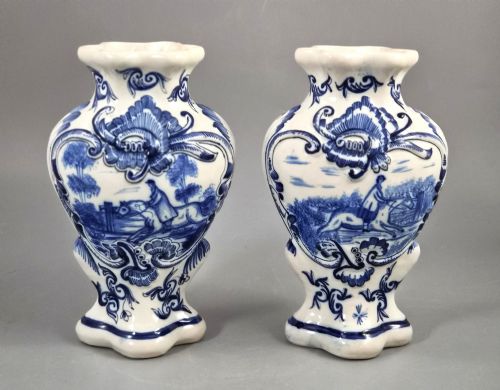
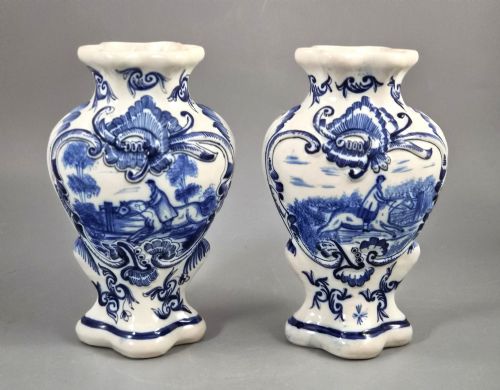
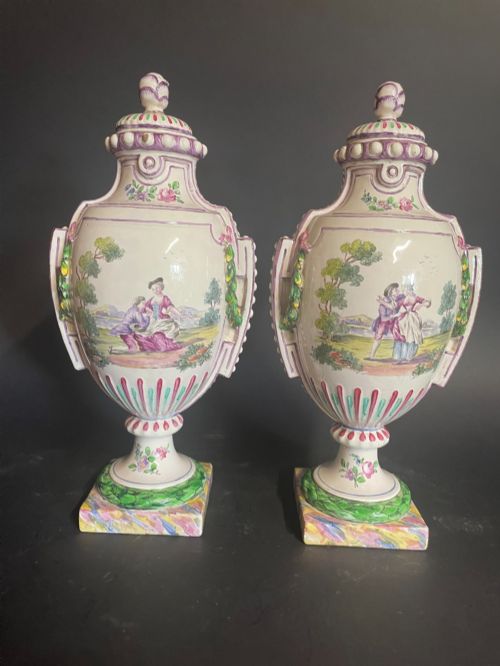
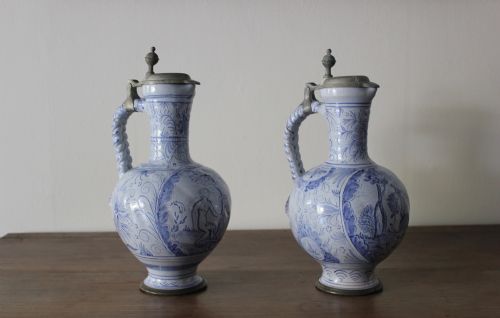
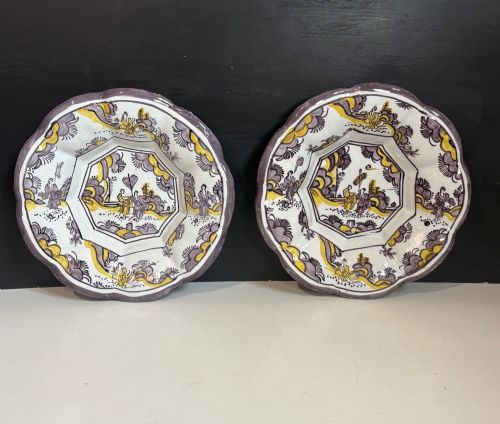
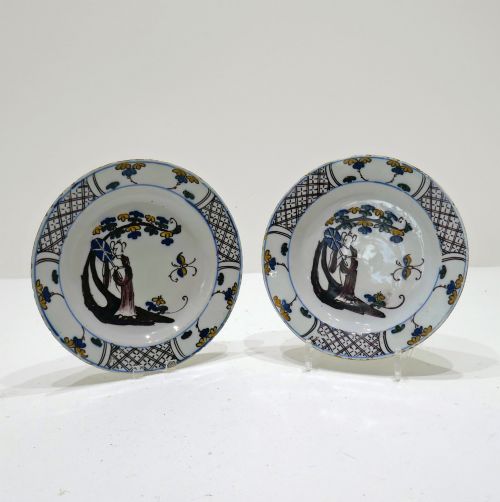
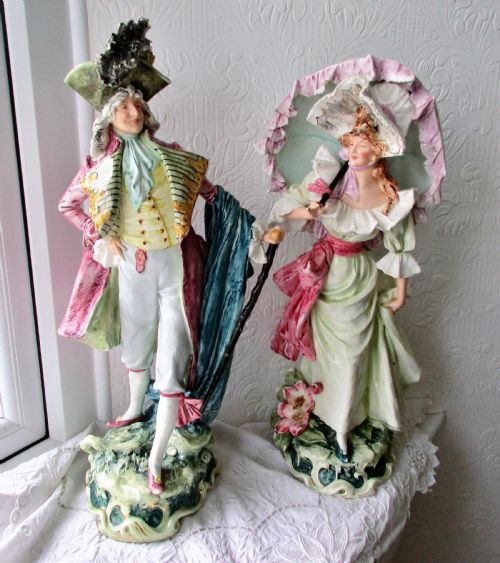
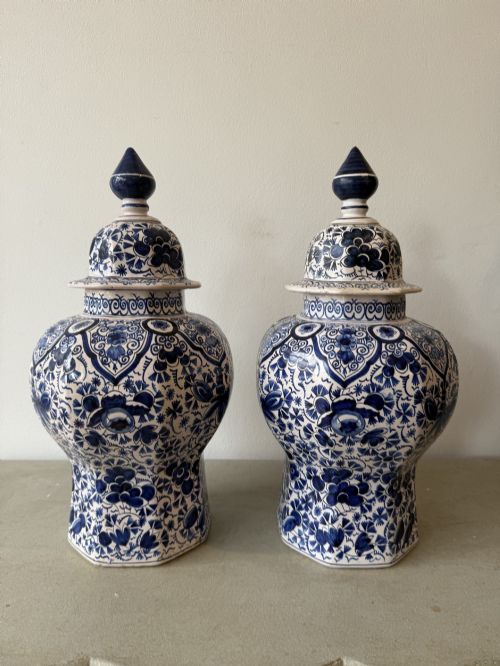
A tin glazed earthenware pair unites matching ceramic objects created across European workshops from the eighteenth and nineteenth centuries. Buyers encounter duplicate forms designed for symmetry, including decorative plates, lidded vases, ewers, and figurative groups.
The selection on this page centres heavily on traditional blue and white delftware alongside polychrome French faience and Italian maiolica. These matched items typically originate from Dutch, English, and French factories operating during the Georgian and later revival periods.
Domestic display drives the search for these dual items, whether placing twin apothecary jars on a mantel or matching plates on a wall. Each set preserves the coordinated output of historical kilns working in tandem.
Materials and production methods
Potters shaped common clay into vessels and figures before applying an opaque tin glaze that created a white, receptive surface for painting. Artisans painted directly onto this unfired glaze using cobalt pigment for blue designs or various mineral oxides for polychrome scenes.
The coated pieces underwent high-temperature firing, causing the metallic oxides to fuse into the liquid tin surface and yield a glossy finish. This specific technique united body, glaze, and pigment into the distinctive earthenware finish seen across Dutch and French output.
Materials recorded across current items include cobalt pigment, clay, and tin glaze.
Distinctions in craftsmanship and survival
Quality rests in the precision of the painted detail and the uniformity of the tin glaze across both matched items. Superior examples display crisp cobalt brushwork or finely controlled polychrome pigments that match closely in tone and design between the two objects.
The physical condition of the tin glaze dictates much of the standing within this category, as the opaque surface tends to chip along edges over centuries of handling. Surviving pairs that retain their original matching lids or show minimal glaze abrasion represent the higher tiers of historical output.
Fourmaintraux-Courquin·3 BELLS Drie klokken Factory
The Tin Glazed Earthenware Pair Glossary
- Tin-Glazed Earthenware
- Pottery coated with a lead glaze made opaque by the addition of tin oxide. This creates the characteristic white background used for painted decoration.
- Faience
- European tin-glazed earthenware, most commonly associated with French production. The term encompasses both tableware and decorative objects.
- Delftware
- Tin-glazed earthenware made in the Netherlands or England, renowned for blue and white designs imitating Chinese porcelain. Potters often produced these in matched sets for domestic display.
- Polychrome
- Decoration employing several colours rather than a single pigment. Artisans utilised various mineral oxides to achieve multi-coloured floral or figurative scenes.
- Maiolica
- Italian tin-glazed earthenware dating from the Renaissance onwards. These pieces frequently feature rich polychrome painting and narrative subjects.
Tin Glazed Earthenware Pair: Frequently Asked Questions
Are these pairs original or assembled later?
Examine the brushwork, glaze tone, and clay body side by side to confirm that both pieces originated from the same kiln firing.
Historical makers produced matched sets intentionally for symmetrical display, though some pairings unite pieces with very similar dimensions and wear patterns.
What caused the glaze to chip on old delft?
The tin glaze layer sits as a glassy coating over a softer earthenware body, making the edges vulnerable to knocks during daily use over centuries.
Such small losses belong to the normal ageing process of early ceramics rather than structural failure.
Where were these pairs displayed historically?
Owners placed matching vases, jars, and figures symmetrically on mantelpieces, sideboards, or architectural ledges to create balanced interior decoration.
Plates were often hung on walls or arranged on dresser shelves alongside other domestic ceramics.