

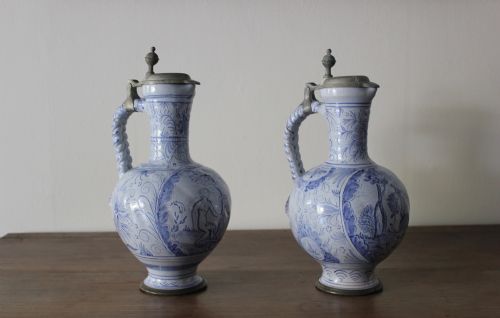


Tin Glaze Earthenware Pitcher
These tin glaze earthenware pitcher examples bring centuries of European ceramic tradition into a modern interior.
Tin Glaze Earthenware Pitcher
A tin glaze earthenware pitcher is a ceramic vessel coated in an opaque white or coloured tin-opacified glaze, often painted in blue, manganese, or polychrome pigments. These pieces emerge from major European ceramic centres spanning the seventeenth, eighteenth, and nineteenth centuries, including Dutch, French, Italian, and English workshops.
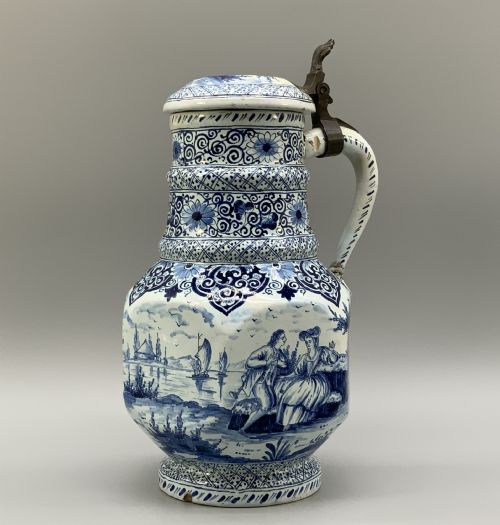
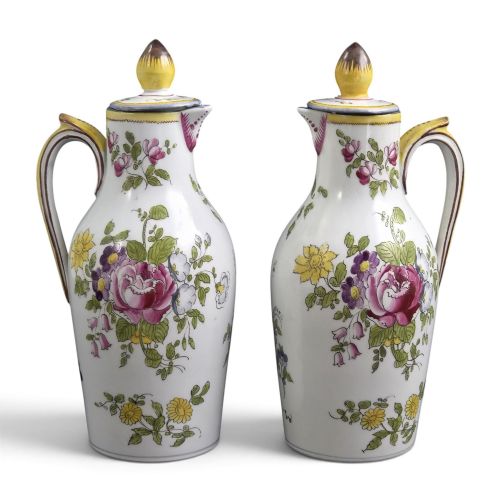
The most frequent form encountered on this page is the Dutch Delftware jug or pitcher, usually decorated with floral, Chinoiserie, or heraldic motifs. Collectors also find specialised variants like puzzle jugs, toby jugs, ewers, and apothecary pharmacy wet drug jars alongside oil and vinegar sets.
Makers and regional potteries utilised earthenware bodies covered in stanniferous glazes to mimic expensive Chinese porcelain long before true porcelain production established itself widely across Europe. This historical ambition shapes the forms and decorative vocabulary seen across the inventory today.
How they were made
Potters threw earthenware clay on a wheel or pressed it into moulds to shape bodies like jugs, ewers, and apothecary jars. Artisans then dipped the fired biscuit body into a liquid glaze containing tin oxide, which dried to a chalky white surface ready for painting.
Painters applied cobalt blue, manganese purple, and polychrome enamel colours directly onto the unfired absorbent glaze before a final high-temperature kiln firing fixed the pigments. Certain pieces incorporated cast pewter lids fitted securely to the ceramic rims by metal hinges.
Tin Glaze Earthenware Pitcher Retail Price Guide 2026
Typical asking prices for tin glaze earthenware pitcher among the pieces listed under this phrase on Sellingantiques today, from the lower quarter to the upper quarter. They describe what is for sale here now, not the wider market.
Listings feature tin glaze earthenware pitcher items from the seventeenth, eighteenth, and nineteenth centuries across Dutch, French, and Italian traditions.
What varies in quality
The finesse of the hand-painted brushwork dictates the visual distinction between standard utilitarian vessels and high-status decorative objects. Crisp, confident lines in cobalt blue or polychrome enamels reflect an experienced painter working in established European faience traditions.
Glaze opacity and surface consistency reveal the technical skill involved in the preparation of the tin-oxide mixture and the management of kiln temperatures. A smooth, even glaze layer without excessive pitting or crawling preserves the clarity of the underlying decoration.
Veuve Perrin Marseille·Cantagalli Florence
The Tin Glaze Earthenware Pitcher Glossary
- Tin glaze
- A lead-glazed ceramic base made opaque by the addition of tin oxide, providing a white background for painted decoration. This technique forms the defining characteristic of European faience, majolica, and delftware.
- Faience
- A European term for tin-glazed earthenware, particularly associated with French, Italian, and other continental production centres. The designation encompasses both utilitarian containers and highly decorative display vessels.
- Delftware
- Tin-glazed earthenware originating from the Netherlands, famous for its blue and white decoration inspired by imported Chinese porcelain. Production ranges from seventeenth-century Chinoiserie designs to nineteenth-century Toby jugs.
- Ewer
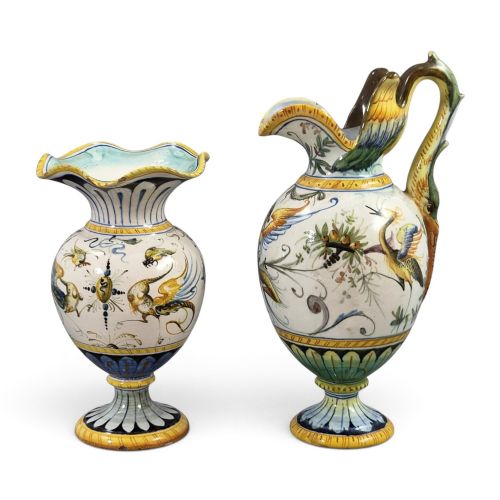
- A large pitcher with a flared spout and a shaped handle, traditionally used for pouring water at the dining table. European faience examples often display sculptural mask spouts or elaborate rococo handles.
Tin Glaze Earthenware Pitcher: Frequently Asked Questions
How do I date a tin-glazed pitcher?
Dating relies on stylistic clues such as palette, potting technique, and decorative motifs like Chinoiserie or floral sprays. Seventeenth and eighteenth-century examples often show thinner earthenware bodies and softer glaze textures compared to later nineteenth-century revival pieces.
Examining the base and any visible marks provides further context, though many domestic vessels remain unsigned. Comparing the form to dated museum examples helps narrow down the decade of production.
Are these pitchers waterproof?
Most tin-glazed earthenware pitchers remain capable of holding water, though historic pieces benefit from gentle handling and caution. The porous earthenware body is sealed by the interior and exterior glaze layers during firing.
Micro-fissures can develop in the glaze over centuries of use, so modern owners often avoid filling antique jugs for prolonged periods. Displaying them dry ensures the preservation of the delicate tin glaze.
How should I clean my delftware jug?
Cleaning requires only lukewarm water and a soft cloth, avoiding harsh detergents or abrasive sponges. Tin-glazed surfaces are sensitive to aggressive cleaning agents which can dull the enamel colours over time.
Submerging antique ceramics with repaired sections or pewter mounts should be avoided entirely. Patting the surface dry with a clean towel prevents moisture from lingering in any hairline crazing.
What is a puzzle jug?
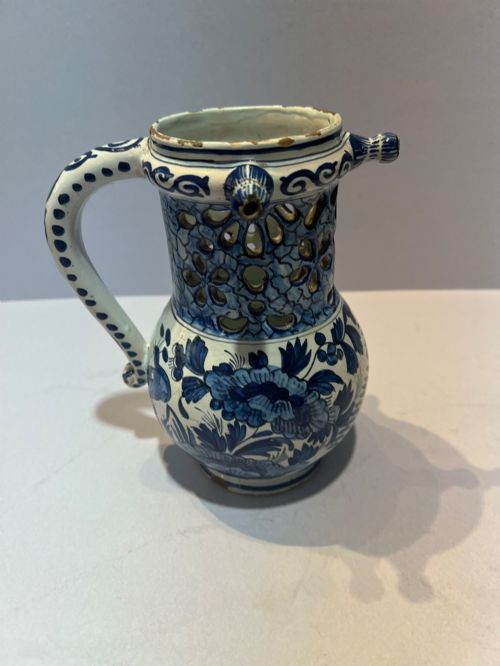
A puzzle jug is a specialised drinking vessel featuring a perforated neck that prevents normal drinking. Users must figure out the secret of drinking through the hollow handle or spouts without spilling the contents.
These clever ceramic items served as entertaining tavern novelties throughout the eighteenth century. They showcase the playful side of European earthenware production alongside standard pitchers and vases.