

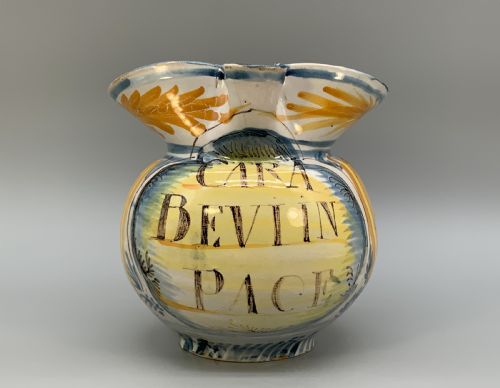


Tin Glazed Faience Jug
A tin glazed faience jug brings centuries of colourful earthenware tradition and painterly brushwork directly to a table.
Tin Glazed Faience Jug
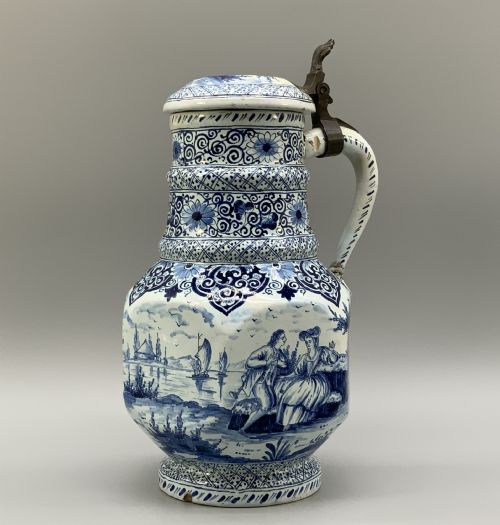
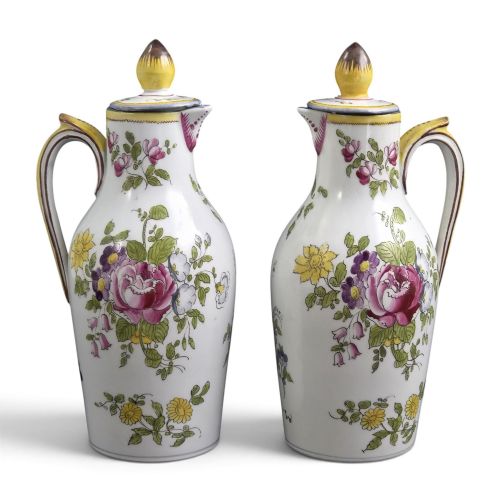
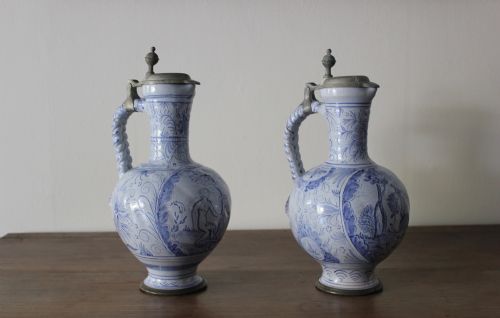
When searching for a tin glazed faience jug, a buyer encounters a diverse range of historic earthenware vessels intended for domestic utility and display. The selection spans utilitarian beer steins, pharmaceutical pharmacy jars, and graceful oil and vinegar containers.
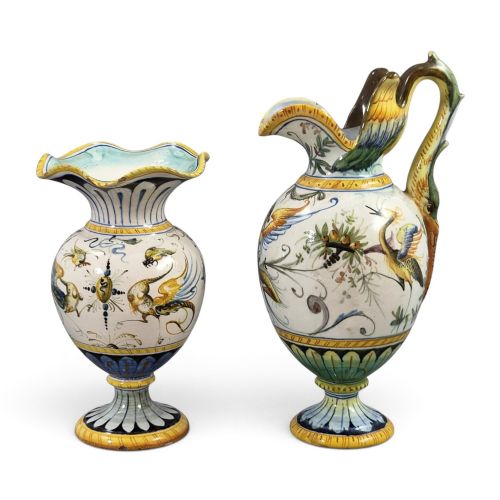
The pieces appearing here derive predominantly from the eighteenth and nineteenth centuries, with occasional seventeenth-century examples. Forms include Dutch Delftware, Italian majolica, and French faience, reflecting varied regional European production centres.
Common shapes range from pilgrim flasks and lidded pitchers to ewers and coffee pots. These vessels showcase both traditional blue and white painting and vibrant polychrome decoration.
Materials and Construction
These items are constructed from earthenware clay and finished with an opaque white tin glaze that provides a smooth ground for decoration. Painters applied metallic oxide pigments directly onto the unfired or biscuit-fired glaze before the final kiln firing.
Makers utilised cobalt for classic blue designs, alongside manganese, yellow, and other polychrome pigments for richer palettes. Certain iterations incorporate fitted pewter lids, adding both structural permanence and functional utility to the ceramic body.
Tin Glazed Faience Jug Retail Price Guide 2026
Typical asking prices for tin glazed faience jug among the pieces listed under this phrase on Sellingantiques today, from the lower quarter to the upper quarter. They describe what is for sale here now, not the wider market.
One cheerful character joining the ranks is a Toby jug complete with a pseudo mark.
Evaluating Quality
Quality in these earthenware pieces rests upon the crispness of the painted decoration and the stability of the tin glaze. Finer examples display confident brushwork and controlled pigment application across intricate floral or figural motifs.
The sophistication of the form also dictates standing, with moulded details such as mask spouts or scallop-shell bodies representing greater ambition. Uniformity in the glaze surface and the successful integration of metal mounts further distinguish superior examples.
Veuve Perrin Marseille·Cantagalli Florence
The Tin Glazed Faience Jug Glossary
- Tin glaze
- An opaque white ceramic glaze containing tin oxide, which creates a smooth surface for hand-painted decoration.
- Majolica
- A type of tin-glazed earthenware originating in Italy, celebrated for its bright polychrome colours and narrative designs.
- Delftware
- Tin-glazed pottery made in the Netherlands, particularly associated with blue and white designs inspired by imported porcelain.
- Polychrome
- Decoration employing multiple distinct colours, typically applied over a white tin-glazed ground.
- Ewers
- Large jugs featuring a wide spout and an ornate handle, historically used for pouring water at the table.
- Manganese
- A dark purple or brown metallic oxide pigment frequently used for outlining and detailing historic ceramics.
Tin Glazed Faience Jug: Frequently Asked Questions
How do I clean a historic tin glazed jug?
Dust these earthenware vessels gently with a soft, dry cloth to remove surface particles.
Avoid immersing antique ceramic pieces in water or using harsh chemical detergents, as moisture can penetrate old glazes and cause damage.
Can I use these jugs for serving liquids?
While these vessels were originally made for liquids such as beer, coffee, or medicinal syrups, historic porous bodies and delicate glazes require careful handling.
Modern functional use is generally discouraged to protect the integrity of the antique ceramic material and historic surface decoration.
What is the difference between faience and majolica?
Faience is the term commonly used for tin-glazed earthenware produced in France, Germany, and the Netherlands. Majolica generally refers to the distinct tin-glazed tradition developed in Italy.
Both categories share the foundational technique of applying painted designs over an opaque white tin glaze.
How do I distinguish eighteenth-century pieces from later revivals?
Eighteenth-century examples typically exhibit the spontaneous brushwork and material characteristics typical of active period production. Nineteenth-century Renaissance Revival pieces often display deliberate stylistic revivals and different kiln markings.
Comparing glaze thickness, pigment behaviour, and potting techniques helps clarify the production era.