

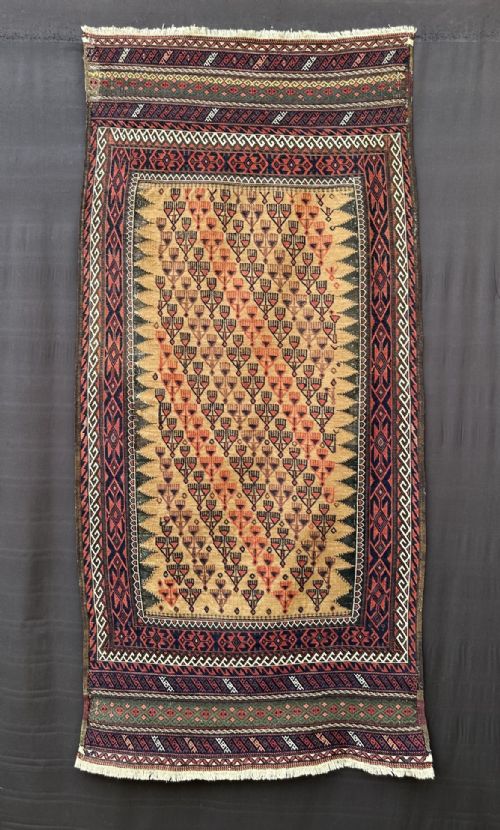


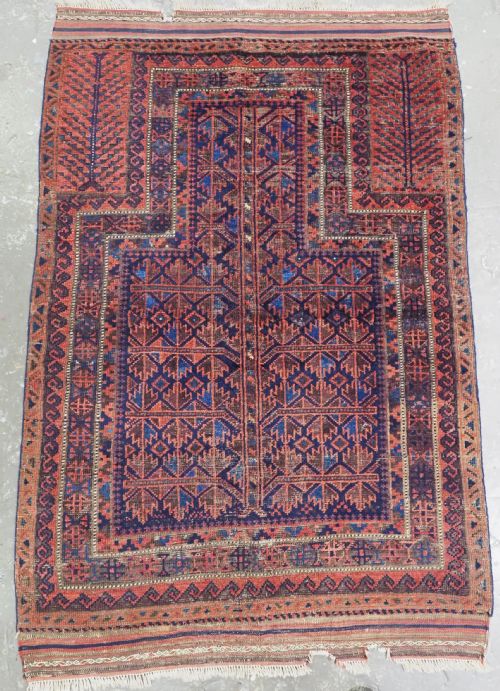


Timuri Afghan Rug
A timuri afghan rug brings nineteenth-century tribal weaving from the borderlands of Persia and Afghanistan into a modern interior.
Timuri Afghan Rug
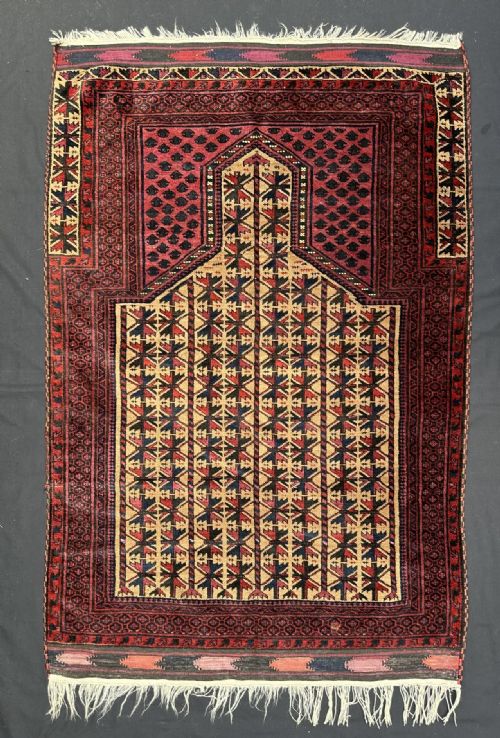
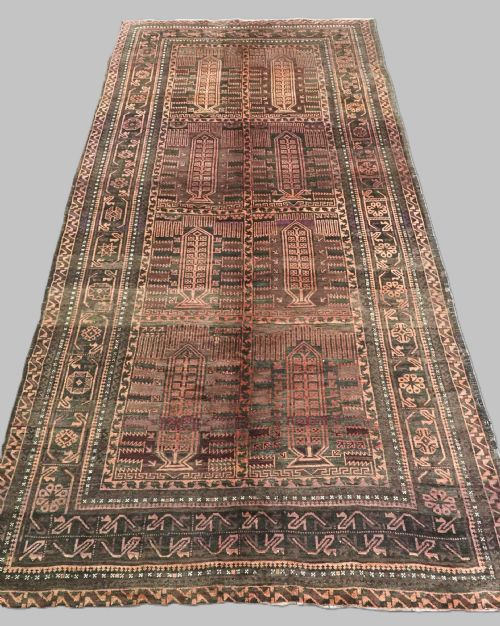
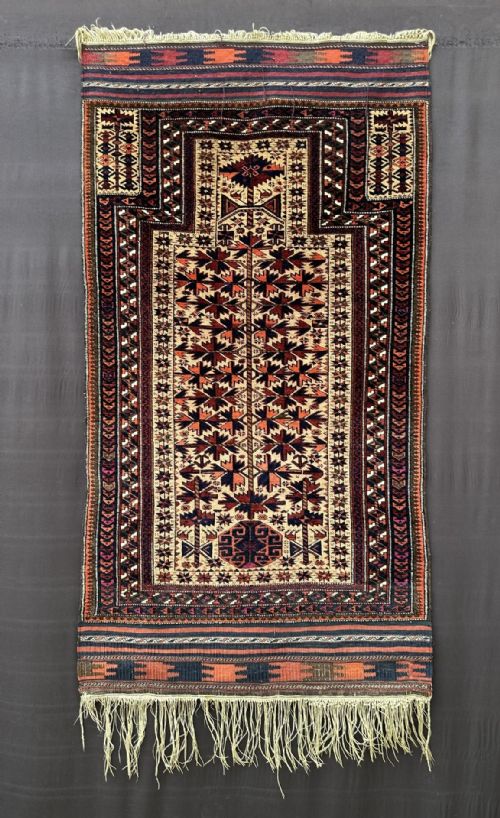
The timuri afghan rug category covers tribal weaving originating from the borderlands of north-east Persia and western Afghanistan, produced by nomadic and semi-nomadic groups. Buyers encounter various utilitarian and devotional forms here, ranging from small prayer mats to larger carpets and specific household textiles.
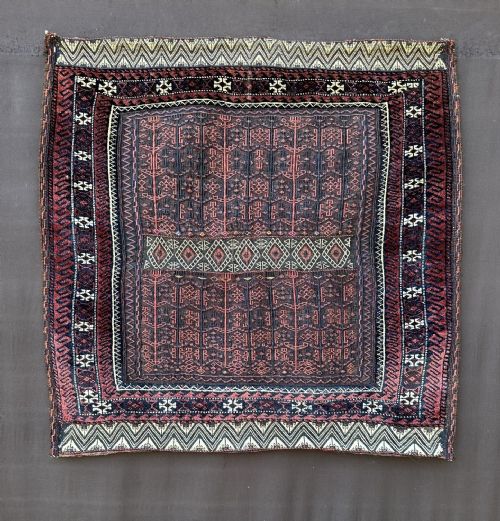
The selection includes specific tribal formats such as dining sofreh, bread sofreh, salt bags, and ru korssi covers alongside standard floor rugs. These pieces date across the late nineteenth and early twentieth centuries, reflecting the distinct heritage of sub-tribes like the Dokhtar-e-Qazi, Sangtshuli, and Yaqoub Khani.
How They Were Made
Weavers utilised hand-spun wool for the pile, often combined with goat hair and cotton foundations to provide structural stability. Camel hair appears in the pile and grounds of specific examples, lending a characteristic warm tone and durable handle.
Natural dyes provide the palette across these textiles, creating deep blues, reds, and camel grounds that age gracefully. The structural interplay of wool and natural colour defines the physical character of each piece recorded in the archive.
Timuri Afghan Rug Retail Price Guide 2026
Typical asking prices for timuri afghan rug among the pieces listed under this phrase on Sellingantiques today, from the lower quarter to the upper quarter. They describe what is for sale here now, not the wider market.
The listings show production dates spanning from 1870 through 1910, focused heavily on the 1880 and 1900 decades.
What Varies in Quality
Quality in a timuri afghan rug rests upon the fineness of the knotting and the precision of the tribal design work, such as pencil box or tree of life motifs. Finer structures allow intricate patterns like the Kalam Donneh or shrub designs to appear with sharper definition.
The handling of natural dyes and the saturation of deep rich colours influence visual success. Subtlety in wool preparation and the preservation of original selvedges and ends distinguish superior weaving within the tribal corpus.
The Timuri Afghan Rug Glossary
- Sofreh
- A spread or cloth used for eating meals or preparing bread within nomadic households. These flatwoven or piled pieces display utilitarian artistry.
- Prayer-rug
- A devotional mat featuring a mihrab or niche design used for daily prayers. These formats often incorporate tree of life motifs.
- Ru Korssi
- A decorative cover placed over a low table warming unit in traditional homes. They exhibit square formats suited to domestic gatherings.
- Kalam Donneh
- A repeating boteh or pencil box design found in main carpets. The motif aligns in structured rows across the field.
- Dokhtar-e-Qazi
- A sub-tribe associated with specific prayer rug designs featuring distinctive mihrab arches and border arrangements. Their output is recognised by specialised collectors.
Timuri Afghan Rug: Frequently Asked Questions
What is a timuri afghan rug?
A timuri afghan rug is a tribal textile woven by nomadic groups inhabiting the border regions between Persia and Afghanistan during the nineteenth and early twentieth centuries.
These pieces reflect distinct sub-tribal traditions, utilising local wool and natural dyes to create durable floor coverings and household items.
How were these rugs used?
Nomadic families used these textiles for daily floor coverings, sleeping mats, and directional prayer rugs in domestic tents and structures.
Other formats served specific domestic functions such as food preparation spreads, table covers, and storage bags for salt.
How do I live with a tribal rug?
Placing a nineteenth-century textile in a contemporary space requires a sturdy underlay to prevent slip and reduce friction against hard floors.
Keep these wool and natural dye creations away from direct, prolonged sunlight to preserve the depth of the blue and camel grounds.
How do I identify different tribal groups?
Attribution relies on studying specific design vocabularies, such as the prayer arches of the Dokhtar-e-Qazi or the structural formats used by the Sangtshuli.
Comparing border patterns and material combinations like camel hair helps connect individual examples to their regional origins.