




Timber Trestle Seating
Timber trestle seating brings honest utility into a room, offering sturdy benches and hall chairs built to last.
Timber Trestle Seating
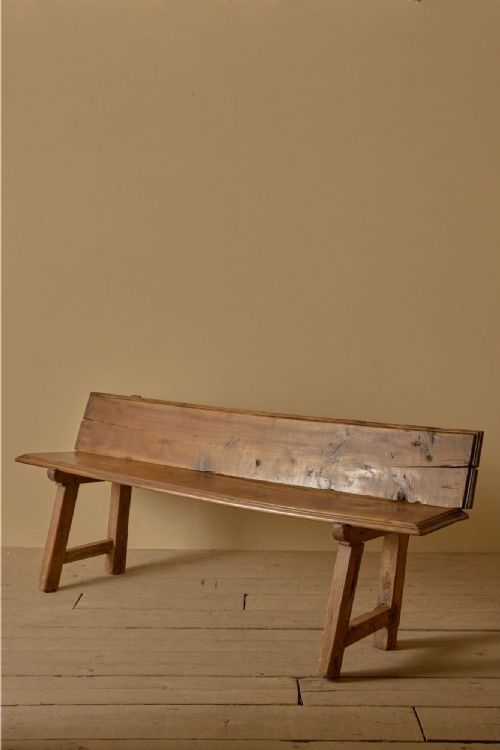
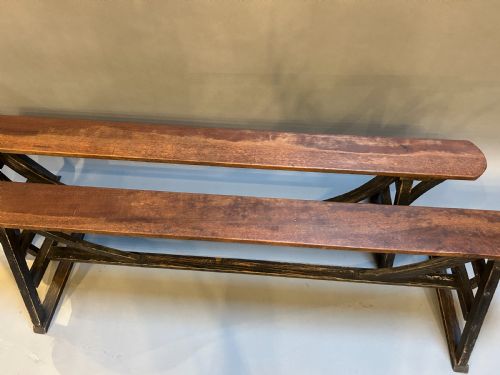
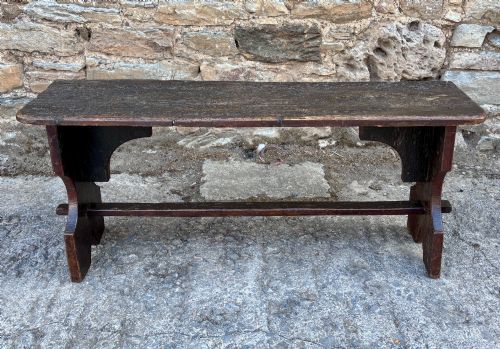
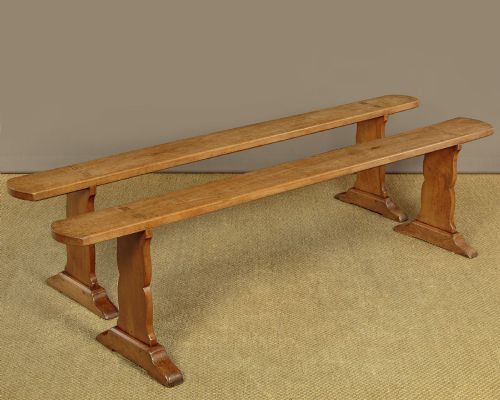
Timber trestle seating comprises benches and hall chairs defined by supporting end frames rather than four standard corner legs. These forms span several centuries, reaching from mid eighteenth century examples up to early twentieth century pieces.
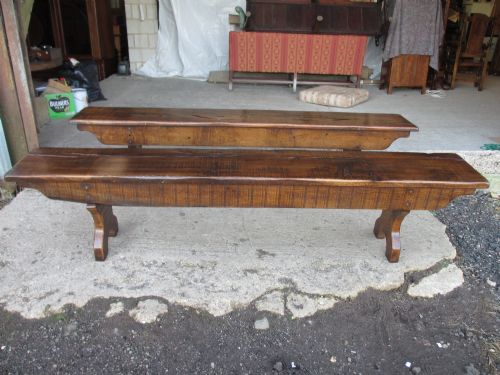
Buyers browsing this selection encounter robust oak dining benches, paired cherrywood benches, and elm seating originating from English and French traditions. Rustic country forms and Georgian country pieces dominate the selection available here.
Materials and construction methods
Carpenters shaped these benches using dense hardwoods and sturdy softwoods, selecting oak, cherrywood, elm, pine, and walnut for their structural resilience. Heavy oak construction provides the backbone for Edwardian and earlier formats.
Makers utilised shaped trestle ends to support long timber seats securely without relying on conventional leg placement. French provincial and rustic farmhouse makers favored cherry and elm to build balanced pairs of long benches.
Timber Trestle Seating Retail Price Guide 2026
Typical asking prices for timber trestle seating among the pieces listed under this phrase on Sellingantiques today, from the lower quarter to the upper quarter. They describe what is for sale here now, not the wider market.
Palace architecture occasionally donates a bench to the dining room, as provenanced pieces from York demonstrate.
Assessing quality and character
Quality rests upon the selection of timber and the integrity of the trestle joints supporting the seat. Dense, well-figured oak or mature cherrywood displays superior grain depth compared to utility softwood alternatives.
Historical provenance and regional vernacular design elevate certain examples well beyond standard utilitarian seating. Master craftsmanship shows in the balanced proportions of shaped trestle ends and the uncompromised stability of the frame.
The Timber Trestle Seating Glossary
- Trestle
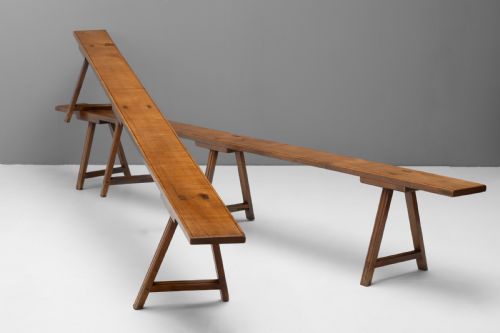
- A structural support consisting of a horizontal beam fixed to two splayed vertical legs. This method distributes weight evenly across the base of long dining benches.
- Vernacular
- Architecture and furniture built by local craftsmen using traditional regional methods and available materials. It reflects domestic utility rather than grand court styles.
- Provenance
- The documented history of ownership and origin of an antique piece. Institutional history adds significant documentary interest to domestic furniture.
Timber Trestle Seating: Frequently Asked Questions
What is timber trestle seating?
Timber trestle seating encompasses benches and hall chairs supported by end frames or trestles rather than conventional legs. These pieces range from eighteenth century oak forms to early twentieth century examples.
They serve primarily as long dining seating or hallway furniture, bringing straightforward utility and traditional craftsmanship into domestic spaces.
How are benches used in interiors?
These benches fit neatly alongside long dining tables to maximise seating capacity without cluttering a room. Their narrow profiles suit hallways and narrow passageways.
Pairs of benches provide visual symmetry when placed opposite each other or positioned along large open walls.
Which woods are most common?
Oak and elm appear frequently in English pieces, offering heavy, durable frames designed for sustained daily use. Cherrywood and walnut feature strongly in French provincial and Georgian items.
Softwood and pine also occur, generally representing more utilitarian country workshops.
How do I spot an older piece?
Older pieces display hand-cut joinery, pegged joints, and timber surfaces shaped by historical usage and natural wear. Eighteenth century examples show distinct patination on the seat boards.
Edwardian and later twentieth century seating often utilises heavier timbers with more uniform mechanical sawing marks.