


Timber Standard Lamp
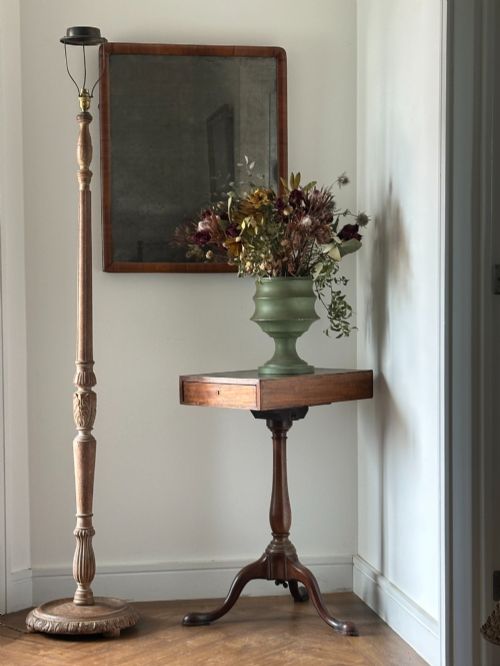
A timber standard lamp brings vertical illumination and presence to a room, drawing the eye upwards while anchoring a seating corner with architectural form.
Timber Standard Lamp
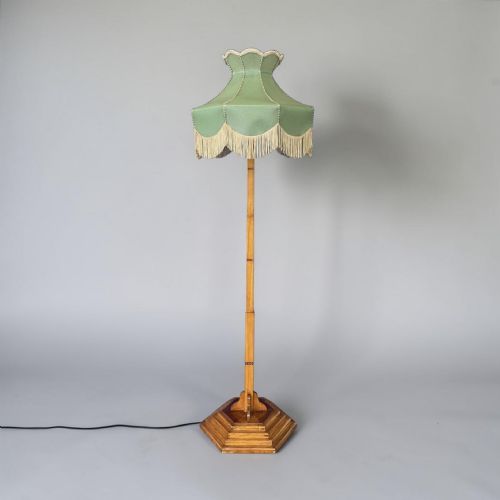
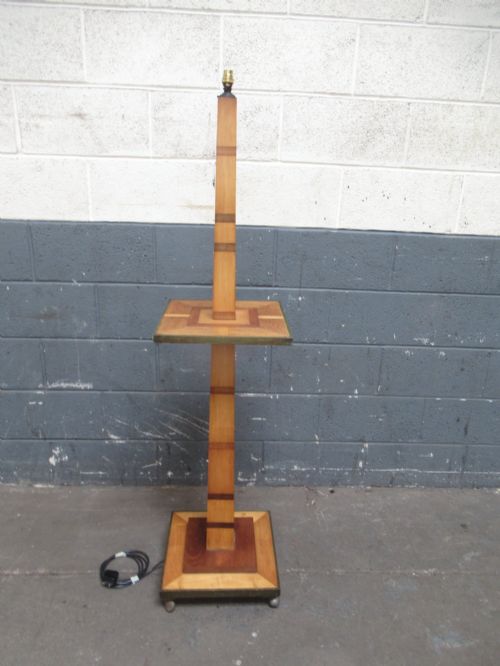
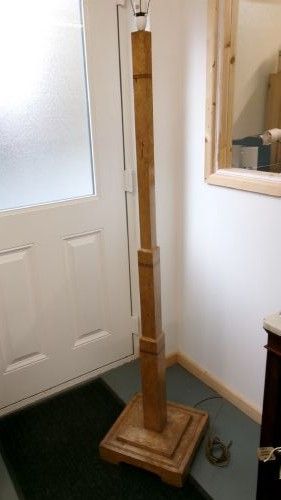
A timber standard lamp stands as a tall vertical lighting fixture designed to rest directly upon the floor. These pieces emerge across several decades, spanning from late Victorian examples through Edwardian interpretations and into the geometric lines of the Art Deco period.
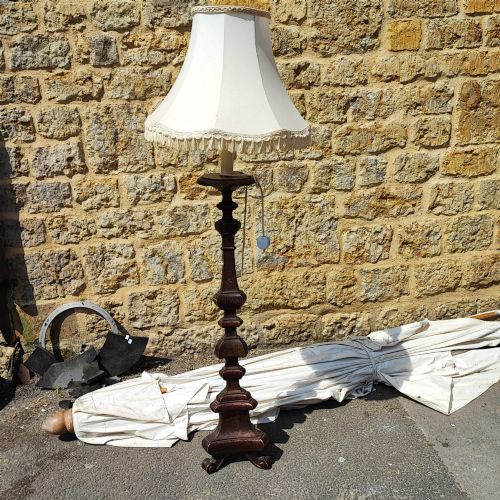
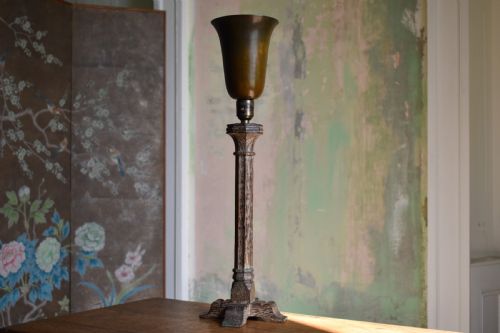
The assortment on this page includes variants executed in oak, walnut, beech, mahogany, and exotic timbers such as padauk. Forms range from simple turned columns to intricately carved standard lamps originating from regional traditions like Kashmiri craftsmanship.
Buyers encounter traditional turned wooden shafts alongside stepped Art Deco designs and Anglo-Indian or Edwardian Chinoiserie interpretations. Each piece reflects the interior lighting requirements and stylistic preferences of its specific decade.
Materials and construction methods
Makers utilised solid hardwoods, turning timber on lathes to create tapering or fluted columns that provide structural stability for a tall lighting standard. Carved elements demonstrate manual skill, utilising chisels to shape organic motifs or geometric patterns directly into the wood.
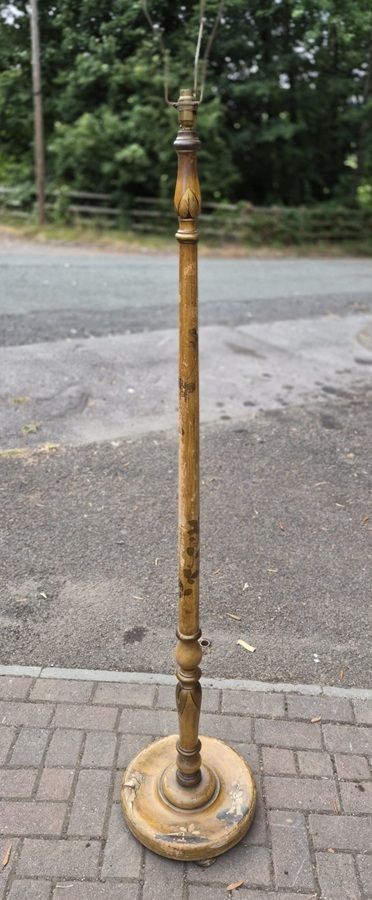
Surface treatments vary from polished finishes that highlight natural grain patterns to limed effects and painted or decorated surfaces. Brass fittings frequently integrate with the wooden structure, securing the bulb holder and wiring conduits.
Styles represented include Art Deco, Edwardian Chinoiserie, Arts and Crafts, and European Folk Art.
Distinguishing quality in construction
The distinction between standard examples and finer pieces lies in the selection of timber and the precision of the turning or carving. Superior standard lamps employ dense, stable hardwoods with well-figured grain, whereas lesser pieces utilise simpler softwood or basic turned components.
Proportion and stability dictate overall merit, with better examples featuring heavy, well-balanced bases that prevent tipping. The crispness of carved detail and the integrity of joints where the vertical shaft meets the base determine the lasting durability of the lamp.
Whytock and Reid
The Timber Standard Lamp Glossary
- Standard lamp
- A tall floor-standing lighting fixture designed to illuminate a room from a vertical position. These pieces support a fabric shade at height.
- Limed oak
- Timber treated with a white pigment rubbed into the open grain to create a pale, textured finish. This technique gained popularity during the interwar decades.
- Padauk
- A dense tropical hardwood displaying rich reddish-brown colouration. It appears in imported standard lamps valued for durability and deep hue.
- Art Deco
- A design style spanning the 1920s and 1930s characterised by clean geometric lines, stepped forms, and stylised motifs. Standard lamps from this era often feature contrasting light and dark woods.
- Turned wood
- Timber shaped on a rotating lathe using cutting tools to produce symmetrical cylindrical or baluster forms. This method creates the central shaft of many floor lamps.
Timber Standard Lamp: Frequently Asked Questions
How do I date a timber standard lamp?
Dating relies upon stylistic markers such as stepped bases and geometric veneers for 1930s pieces, or heavy turned mahogany and brass mounts for Victorian examples.
Construction details, including screw types and wiring channels, also offer clues to the manufacturing period.
Are these lamps safe for modern use?
Most antique floor lamps require rewiring to meet contemporary electrical standards. A qualified electrician can easily update the internal cord while preserving the original wooden stem.
It is advisable to check the stability of the base and the integrity of the bulb holder during any restoration.
What kind of shade suits a standard lamp?
Fabric shades work best, balancing the visual weight of the wooden column while diffusing light evenly across the room. Traditional empire or drum shapes complement the proportions of tall floor lamps.
Proportion is key; the shade diameter should match the visual heft of the wooden base.
How should I care for wooden lamp standards?
Maintain the timber by dusting regularly with a soft, dry cloth and applying occasional quality wax to nourish the grain. Avoid placing the lamp near direct heat sources or strong sunlight to prevent wood splitting.
Gentle upkeep preserves the original patina developed over decades of domestic use.