


Art Deco Floor Light
An art deco floor light brings distinct period form and upright illumination to a room, offering both practical light and sculptural presence.
Art Deco Floor Light
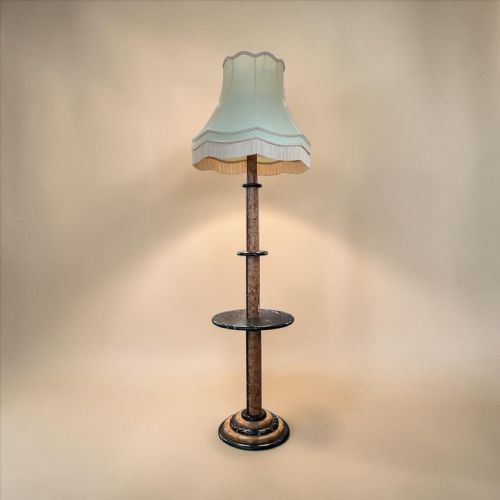
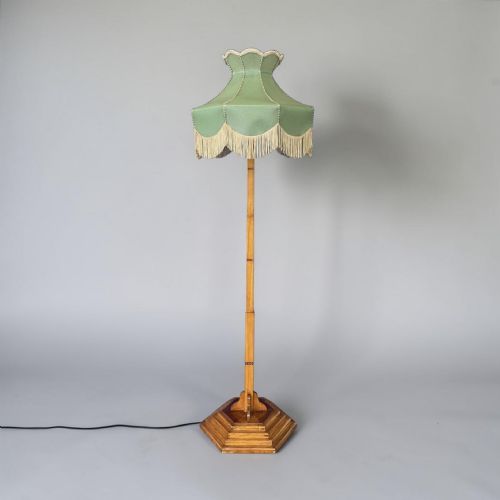
An art deco floor light takes the form of standard lamps, torcheres, and uplighters designed during the 1920s and 1930s. These pieces provide tall vertical presence in a room, often combining functional illumination with integrated tables or decorative bowls.
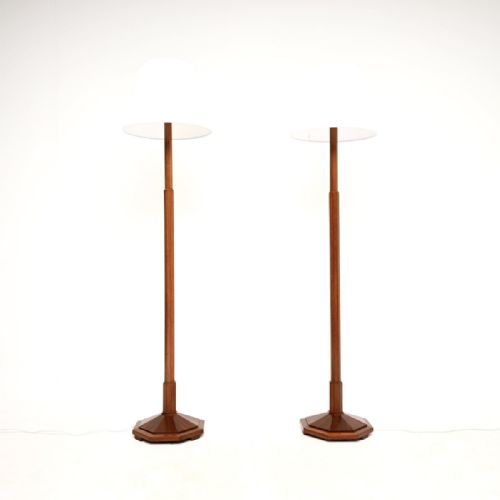
The standard lamps and torcheres seen here appear in both single examples and matched pairs. Makers from the period fashioned these upright lights to serve as focal points in a sitting room or hallway.
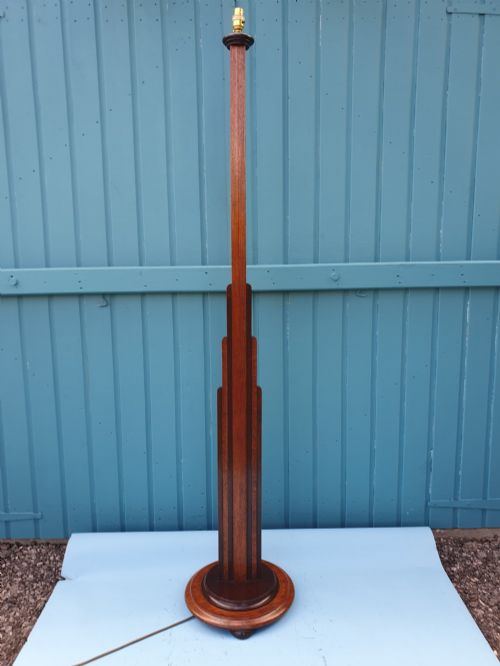
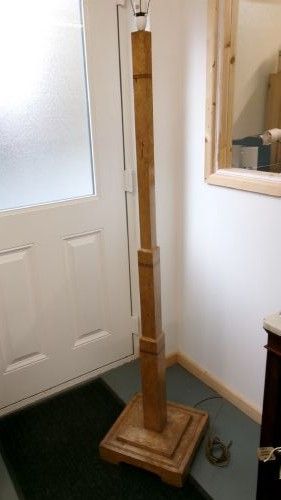
Buyers encounter designs ranging from simple stepped wooden columns to elaborate uplighter bowls in chrome and glass. The selection draws primarily from the 1920 and 1930 periods, showing clear stylistic links to Art Deco and Neoclassical Revival tastes.
How they were made
Workshops constructed these upright lights using a combination of hardwoods and metals. Cabinetmakers utilised oak, walnut, blond walnut, golden walnut, ebony, and giltwood for timber standards, whilst other pieces rely on solid marble, brass, and chrome.
Lighting elements incorporate fabric shades, glass bowls, and torchere vase formations. Makers integrated materials such as glass and silk-covered elements to diffuse the upward or downward projection of light.
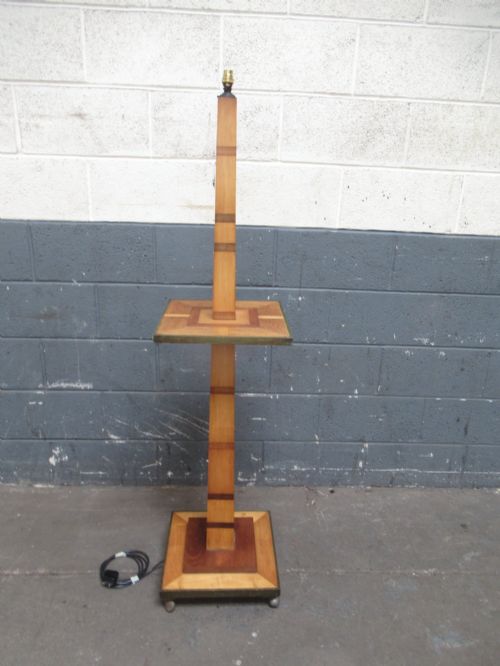
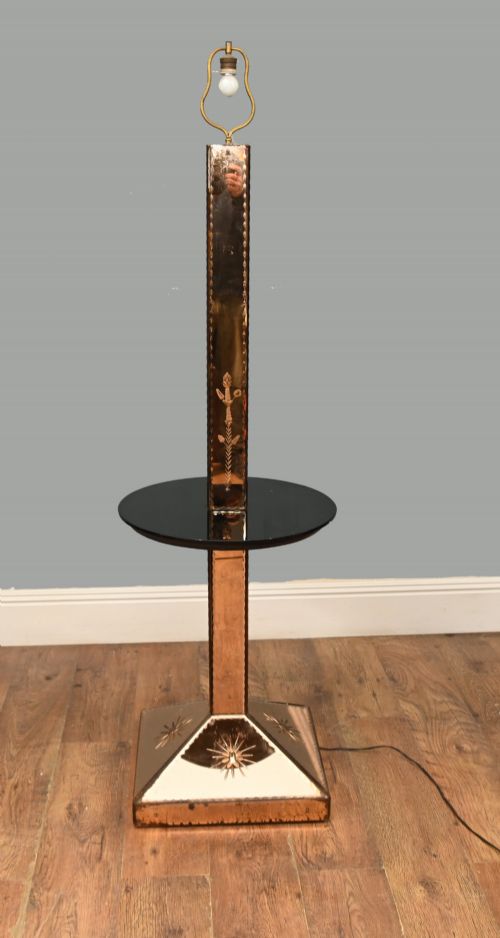
Some floor lights doubled as cocktail furniture, letting you pour a drink whilst standing beside your illuminated walnut column.
What varies in quality
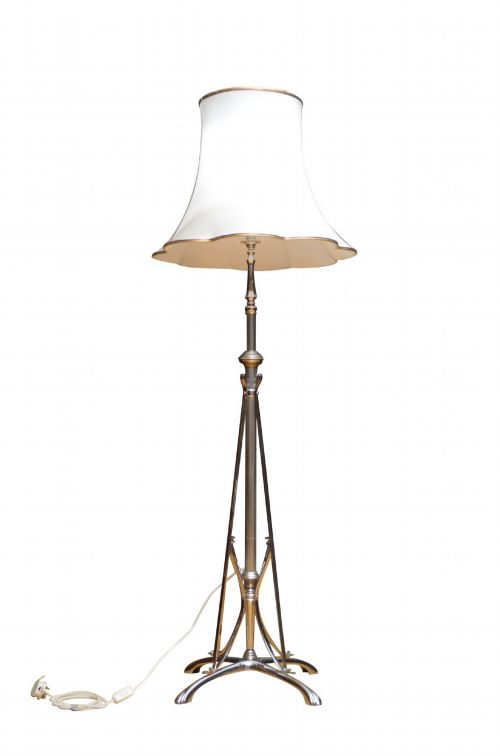
Quality in an art deco floor light rests on the selection and handling of materials. The finest pieces employ figured timbers like blond walnut and golden walnut, or combine chrome and glass with robust engineering such as adjustable mechanisms.
Design complexity also separates standard production from superior work. Examples featuring integrated cocktail tables, tiered skyscraper or Odeon styling, and matched pairs demonstrate higher ambition from makers during the 1920s and 1930s.
Harry and Lou Epstein
The Art Deco Floor Light Glossary
- Standard Lamp
- A tall floor-standing lamp designed to illuminate a room from a raised bulb position. These pieces typically support a fabric or glass shade.
- Uplighter
- A lighting fixture that casts its illumination primarily upward. These frequently utilise metal and glass configurations from the interwar period.
- Odeon Style
- A design aesthetic inspired by streamlined architecture and cinema buildings of the era. It relies on stepped vertical forms and geometric layering.
- Torchere Vase
- A specific form of standard lamp incorporating a vase-like decorative element along the upright shaft. This shape reflects classical influences adapted to modern interiors.
Art Deco Floor Light: Frequently Asked Questions
How do I place an art deco floor light in a room?
Position the upright lamp in a corner or beside seating where its height can anchor the furniture grouping. Models with integrated tables or uplighter bowls work well to provide ambient illumination without needing table space.
Ensure the cord reaches a socket safely and consider whether the upward light complements your existing overhead fixtures. The tall vertical lines of these pieces help draw the eye upward in rooms with high ceilings.
What is the difference between a standard lamp and a torchiere?
A standard lamp generally supports a shade that casts light both downwards and outwards into the room. This makes them suitable for reading or general task lighting alongside armchairs.
A torchiere specifically directs its light upwards toward the ceiling, creating an indirect glow. These often feature glass dishes or bowls at the summit of the metal or wooden shaft.
Did these lamps always come with shades?
Many period examples originally paired with fabric shades or specialised glass bowls. Some surviving pieces retain their silk-covered shades or glass cocktail table attachments.
When a shade is absent, collectors often source period-appropriate replacements that match the specific proportions of the timber or chrome standard.
How can I tell a 1920s light from a 1930s one?
Pieces from the 1920s often display early Art Deco geometry alongside traditional wood veneers like walnut and oak. Neoclassical revival elements also appear frequently in this decade.
By the 1930s, designs increasingly incorporated chrome, glass, and stepped Odeon or skyscraper motifs. Uplighters and adjustable metal standards became more prominent during this later period.