








Timber Framed Architectural Art
Timber framed architectural art captures historic cityscapes, buildings, and interiors through watercolours, oils, stained glass, and panels.
Timber Framed Architectural Art
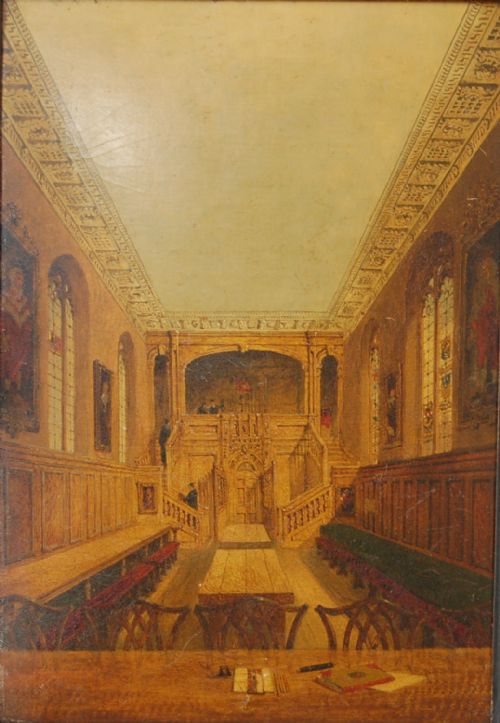
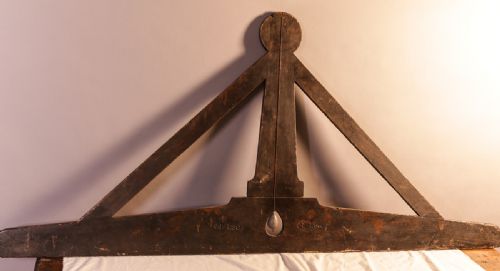
Timber framed architectural art encompasses works depicting historic structures, cityscapes, and buildings rendered across various mediums. When searching for timber framed architectural art, buyers encounter watercolours, oil paintings, stained glass windows, and marquetry panels.
The pieces span periods from the eighteenth century through the Edwardian era and the early twentieth century. Common subjects include British cathedrals, historic inns, townscapes, and architectural plans.
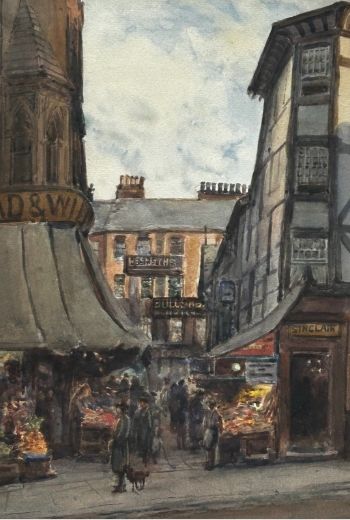
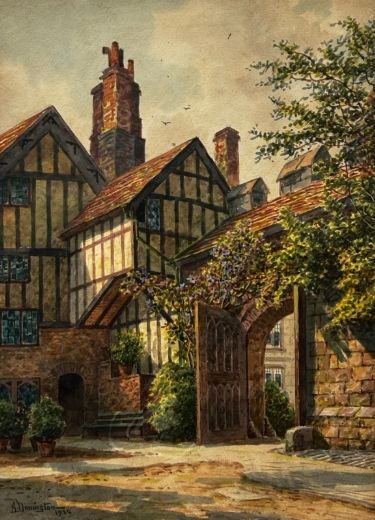
Watercolour paintings and architectural drawings dominate the selection, often signed by period artists and capturing specific British locations like Manchester, Winchester, and York.
Materials and construction
These works utilise traditional materials including wood, paper, canvas, and glass, combined with watercolours, oil paint, and lead. Stained glass windows incorporate lead work to hold coloured and clear glass sections together.
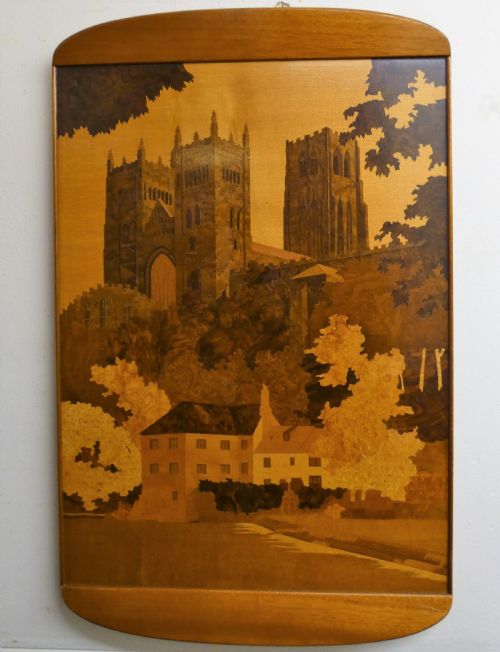
Paintings and drawings employ watercolour or oil on canvas and paper, while marquetry panels utilise wood inlay techniques to build pictorial scenes. Industrial lithographs and engravings on paper represent the printed architectural plans and townscapes.
Timber Framed Architectural Art Retail Price Guide 2026
Typical asking prices for timber framed architectural art among the pieces listed under this phrase on Sellingantiques today, from the lower quarter to the upper quarter. They describe what is for sale here now, not the wider market.
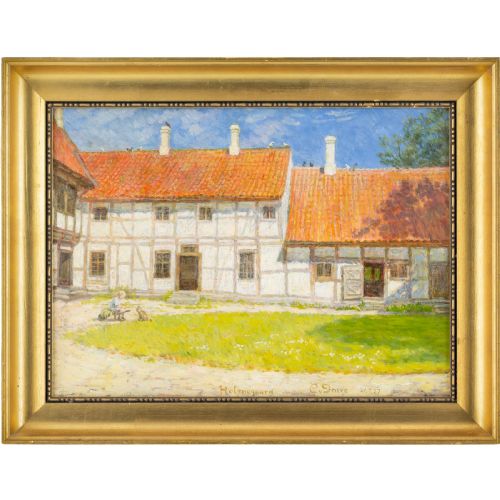
Listings feature works spanning the eighteenth, nineteenth, and early twentieth centuries, executed in watercolours, oils, stained glass, and wood marquetry.
Assessing quality
The condition of the original framing, the preservation of paper or canvas, and the integrity of lead cording in stained glass windows influence the overall character of each piece.
Francis Browne Tighe·Albert Dunington·Caroline Van Deurs·Tom Dudley·Annie L. Lee·Fred Lawson·Frank Moss Bennett·J. Mitan·Joseph Murray Ince
The Timber Framed Architectural Art Glossary
- Watercolour painting
- A work executed with water-soluble pigments on paper, frequently used here for detailed architectural townscapes and street scenes.
- Stained glass
- Coloured or painted glass panels held together by lead strips, often created as pairs for architectural placement.
- Marquetry
- The art of applying pieces of veneer to a structure to form decorative patterns and pictorial wall panels.
- Lithograph
- A print made from a planographic process, seen in industrial architectural plans from the Victorian period.
- Overdoor painted panel
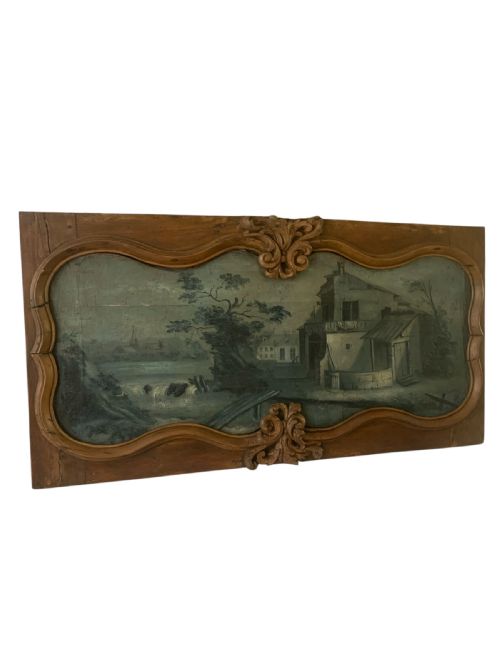
- A decorative artwork designed to be mounted above a doorway, typically originating from the eighteenth century.
Timber Framed Architectural Art: Frequently Asked Questions
What periods do these pieces date from?
The selections span from the eighteenth century up through the Edwardian era and the early twentieth century. Pieces include eighteenth-century overdoor panels, Regency engravings, and works from the 1920s and 1930s.
Buyers will also find Victorian industrial lithographs and stained glass windows dating around nineteen ten, reflecting changing architectural tastes over centuries.
What materials are commonly used?
Artworks incorporate wood, paper, glass, canvas, lead, oil paint, and watercolours. Framed watercolours and oil paintings on canvas form a large part of the selection.
Other examples utilise stained glass with lead came, wood marquetry panels, and paper lithographs or engravings depicting architectural subjects.
How were stained glass windows used?
Stained glass windows served as decorative architectural elements within buildings, often filtering light through coloured glass panes. Pairs of windows from the Edwardian period indicate they were fitted into domestic or institutional properties.
They function today as wall art or decorative window pieces that showcase period craftsmanship and leadwork.
How do I display architectural paintings?
Watercolours and drawings on paper require placement out of direct sunlight to protect the pigments from fading over time. Oil paintings on canvas and wood panels suit standard wall mounting in interior spaces.
Stained glass windows look best hung where natural light can pass through the glass to highlight the colours and lead lines.