

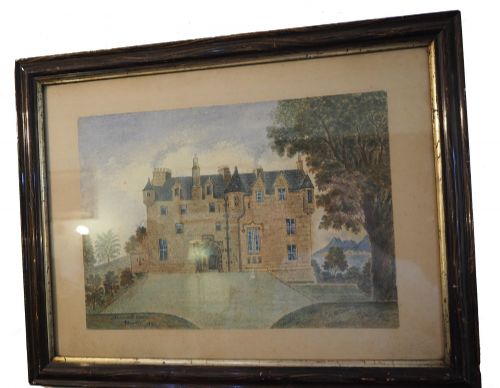


Brown Architectural Watercolour
Brown architectural watercolour works capture historic streetscapes, grand interiors and ancient masonry through tonal wash and precise ink line.
Brown Architectural Watercolour
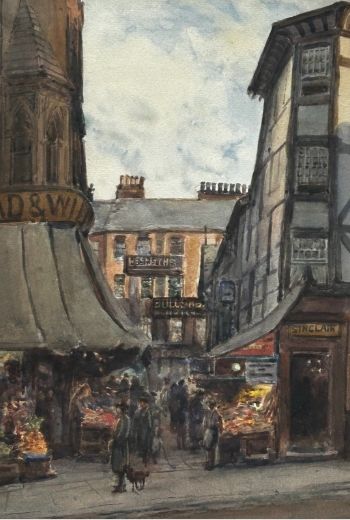
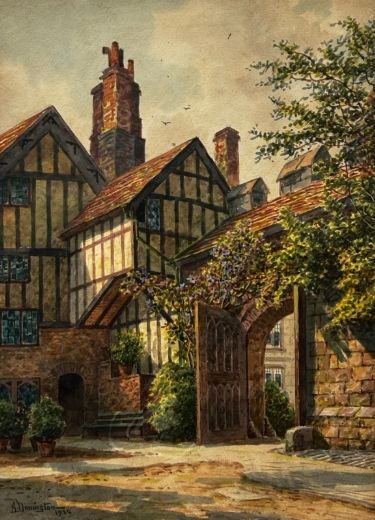
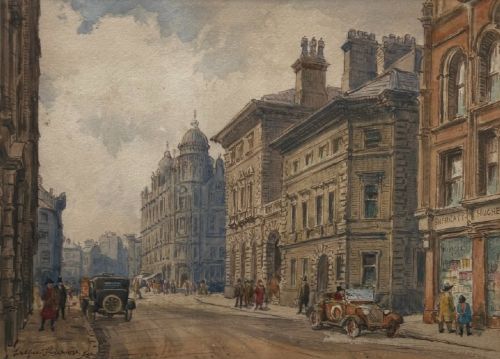
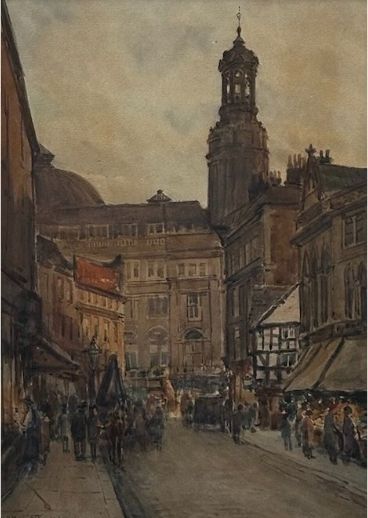
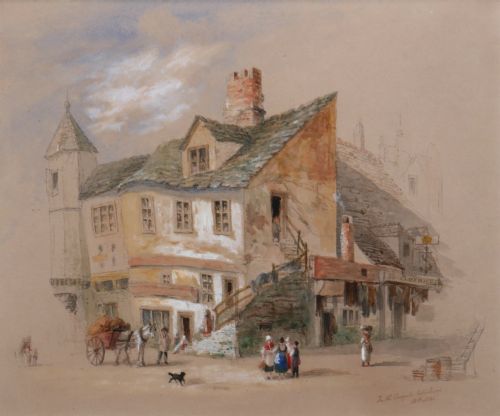
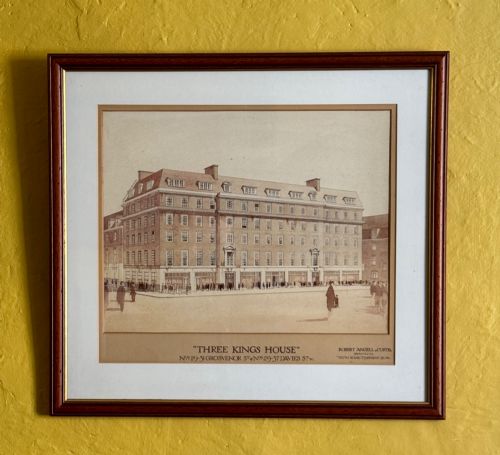
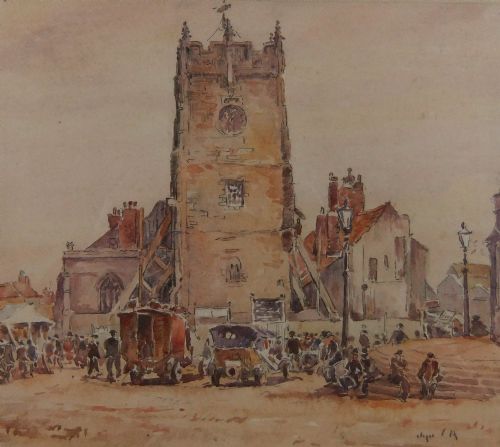
A brown architectural watercolour centres on historic cityscapes, castles, cathedrals and interior rooms recorded across the nineteenth and twentieth centuries. Buyers encounter framed artworks depicting British and continental street scenes, townscapes and grand country houses.
The selection ranges from Victorian topographical studies and Edwardian drawings to early twentieth-century British works. Pieces frequently focus on identifiable locations such as York, Manchester, Winchester and London landmarks.
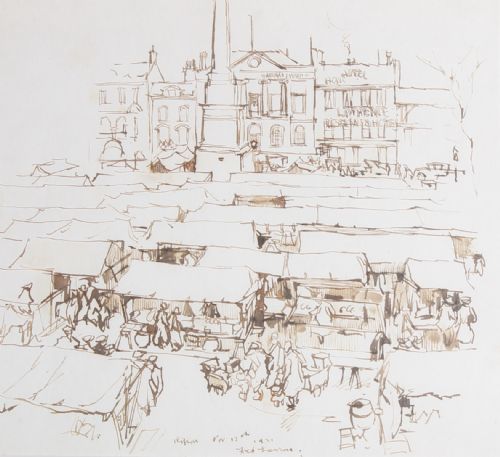
Works on paper appear alongside ink drawings and framed watercolours utilising sepia and earth-toned pigments. Many bear signatures and dates from artists documenting architectural heritage.
Materials and technique
Artists executed these works on paper using watercolour pigment and ink applied with fine brushes and pens. The dominance of brown tones relies on monochrome or limited earth palettes to define perspective and shadow.
Support materials include paper housed behind glass within wooden frames, sometimes accompanied by gilt wood mouldings. Pigments were brushed over preliminary ink outlines to establish stone facades, rooflines and interior masonry.
Brown Architectural Watercolour Retail Price Guide 2026
Typical asking prices for brown architectural watercolour among the pieces listed under this phrase on Sellingantiques today, from the lower quarter to the upper quarter. They describe what is for sale here now, not the wider market.
Engineers dismantling railway station roofs shared drawing space with delicate depictions of stately drawing rooms.
Judging the work
Quality rests upon the surety of the draughtsmanship and the control of tone across the architectural elements. Stronger examples display confident ink lines and subtle washes that articulate depth in stone, brick and interior panelling.
The precision in rendering perspective and historical detail distinguishes accomplished topographical recording from routine sketches. Condition of the paper and the retention of pigment depth also influence the visual impact.
Francis Browne Tighe·Albert Dunington·Wilfried Rene Wood·Fred Lawson·Thomas Fenwick·Sir Thomas Newenham Dean·Louie Stanley Maurice Prince·Tom Dudley·Maurice Asselin·Henry J Neave·Margaret Thompson·John Thurtle
The Brown Architectural Watercolour Glossary
- Topographical art
- Artworks that accurately depict specific real-world locations, buildings and landscapes. These pieces serve as visual records of historic towns and architecture.
- Wash
- A thin, fluid layer of watercolour pigment spread across paper to create smooth backgrounds or shadow. It provides translucent coverage without heavy texture.
- Gilt wood
- Wood frames coated with a thin layer of gold leaf or gold-coloured finish. This framing method appears frequently on antique and vintage works on paper.
- Ink and watercolour
- A mixed technique combining precise pen lines with fluid pigment washes. The ink establishes sharp architectural outlines while the watercolour adds tone.
Brown Architectural Watercolour: Frequently Asked Questions
What periods do these watercolours cover?
The pieces span from the late eighteenth century through the Victorian and Edwardian eras into the mid-twentieth century. Most examples date from the nineteenth century and the early decades of the twentieth century.
Artists during these periods recorded evolving urban environments, railway stations, ancient abbeys and stately home interiors using traditional paper and pigment methods.
How should I frame and hang them?
Works on paper require protection from direct sunlight to prevent fading of the watercolour pigments and yellowing of the paper support. Framing behind glass with acid-free mounts ensures proper preservation.
Display them on interior walls away from damp spaces and direct heat sources to maintain the stability of the antique paper and wooden frames.
How can I identify the location depicted?
Many pieces include contemporary inscriptions, signatures or titles written on the front or reverse of the paper specifying streets, buildings and towns. Signatures allow researchers to trace artists exhibiting during the Victorian and twentieth-century periods.
Landmarks such as cathedrals, castle towers and named historic houses provide clear geographical references within British and European cities.
What is the difference between ink and wash?
Ink drawings rely primarily on pen lines applied with black or brown ink to define outlines, masonry joints and architectural details. Watercolour adds tonal depth and shadow through translucent washes of pigment.
Artists frequently combined both techniques on paper to build sharp perspective alongside soft atmospheric shading.