



Tilting Dressing Mirror
A tilting dressing mirror offers adjustable reflection and period character, bringing practical elegance to a bedroom or dressing room.
Tilting Dressing Mirror
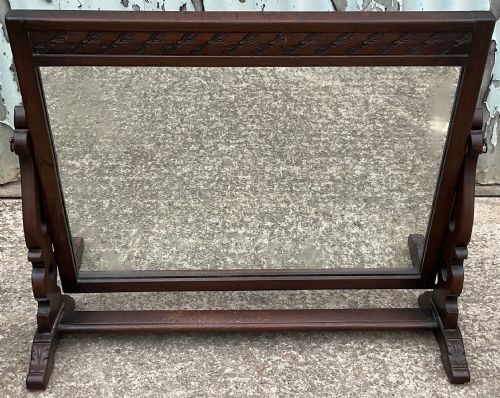
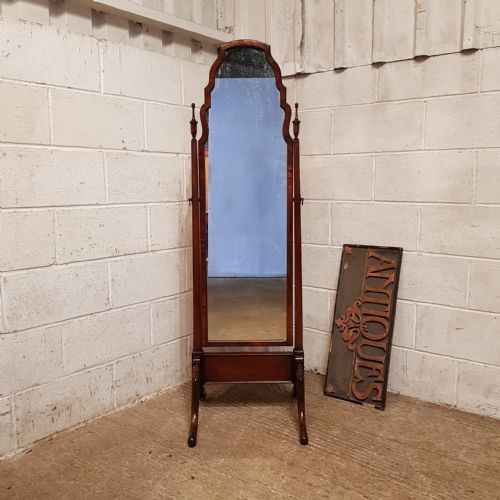
A tilting dressing mirror is a piece of furniture designed for personal grooming, allowing the user to adjust the angle of the glass. When searching for a tilting dressing mirror, you encounter full-length cheval mirrors alongside smaller tabletop and toilet mirrors made to sit on chests or dressing tables.
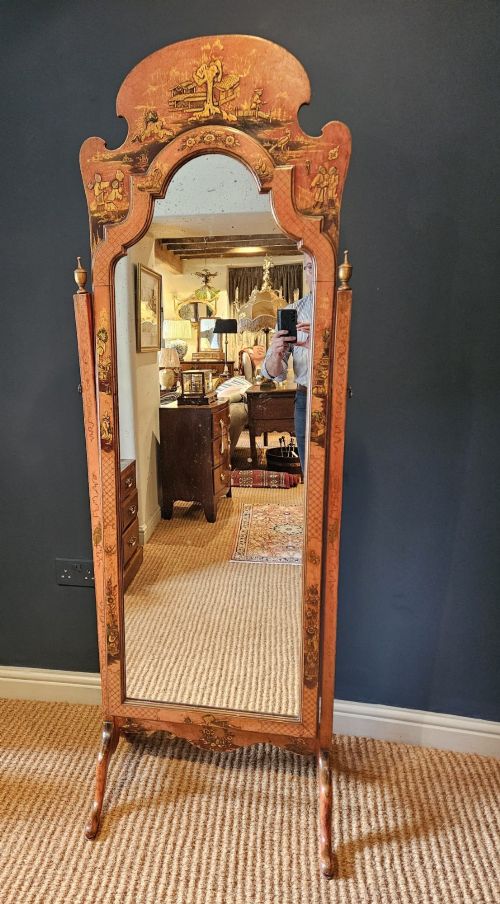
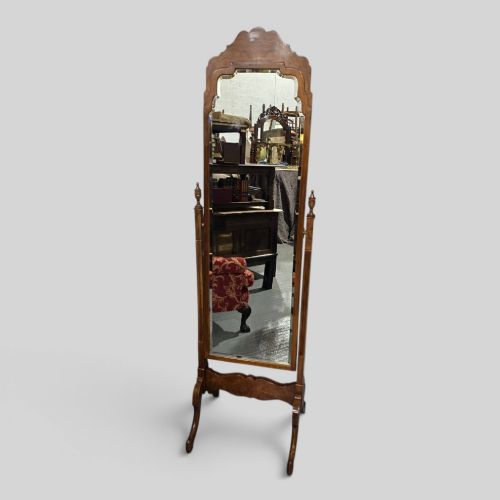
The pieces appearing most frequently on this page date from the nineteenth and twentieth centuries, spanning Victorian, Edwardian, and Regency periods. Mahogany remains the dominant timber, though walnut, burr walnut, and oak also appear among the listings.
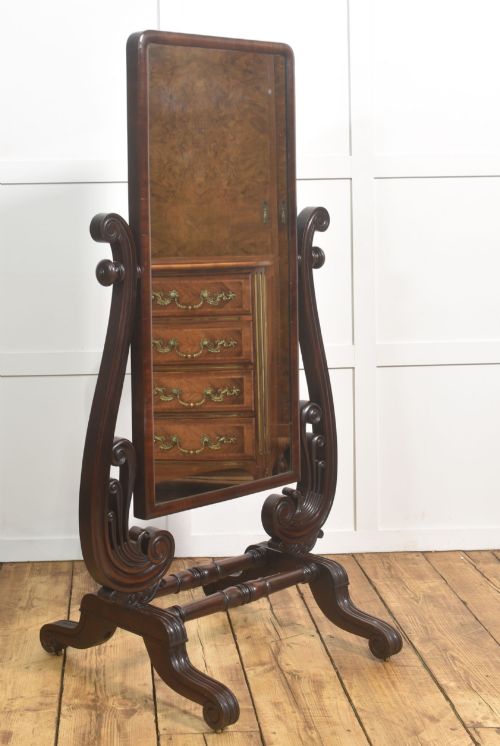
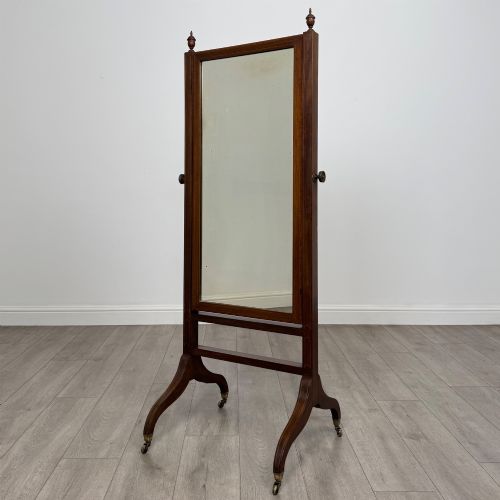
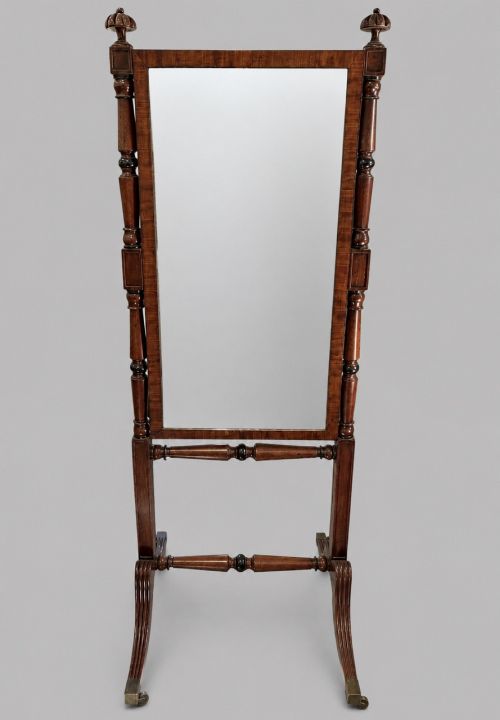
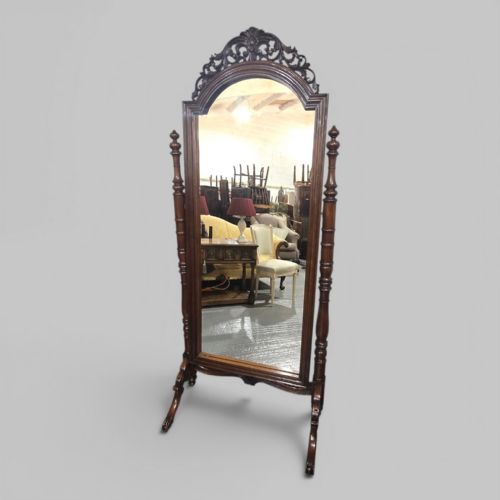
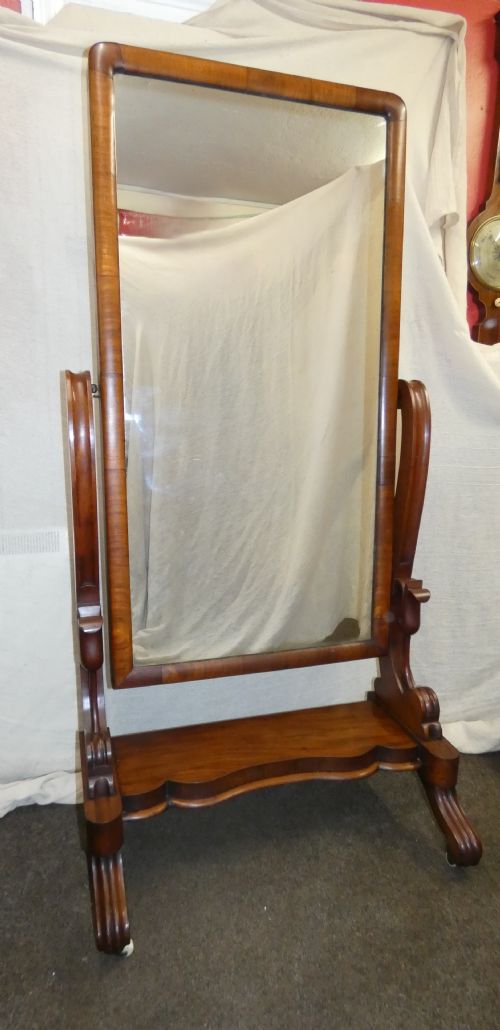
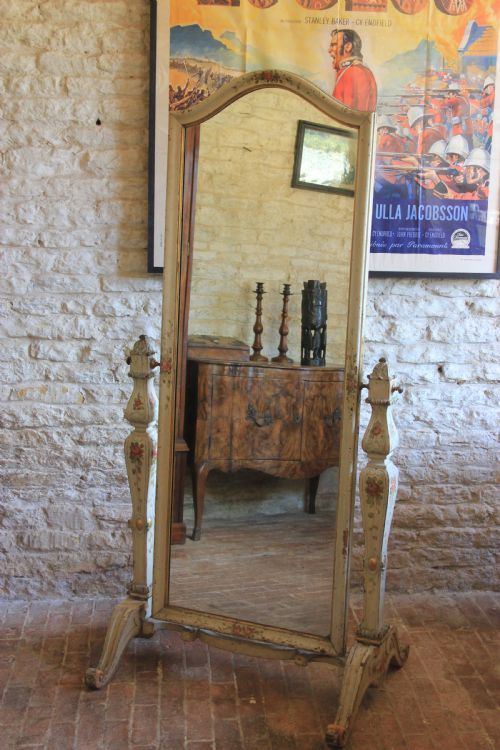
Formats range from simple swing frames mounted on box bases to large cheval mirrors on supportive legs with brass fittings. Some examples incorporate clever pivoting mechanisms and storage drawers within the base construction.
How they were made
Makers constructed these frames predominantly from solid hardwoods and veneered timbers such as mahogany, walnut, and oak, often selecting figured grains for visual depth. Brass feature heavily in the hardware, including pivoted side screws, sabots, and castors.
The mirror glass itself is held within adjustable frames that tilt via side pins or axis pivots supported by upright standards. Joinery methods relied on traditional cabinet-making techniques, ensuring the freestanding frames remained rigid despite the weight of the pivoting glass.
One exceptional piece carries the history of once belonging to a military general.
What varies in quality
Quality in a tilting dressing mirror reveals itself through the choice of timber and the precision of the pivoting mechanism. Finer pieces display carefully matched wood veneers, substantial brass mounts, and stable frames that hold their tilt without slipping.
Construction details such as dovetailed drawers in the base and well-balanced proportions distinguish superior examples from standard utility pieces. The clarity of the mirror plate and the weight of the supporting uprights further set the better examples apart.
Waring and Gillow
The Tilting Dressing Mirror Glossary
- Cheval mirror
- A full-length framed mirror supported by a freestanding frame with four legs. This form allows the entire glass to swing freely on side pivots.
- Toilet mirror
- A smaller dressing mirror designed to stand upon a table, chest, or dressing bureau. These often incorporate a box base fitted with small drawers.
- Sabot
- A metal sleeve or shoe fitted to the foot of a furniture leg. They frequently appear in cast brass on Regency and nineteenth-century cheval frames.
- Flame mahogany
- A veneer cut from timber where the branch meets the trunk, producing a distinctive flickering flame pattern. Cabinet-makers prized this for visible front surfaces.
Tilting Dressing Mirror: Frequently Asked Questions
Where should I place a cheval mirror?
A full-length cheval mirror requires adequate floor space and good ambient light to function effectively as a dressing aid. Placing it near a window helps maximise the reflection of natural light into the room.
Freestanding models need a stable surface to stand level on floorboards or carpet without rocking on their castors.
How do the tilting mechanisms work?
Most tilting mirrors operate using threaded metal screw pins set into the upright supports that grip the sides of the mirror frame. Tightening these pivots allows the glass to remain fixed at your chosen angle.
Older examples rely on balanced friction pivots or weighted elements to hold the glass in place without slipping.
What is the difference between a cheval and a toilet mirror?
A cheval mirror is a tall, freestanding piece designed to reflect the whole figure from head to toe. They stand directly on the floor on their own legs or frame.
By contrast, a toilet mirror is a smaller version built to sit on top of a dressing table, chest of drawers, or washstand.
How do I date a mahogany dressing mirror?
Dating relies on observing the timber choice, joinery style, and hardware details like brass castors or turning shapes. Regency and Georgian examples tend to feature finer proportions and sabre legs, while Victorian pieces often display heavier proportions.
Looking at the construction of the base drawers and the fixings provides further clues to the manufacturing period.