
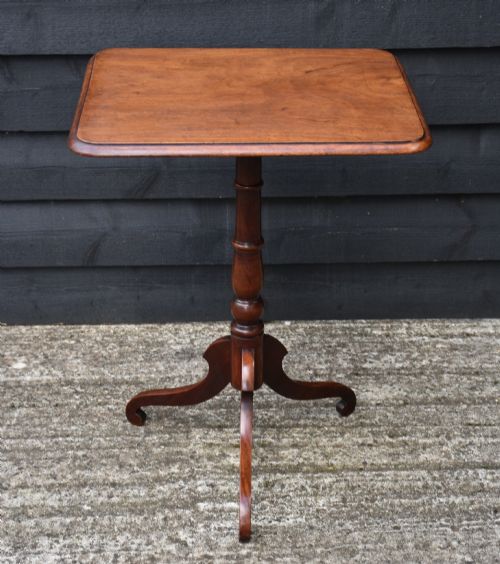
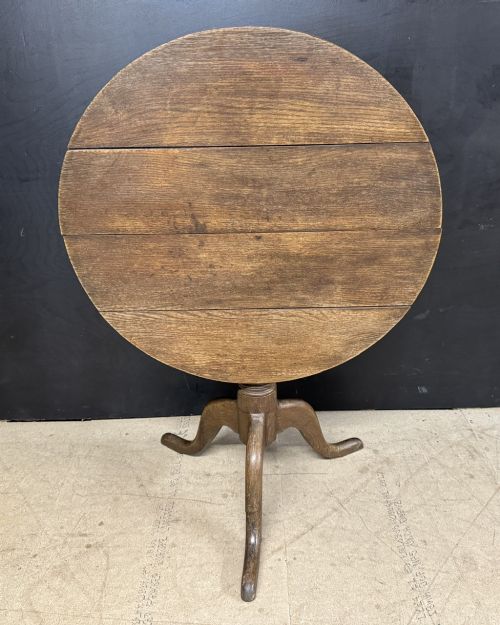
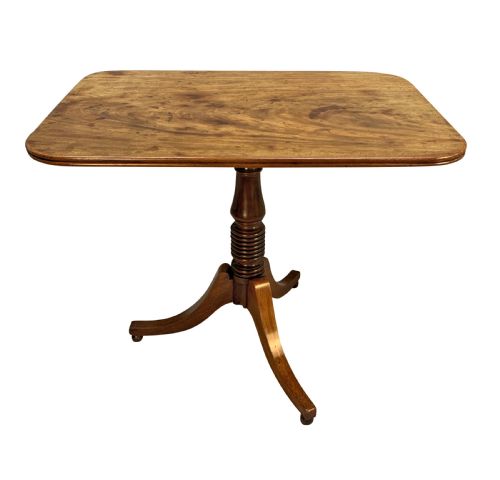
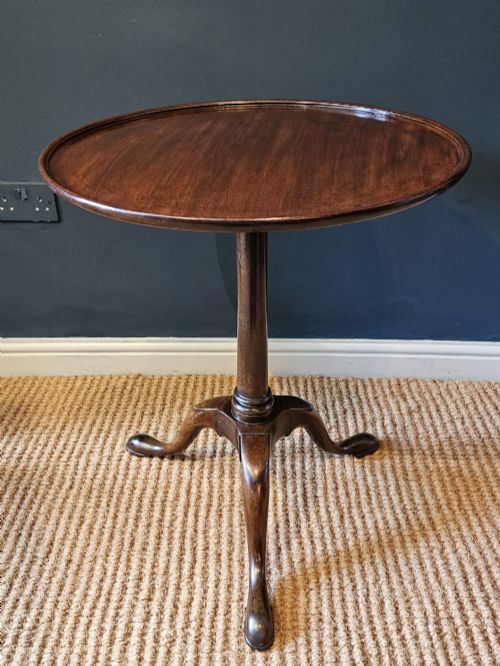


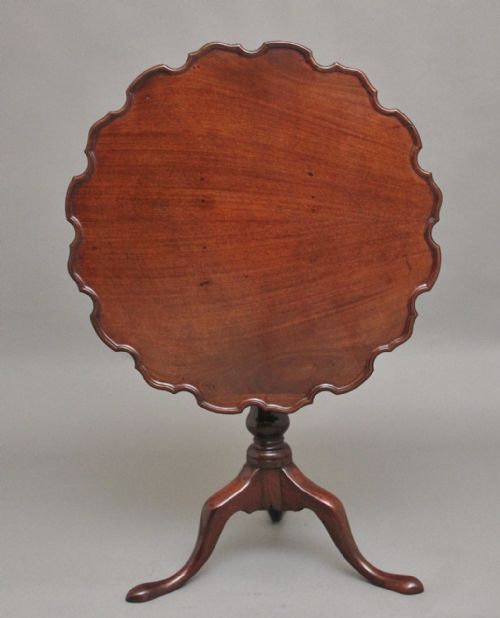
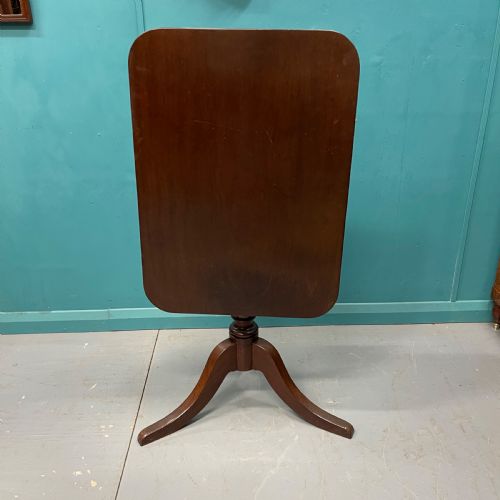

Tilt Action Side Table
These tilt action side table examples combine pivoting surfaces with tripod bases for adaptable domestic use.
Tilt Action Side Table
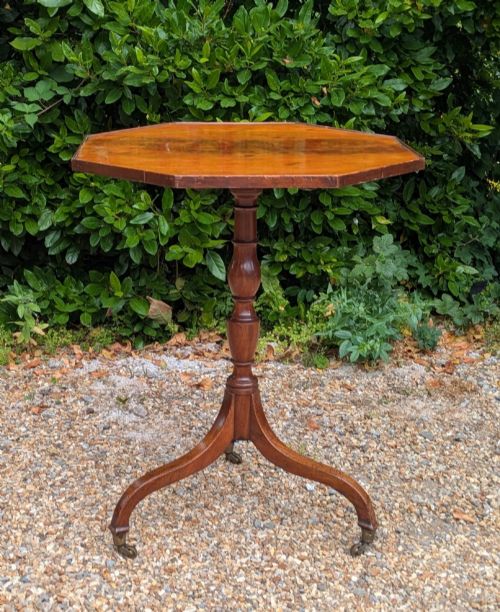
A tilt action side table serves as a flexible surface designed to pivot upright when not in use, saving valuable floor space in traditional rooms. You will frequently encounter Georgian and 19th Century examples configured as occasional tables, wine tables, and tea tables.
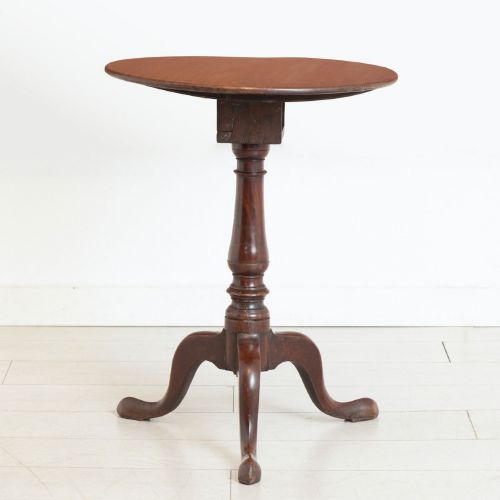
The primary forms appearing here span from Early Georgian and George II periods through Regency and Victorian eras. These tripod tables feature circular tops supported by central pillars atop three spreading legs.
Materials and construction methods
Cabinetmakers constructed these tables predominantly using solid mahogany, red walnut, burr walnut veneer, and occasional oak for country pieces. Timber selection dictated the weight and grain movement of the circular top.
Sophisticated mechanisms incorporated birdcage frameworks and snap-top catches in brass and wood to secure the pivoting top onto the central column. Tripod bases required precise joinery to ensure stable support without rocking.
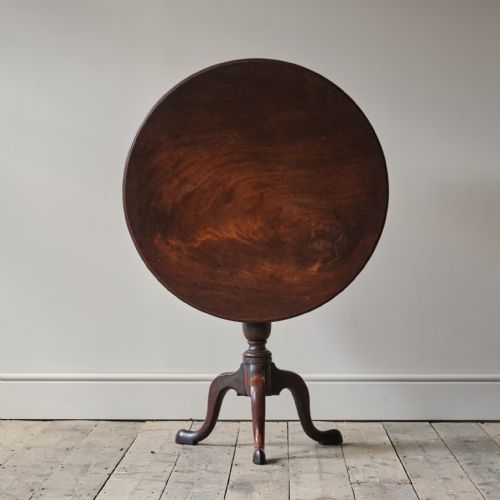
Some tabletops are carved from a single wide mahogany board, sparing the tree a visible join line.
Assessing quality and craftsmanship
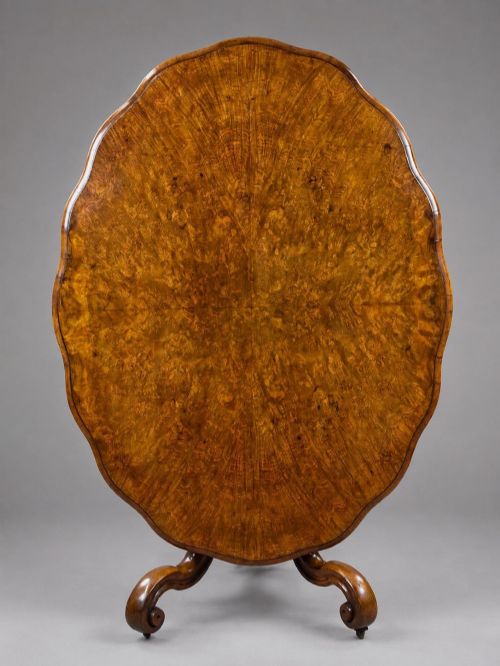
Quality reveals itself in the timber selection for the top, such as single-piece mahogany boards or finely figured burr walnut veneer. Superior examples display crisp carving on the tripod legs and neat turning on the central pillar.
The sophistication of the pivoting mechanism marks the tier of a piece, with complex birdcage assemblies and well-fitted snap-top catches demonstrating advanced cabinetmaking. Edge treatments, from plain mouldings to carved pie crust profiles, further distinguish workshop standards.
The Tilt Action Side Table Glossary
- Tilt-top table
- A small table featuring a hinged mechanism that allows the surface to fold vertical. This clever design lets the furniture stand flush against a wall when not in use.
- Birdcage
- A revolving wooden framework beneath the table top that permits both rotation and tilting. It connects the surface to the central pillar via small vertical spindles.
- Snap top
- A spring-loaded catch mechanism holding the table surface firmly horizontal in use. It prevents the top from tipping accidentally while objects rest upon it.
- Tripod base
- A support structure consisting of three curved legs radiating from a central pedestal. This configuration ensures stability on uneven older floors.
- Pie crust edge
- A raised, decorative rim carved along the perimeter of the circular table top. The undulating profile resembles the crust of a traditional pastry.
Tilt Action Side Table: Frequently Asked Questions
What is a tilt action side table?
A tilt action side table is a compact pedestal table with a hinged top that folds down into a vertical position. This mechanism allows the furniture to tuck away neatly against a wall when unoccupied.
Craftsmen designed these pieces for flexibility in historic drawing rooms and parlours where space was at a premium.
How do you use a tilt top table?
These tables function as convenient surfaces for serving tea, holding books, or displaying decorative objects during the evening. When the room needs to be cleared for other activities, the top tilts upward to rest flat.
They sit easily beside armchairs or in corners, moving around the home with minimal effort.
What is a birdcage mechanism?
A birdcage is a rotating wooden box frame situated directly beneath the table top. It permits the surface to spin horizontally as well as pivot vertically.
This sophisticated addition represents a mark of finer construction found on many Georgian examples.
How do I date an antique tilt table?
Dating relies on examining the timber species, leg profiles, and the complexity of the under-tier mechanisms. Early Georgian pieces often show simpler dish tops and robust tripod proportions.
Victorian iterations frequently introduce richer veneers like burr walnut and more ornate edge carvings.