




Tile Top Side Table
These tile top side table examples bring robust oak construction and glazed ceramic surfaces together for practical daily use in any room.
Tile Top Side Table
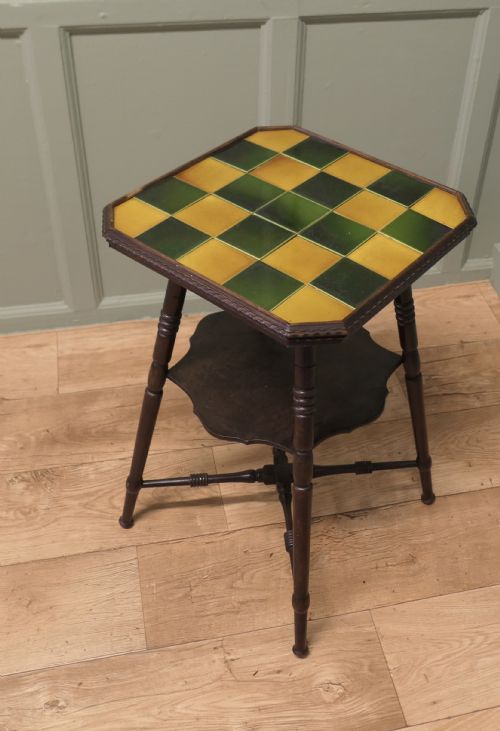
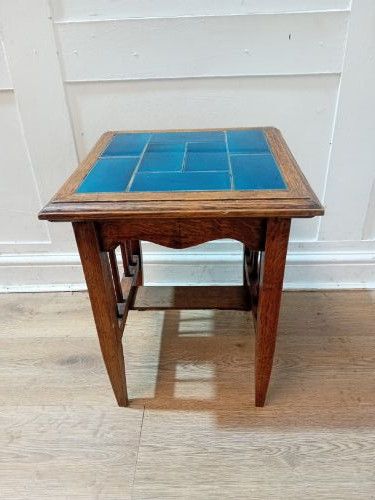
When you search for a tile top side table, you are looking at sturdy occasional furniture designed to hold objects safely on a heat-resistant ceramic surface. These practical tables appear frequently in Arts and Crafts and Edwardian iterations, often rendered in solid oak.
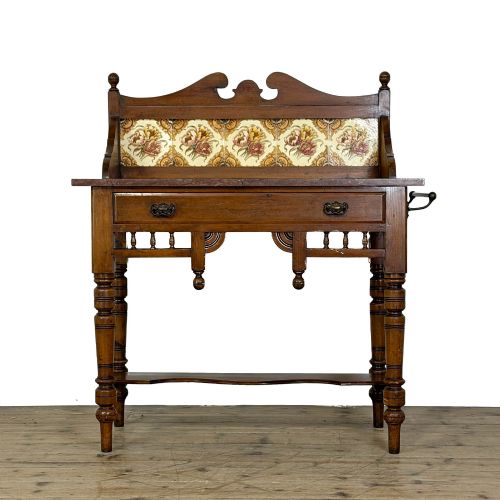
The forms on this page include occasional tables, lamp tables, bedside cabinets, and plant stands, alongside related washstands featuring ceramic or marble tops. Most examples rely on heavy timber frames to support the weight of inset decorative tiles.
How they were made
Cabinetmakers constructed the main framework using durable hardwoods like oak and mahogany, occasionally utilising painted pine or ebonised timber. These frames were joined securely to bear the considerable weight of inset ceramic tiles or marble slabs.
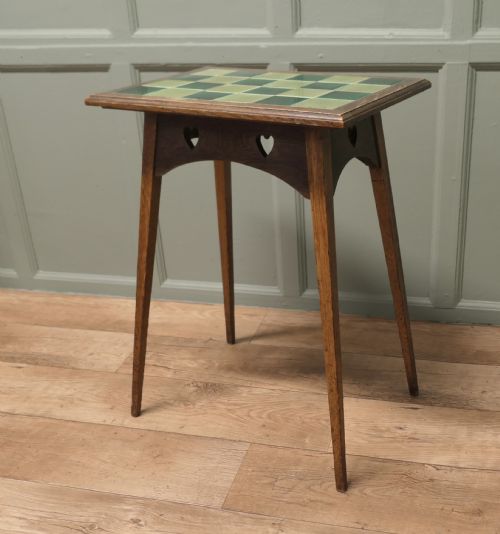
The decorative surfaces combine fired ceramic tiles, sometimes featuring art nouveau motifs or heart carvings, set flush into the wooden top. Brass and glass elements occasionally appear alongside the primary wood and ceramic construction.
Tile Top Side Table Retail Price Guide 2026
Typical asking prices for tile top side table among the pieces listed under this phrase on Sellingantiques today, from the lower quarter to the upper quarter. They describe what is for sale here now, not the wider market.
Some tables feature heart-carved woodwork, adding a touch of romance to practical furniture.
What varies in quality
Quality rests in the harmony between the timber framing and the artistic merit of the inset tiles. Finer examples display hand-carved details or distinctive stylistic flourishes associated with notable workshops rather than plain utility.
The integrity of the wooden structure and the condition of the glazed ceramic surface dictate the standing of a piece. Robust joinery and well-fired tiles with intact glazes separate standard production items from superior workshop output.
Liberty London·Shapland and Petter·Baillie Scott
The Tile Top Side Table Glossary
- Arts and Crafts
- A design movement prioritising traditional craftsmanship and simple forms. It strongly influences many pieces found in this category.
- Edwardian
- Pertaining to the reign of King Edward VII, spanning the early twentieth century. Furniture from this period often retains lighter proportions.
- Occasional table
- A small, movable table designed for specific, intermittent use within a room. These form a large part of the available selection.
- Washstand
- A piece of bedroom furniture holding a basin, often adapted or built with a marble or tile top. Several examples share characteristics with standard side tables.
Tile Top Side Table: Frequently Asked Questions
What is a tile top side table?
A tile top side table is a small occasional table featuring an inset of ceramic tiles within a wooden frame. This design provided a durable, heat-resistant surface for lamps and drinks.
These pieces emerged strongly during the late nineteenth and early twentieth centuries, driven by Arts and Crafts ideals. They combine utility with decorative ceramic art.
How do I clean the tiles?
Cleaning glazed ceramic tiles requires only a damp cloth and mild soap to preserve the original surface. Avoid harsh abrasives that might scratch the glaze or damage the surrounding wood.
Care should be taken around the grout lines and the wooden frame. Keeping moisture away from the timber joints ensures the longevity of the table.
Are these tables waterproof?
The ceramic tile surface resists moisture effectively, making it suitable for cups and plants. However, the wooden frames and older grout can be sensitive to standing water.
Spills should be wiped promptly from both the tiles and the wood. This prevents moisture from seeping into the surrounding frame.
How do I date a table?
Dating relies on stylistic clues such as Arts and Crafts or Art Nouveau motifs, alongside construction methods. Oak frames and specific tile designs often point toward the late nineteenth or early twentieth century.
Comparing the hardware, timber thickness, and overall form helps narrow down the period. Many pieces reflect the aesthetic preferences of the Edwardian era.