
Tiered Walnut Side Table
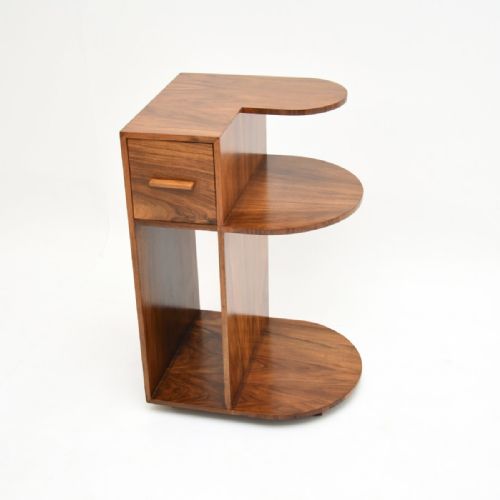
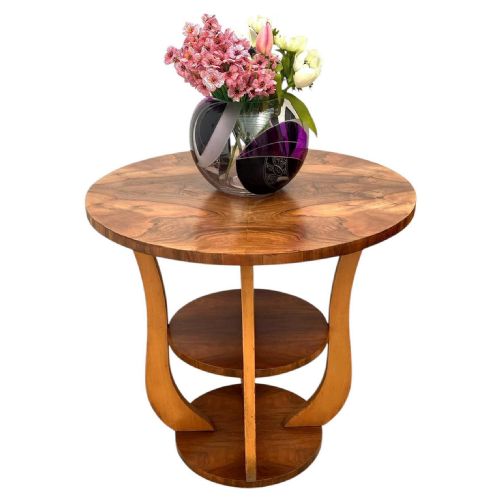
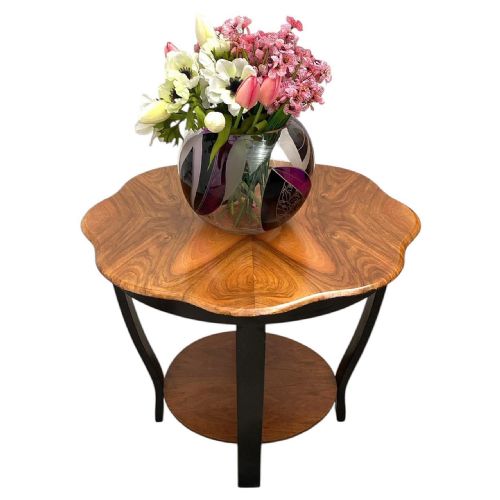
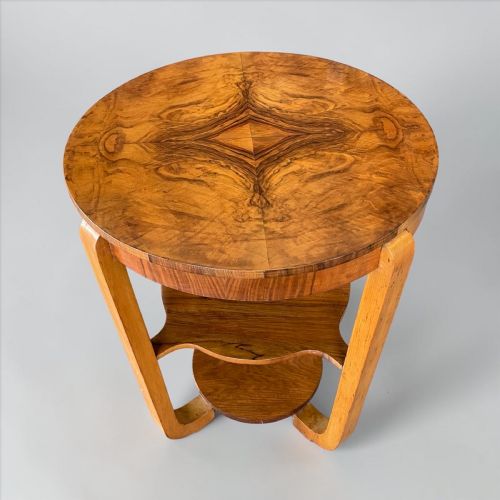
A tiered walnut side table brings multi-level display space and rich timber grain to a room.
Tiered Walnut Side Table
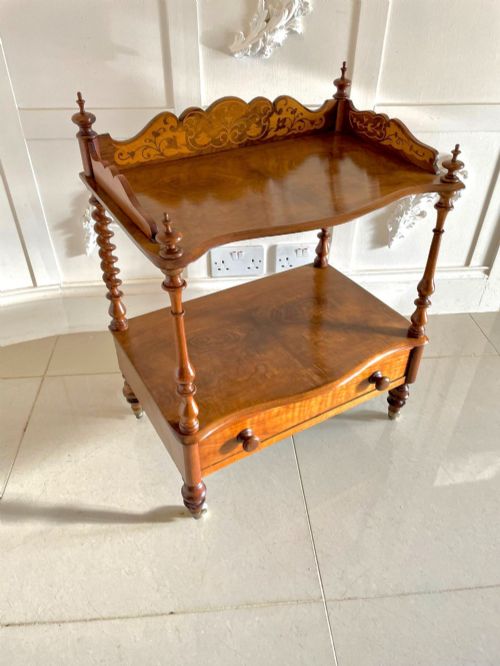
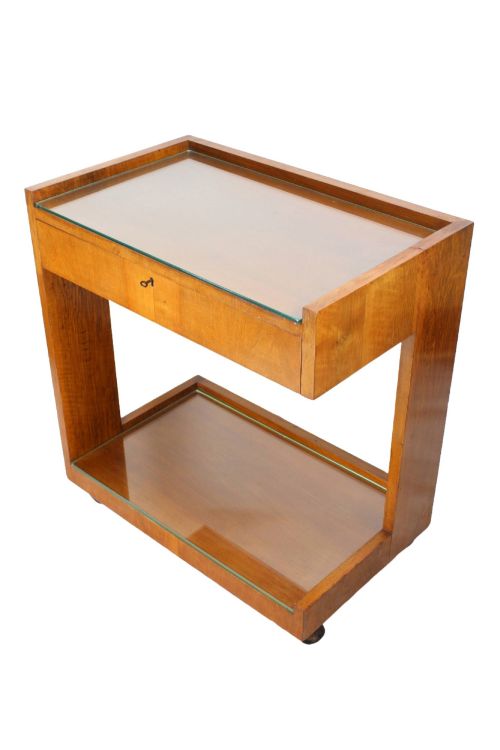
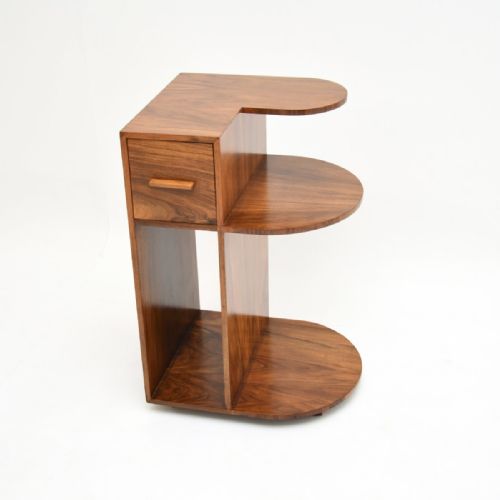
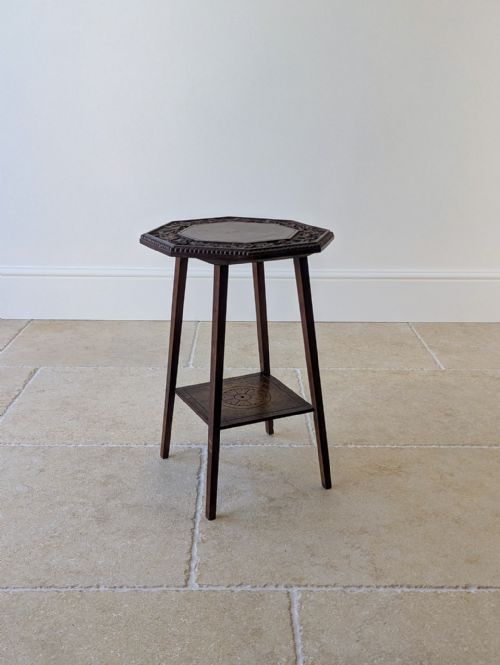
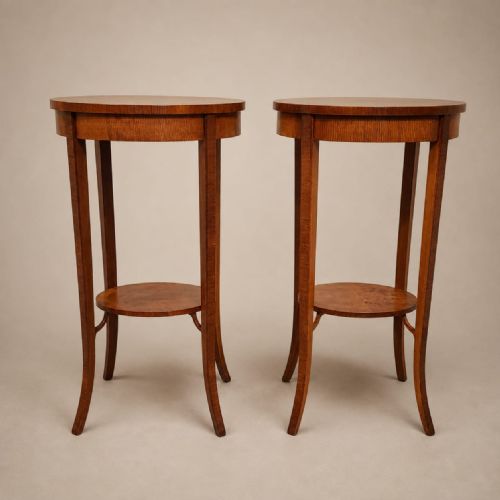
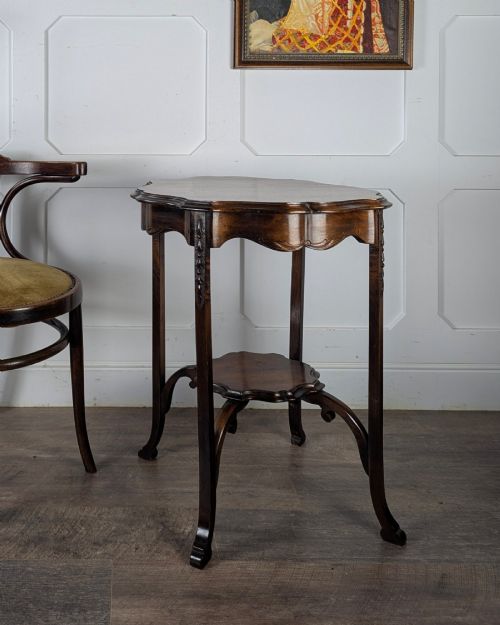
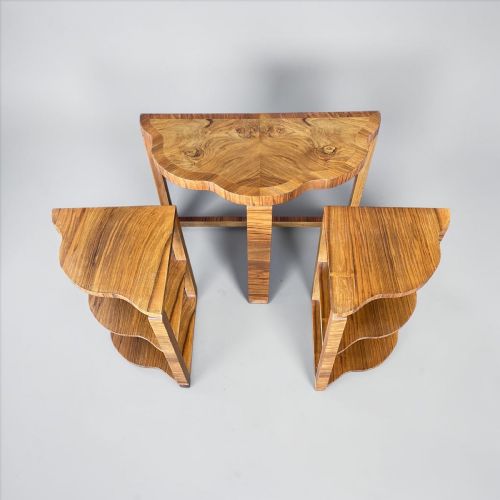
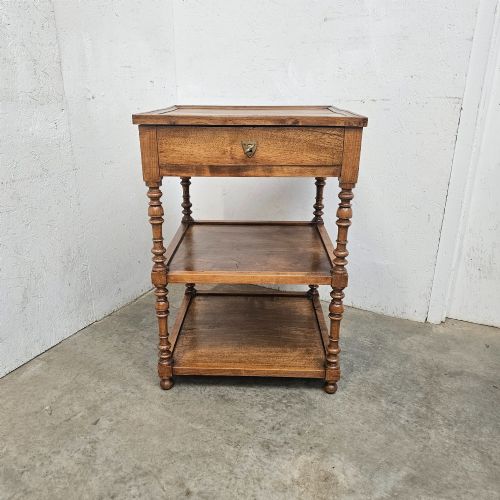
A tiered walnut side table provides layered surfaces for lamps and objects across periods ranging from the Victorian era to the 1930s. These pieces appear in forms such as occasional tables, coffee tables, etageres, and multi-tier trolleys.
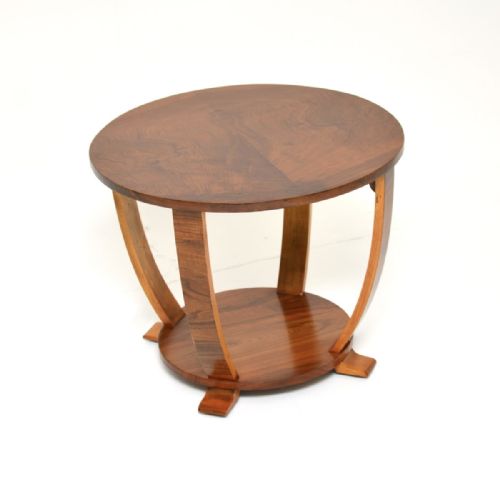
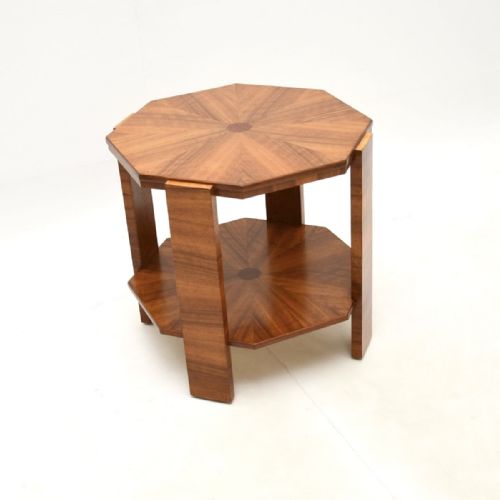
The selection leans heavily toward Art Deco pieces from the 1920s and 1930s alongside 19th-century Victorian, Edwardian, and Arts and Crafts examples. French and English origins predominate among the tiered formats available.
Materials and Construction Methods
Makers utilised solid walnut, walnut veneer, and highly figured burr walnut to construct these tables, often combining the timber with brass, ormolu, and ebonised wood details. Marquetry inlay appears on select surfaces to add decorative patterns to the grain.
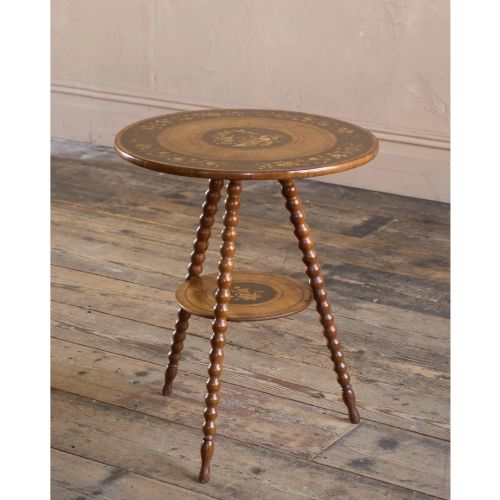
Structural elements include turned legs, bobbin legs, and tiered shelving supported by uprights. French and English workshops applied polished finishes to highlight the natural figures and tones of the walnut timber.
Materials documented across the inventory include solid walnut, burr walnut, walnut veneer, mahogany, brass, ormolu, and ebonised wood.
Distinctions in Execution and Material
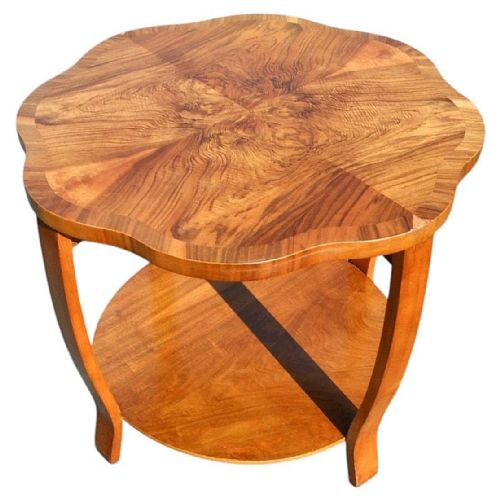
The quality of a tiered walnut side table rests on the selection of the timber veneer and the precision of the joinery across multiple levels. Figured burr walnut and carefully matched grain patterns elevate the visual impact of the piece.
Design complexity also separates standard tables from finer examples, seen in turned legs, marquetry work, and integrated brass or ormolu mounts. The stability of the tiers and the crispness of the carving indicate the skill of the maker.
WILLIAM BIRCH·LIBERTY of LONDON·Tehan
The Tiered Walnut Side Table Glossary
- Burr walnut
- A wood harvested from walnut tree growths that produces intricate, swirling grain patterns. This material was frequently used on tabletops to create decorative visual effects.
- Etagere
- A piece of furniture consisting of a set of open shelves for displaying small objects. These tiered formats often function as side or lamp tables.
- Marquetry
- The art of applying pieces of veneer to a structure to form decorative designs. Makers utilised this technique on tabletop surfaces using various wood types.
- Ormolu
- Gilded bronze mounts applied to furniture for decoration. This material appears on select pieces from continental workshops.
- Bobbin leg
- A turned furniture leg shaped to resemble a series of wooden bobs or spools. This style appears on Victorian and Edwardian occasional tables.
Tiered Walnut Side Table: Frequently Asked Questions
What is a tiered walnut side table used for?
These tables provide multiple surfaces for placing lamps, books, and decorative objects while taking up minimal floor space. The stacked tiers allow items to be separated across different levels.
In living rooms or bedrooms, they function as lamp tables, coffee tables, or bedside stands. The extra shelves offer practical display areas without increasing the overall footprint of the furniture.
How do I identify an Art Deco tiered table?
Art Deco tiered tables from the 1920s and 1930s typically feature clean geometric lines and figured walnut veneers. They often incorporate multiple circular or rectangular shelves arranged in stepped formations.
Unlike ornate Victorian designs, these pieces rely on the natural grain of the wood and streamlined silhouettes for visual appeal. Maple accents or simple brass details frequently accompany the walnut construction.
Where were these tables manufactured?
The pieces originate primarily from English and French workshops, reflecting the dominant design centres of the 19th and early 20th centuries. Retailers like Liberty of London also retailed specific Arts and Crafts designs.
Continental examples often showcase distinct styling such as Louis XV or Louis XVI influences, while English pieces lean toward Arts and Crafts or standard Victorian cabinetmaking traditions.
How should I care for walnut veneer surfaces?
Walnut veneer surfaces require protection from direct sunlight and excessive moisture to prevent fading and lifting of the wood. Dusting regularly with a soft, dry cloth maintains the polished finish.
Avoid placing hot cups or damp items directly on the bare wood to protect the historical polish and the underlying timber grain from water marks.