

Tiered Mahogany Corner Stand
A tiered mahogany corner stand brings useful display space into an unused angle, pairing fine timber with practical multiple levels.
Tiered Mahogany Corner Stand
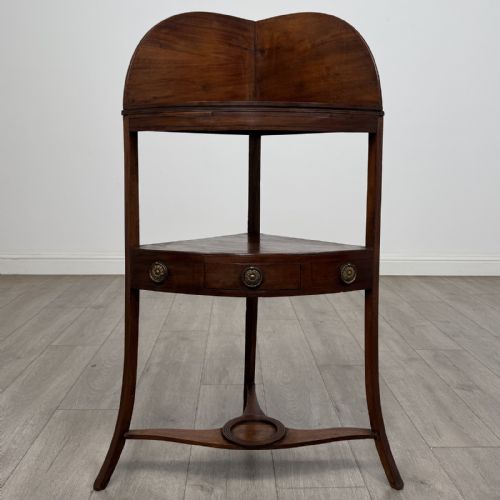
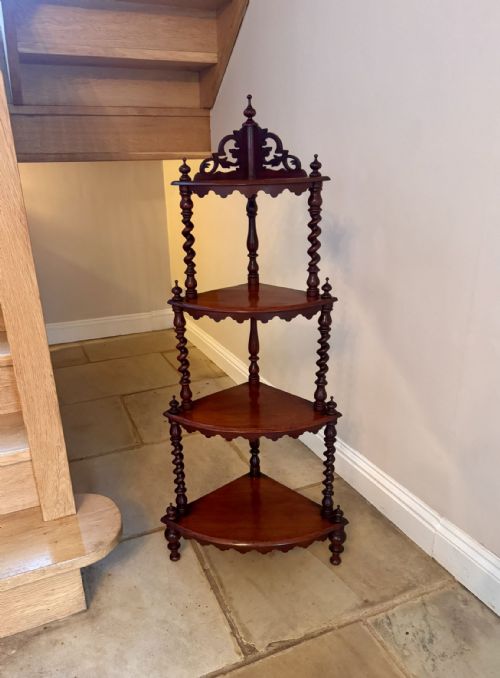
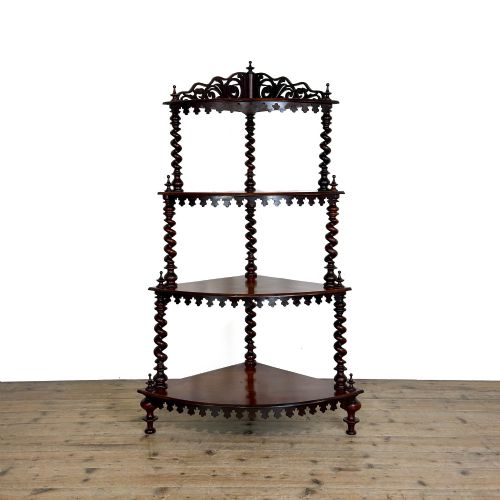
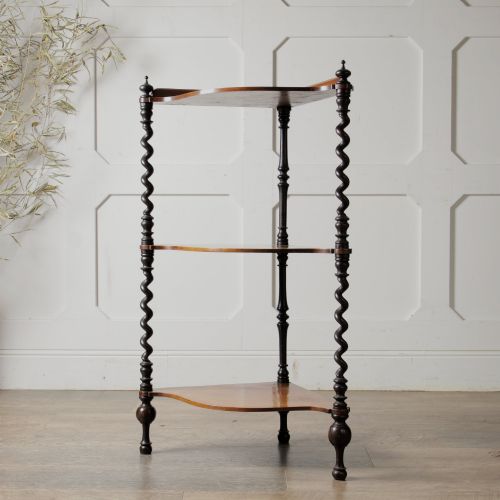
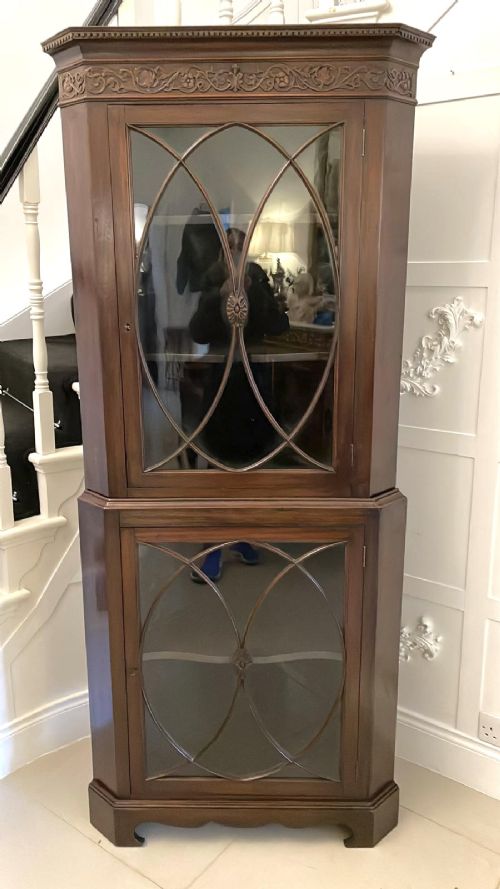
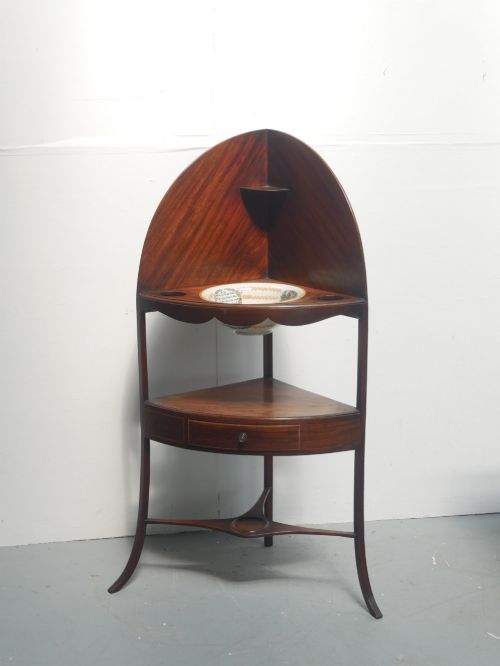
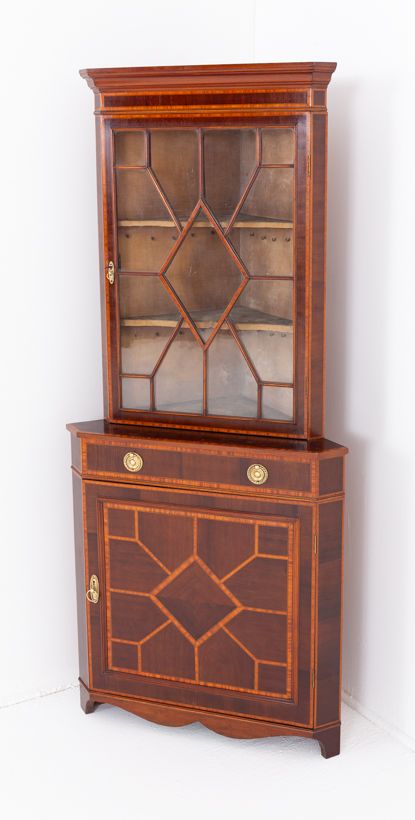
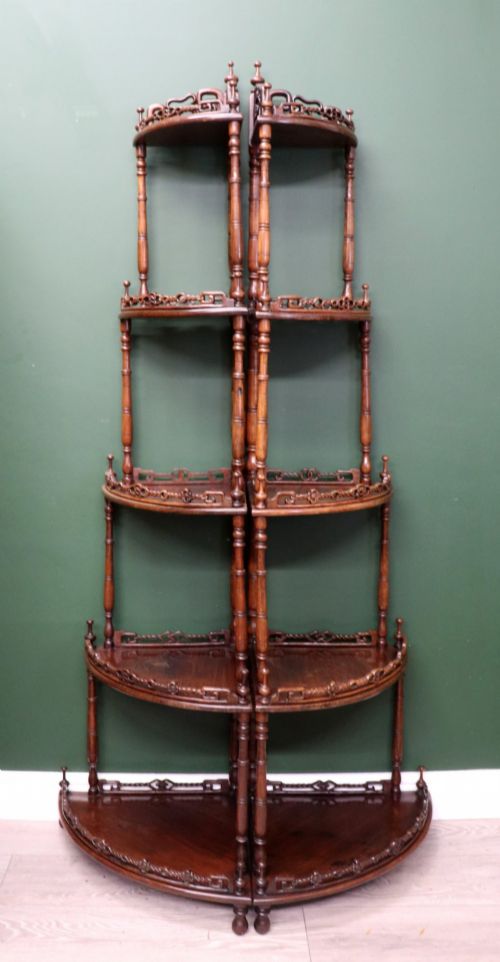
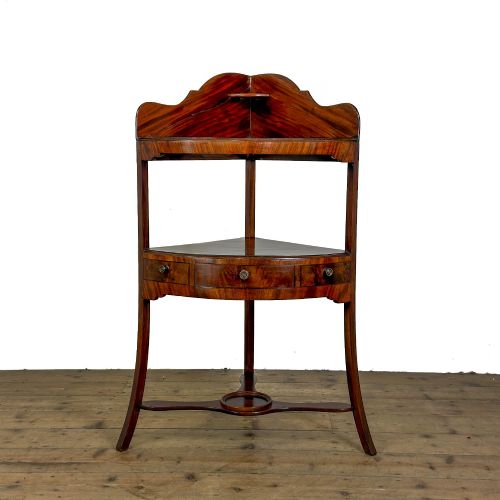
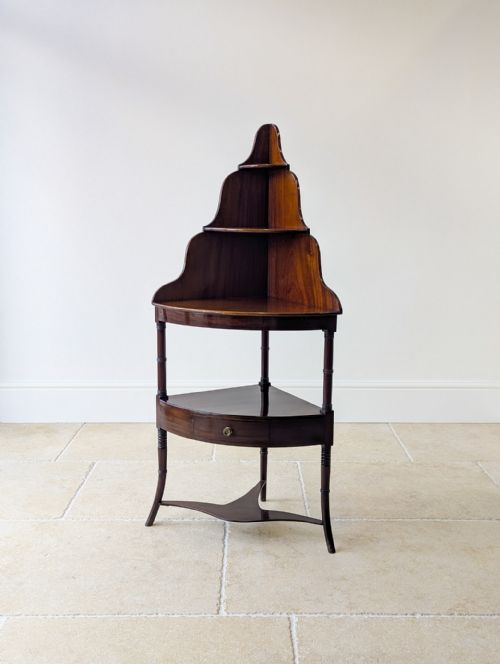
A tiered mahogany corner stand takes several shapes across the Georgian, Victorian, and Edwardian periods, appearing most often as multi-tiered whatnots, washstands, and glazed or open corner cabinets. These pieces fit snugly into room angles, offering graduated shelves or enclosed cupboards that make efficient use of difficult corners.
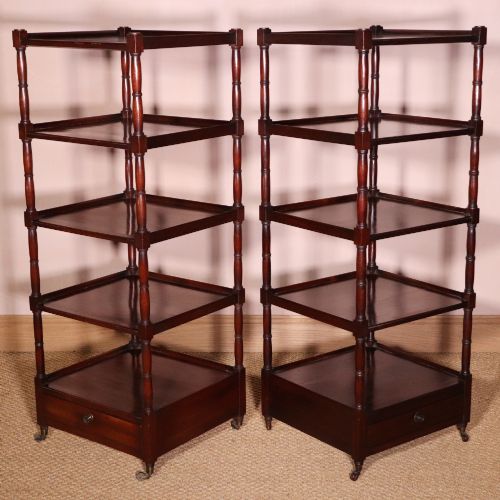
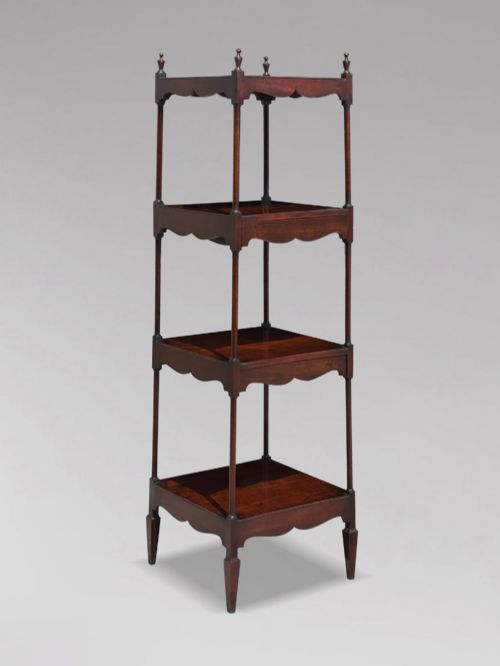
Makers designed these stands to hold books, china, or decorative items, resulting in structures ranging from simple four-tier open shelving to sophisticated pieces with bowed fronts, mirrors, or marble tops. The selection spans the eighteenth, nineteenth, and early twentieth centuries, showing how domestic storage needs evolved while keeping the timber frame constant.
Materials and construction
Makers relied primarily on solid and veneered mahogany, often selecting it for its rich grain and structural stability. Workshops enhanced these surfaces using contrasting stringing and banding in boxwood and satinwood, adding visual definition to edges and door panels.
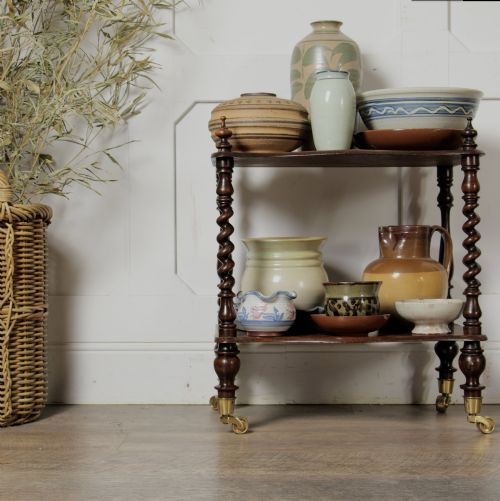
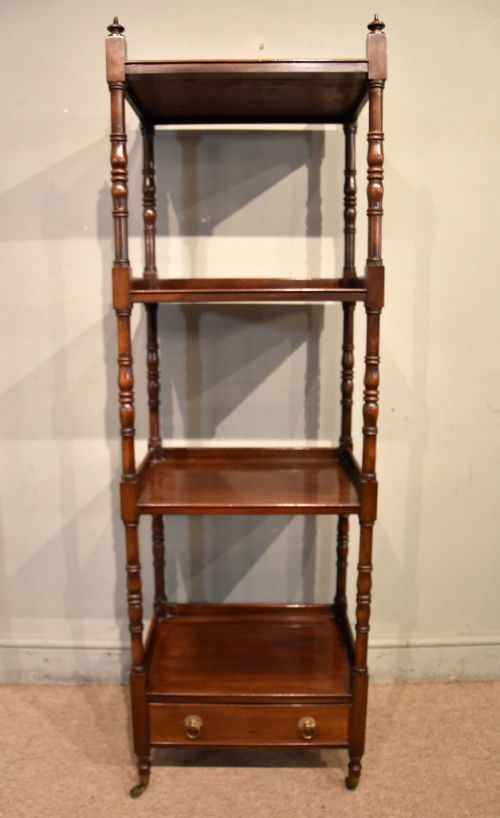
Structural joints relied on traditional cabinet-making techniques, supporting multi-tiered platforms with turned or barley twist uprights. Additional elements such as brass handles, glass panes, and ceramic inserts appear on specific washstands and cabinets to complete the functional design.
Several stands double as washstands, proving that nineteenth-century basin storage could double as a graceful corner plant table.
Judging execution and timber
Quality rests on the depth of the mahogany grain and the precision of the joinery connecting the tiers to the upright supports. Finer pieces demonstrate careful selection of timber figures and seamless application of satinwood inlay rather than plain, uniform boards.
The sophistication of the turning on legs and columns, alongside the crispness of any carved mouldings or astragal glazing bars, separates standard utility items from superior cabinet work. Original brass fittings and stable, well-aligned tiers further indicate higher workshop standards.
Gillows
The Tiered Mahogany Corner Stand Glossary
- Whatnot
- An open set of tiered shelves designed for displaying ornaments or books. These pieces gained popularity in the nineteenth century for corner and wall placements.
- Astragal
- A moulded strip of wood or metal separating panes of glass in a cabinet door. Finer examples show delicate profiling.
- Satinwood inlay
- A decorative technique inserting contrasting light wood into the mahogany surface. This method creates geometric borders or floral motifs.
- Dumb waiter
- A tiered stand traditionally used for holding dishes or serving items without domestic staff present. They frequently utilise a central column or stacked circular platforms.
Tiered Mahogany Corner Stand: Frequently Asked Questions
What is a tiered mahogany corner stand used for?
These stands serve as display units or storage fixtures, fitting neatly into room angles to hold books, ceramics, or decorative objects. Their multiple levels maximise floor space without crowding a room.
Historically, variations such as washstands and cabinets also accommodated personal grooming equipment or enclosed valuable tableware behind glazed doors.
How do I tell a Georgian stand from a Victorian one?
Georgian pieces generally display restrained lines, bracket feet, and simpler proportions focused on utility, particularly in washstands and A-frame whatnots. Mahogany tones tend to be deeper and warmer through age.
Victorian and later iterations often introduce heavier turning, such as barley twist columns, mirrored backs, or more elaborate satinwood inlay reflecting Revival tastes.
Will a corner stand fit a modern room layout?
The triangular footprint allows these stands to occupy dead space in corners where standard rectangular furniture will not fit. They work effectively in smaller rooms needing vertical storage.
Careful measurement of the wall depth and height ensures the tiered shelves clear skirting boards and picture rails.
Are these stands sturdy enough for daily use?
The solid mahogany construction provides a stable frame for everyday placement of lamps, books, or decorative collections. The multi-tiered design distributes weight effectively across the upright supports.
Checking that the joints connecting the shelves remain tight guarantees the piece will safely bear standard household items.