


Tiered Dumb Waiter Stand
A tiered dumb waiter stand provides multi-level serving surface space in dining rooms and sitting rooms across multiple historic periods.
Tiered Dumb Waiter Stand
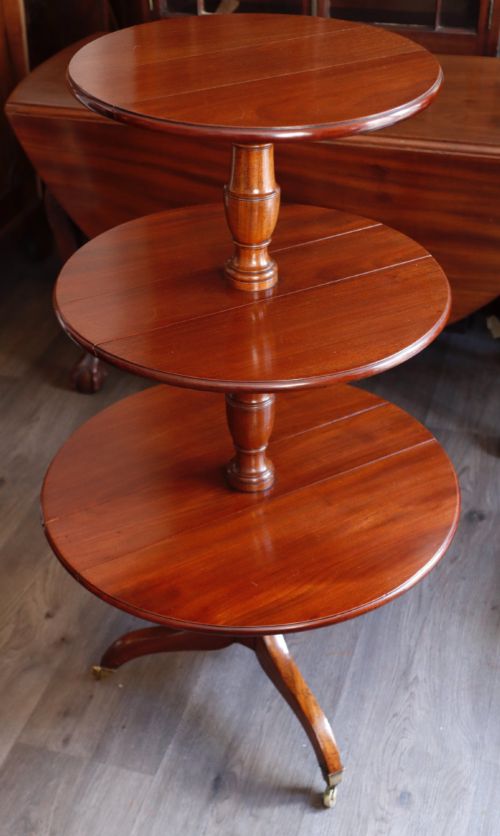
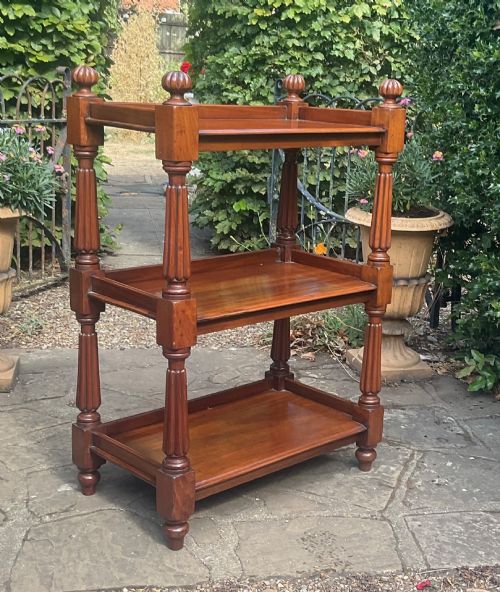
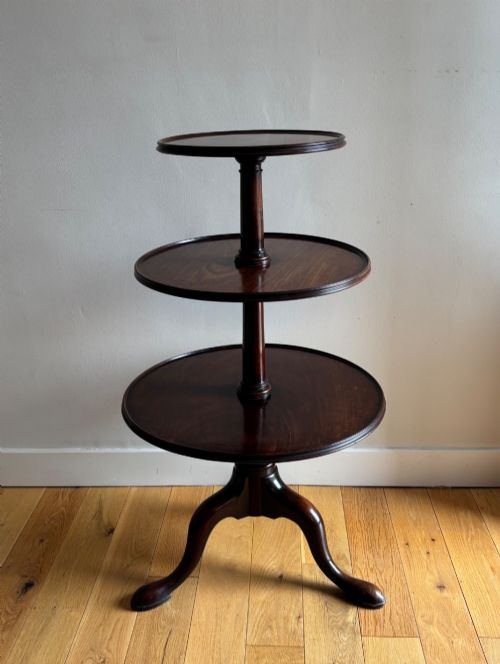
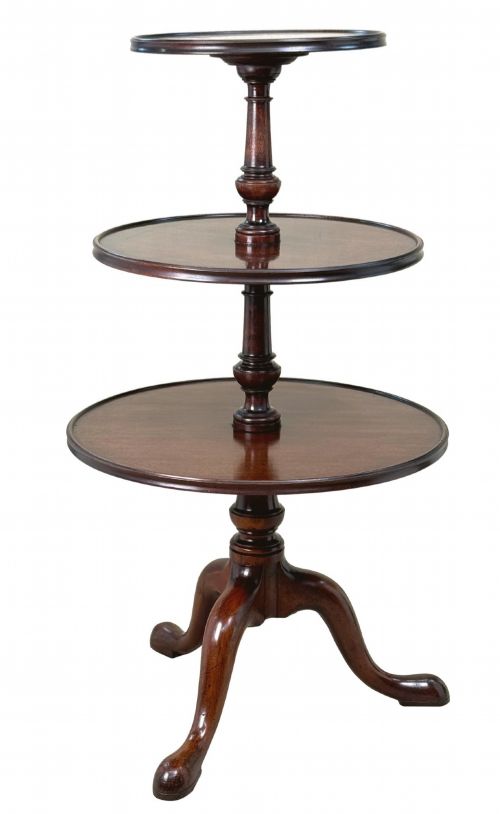
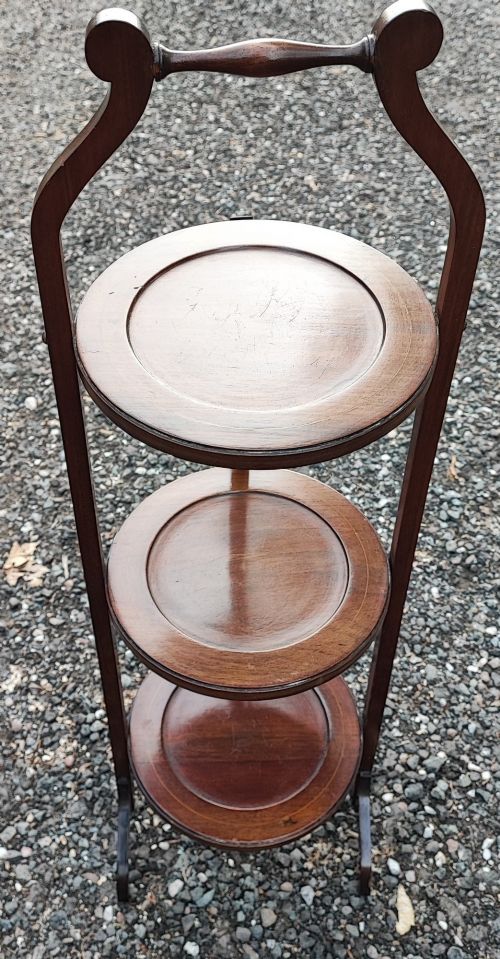
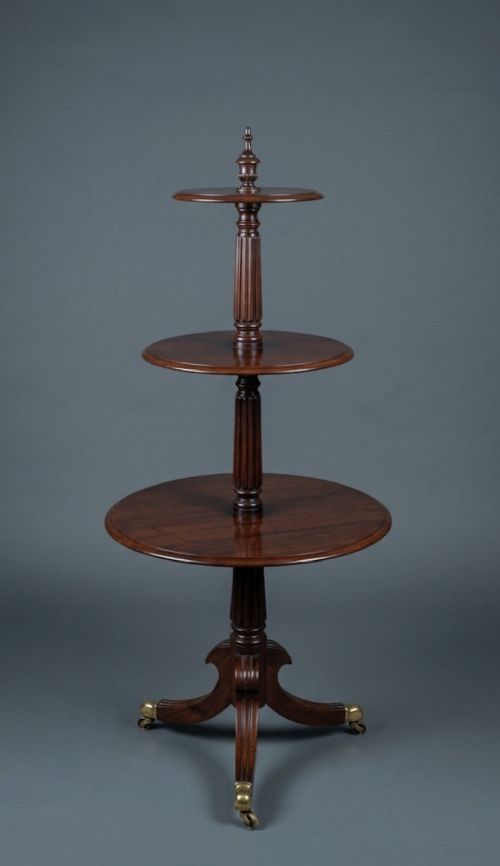
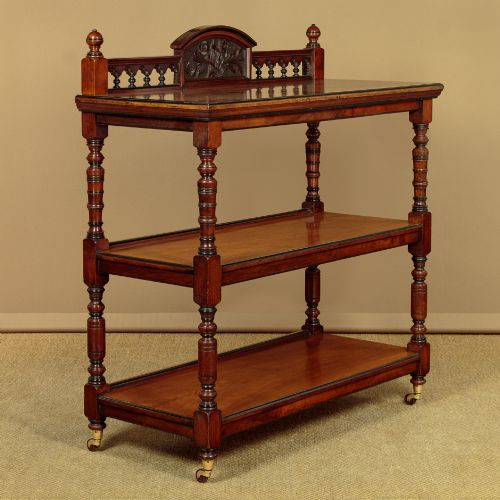
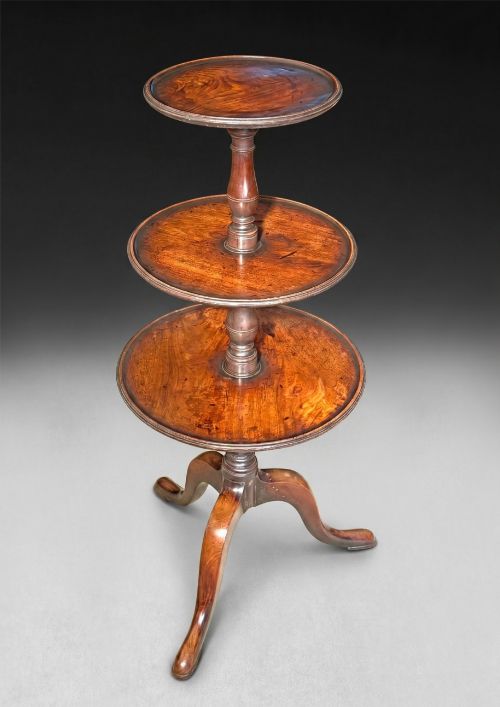
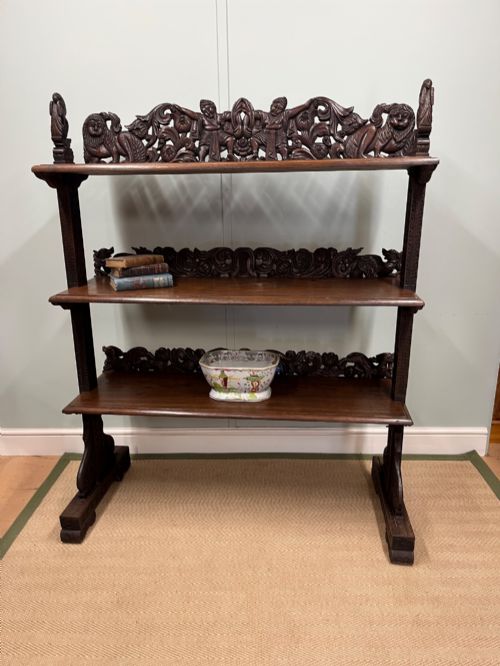
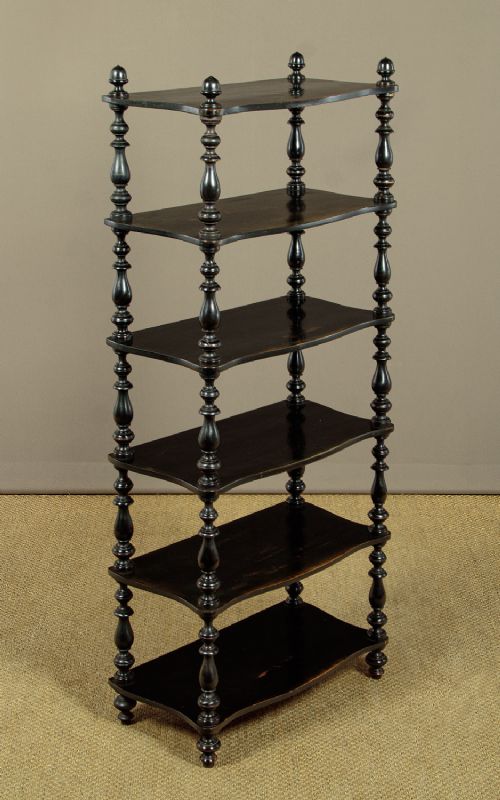
A tiered dumb waiter stand is a multi-level serving table designed for dining and entertaining. When searching for a tiered dumb waiter stand, buyers encounter forms ranging from Georgian circular revolving tables to Victorian and Edwardian cake stands and etageres.
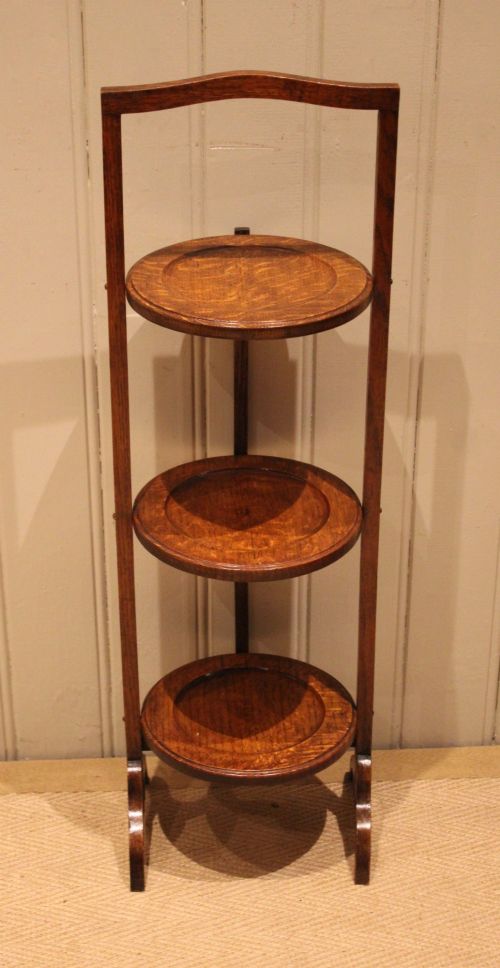
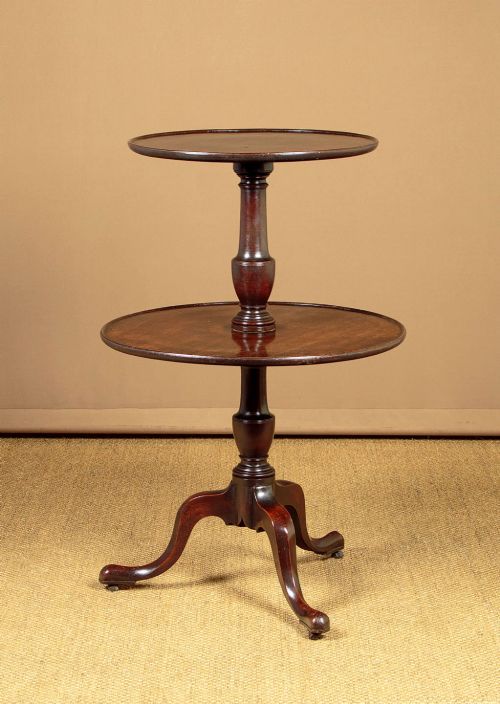
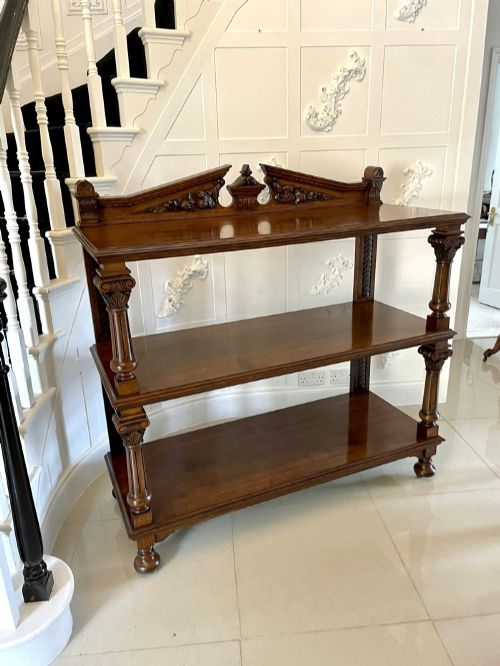
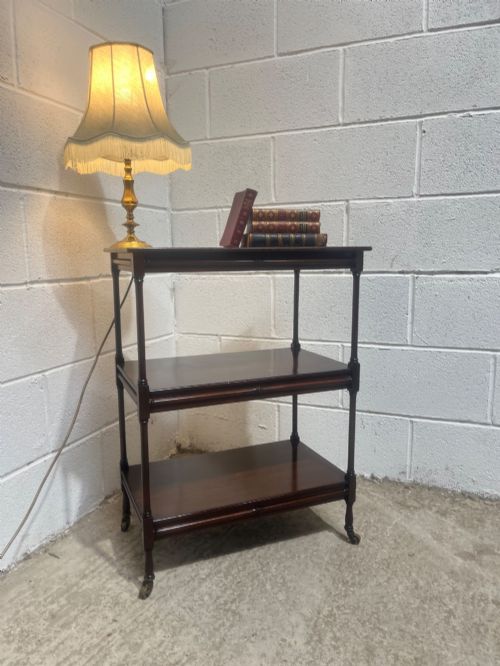
The materials span mahogany, oak, walnut, rosewood, teak, and ebonised wood, reflecting periods from the eighteenth century through to the early twentieth century. Circular stacking trays on tripod pedestals appear alongside tall rectangular multi-tier cake stands and folding variants.
The eighteenth and nineteenth-century examples often utilise solid and figured mahogany with revolving tiers, while later Edwardian versions tend to offer static multi-tier shelving for afternoon tea.
Materials and construction
Makers relied heavily on dense timbers such as mahogany, pollard oak, and walnut to support multiple levels without warping. Turning lathes shaped central pedestals and tripod legs, while brass castors and hinges provided mobility and folding mechanisms.
Joints typically involved mortise and tenon construction for stability across tiers, and turnery secured circular trays to central columns. Inlaid boxwood lines and brass fittings added detail to later Victorian and Edwardian iterations.
Listings span eight distinct periods from the eighteenth century to the early twentieth century, utilising mahogany, brass, oak, rosewood, ebonised wood, boxwood, and walnut.
Assessing quality and proportion
Quality rests in the timber selection, grain figure, and the precision of the turning on the central column. Superior examples maintain balanced proportions across multiple rotating or fixed tiers without wobble.
Finer pieces show careful attention to timber matching across each tier and subtle brass detailing, whereas simpler utility stands rely on plain surfaces and straightforward bracket construction.
Gillows
The Tiered Dumb Waiter Stand Glossary
- Etagere
- A piece of furniture with a set of open shelves for displaying small objects or serving. These multi-tiered stands provide vertical storage in domestic rooms.
- Tripod base
- A three-legged support structure commonly found beneath the central pedestal of Georgian and Regency revolving tables. This design ensures stability on uneven floors.
- Revolving tier
- A circular tray mounted on a central spindle allowing diners to rotate food and dishes. It represents a characteristic feature of eighteenth-century dining room pieces.
- Campaign washstand
- A folding or portable piece of furniture designed for travel, incorporating brass fittings and compartmentalised timber. These items date primarily to the nineteenth century.
- Pollard oak
- Timber taken from the trunk of an oak tree that has been cut back to promote dense, decorative branching patterns. The resulting wood displays a knotted and highly figured grain.
Tiered Dumb Waiter Stand: Frequently Asked Questions
What is a tiered dumb waiter stand used for?
These stands served dining rooms by holding dishes, bottles, and cutlery without requiring a servant to stand nearby during a meal. Later Victorian and Edwardian variations shifted function toward afternoon tea and general display.
Today, they operate as occasional tables or display units in living spaces and hallways, offering multiple surface levels within a compact footprint.
How do you distinguish a Georgian dumb waiter from a Victorian one?
Georgian versions typically feature graduating circular trays mounted on a central tripod pedestal, often with revolving mechanisms designed for dining rooms. They rely heavily on rich, dark mahogany.
Victorian and Edwardian examples introduce greater variety, including tall cake stands, folding stands, and materials like walnut, amboyna, and ebonised wood with inlaid details.
Do all tiered dumb waiter tiers rotate?
Not all tiers revolve. Eighteenth and early nineteenth-century dining room dumb waiters frequently feature rotating circular trays on a central column.
Later cake stands, etageres, and buffets generally utilise fixed shelves designed for static display and afternoon tea service.
How do you care for antique timber tiers?
Antique timber surfaces require protection from direct sunlight and extreme humidity changes to prevent timber splitting or fading. Regular application of suitable furniture wax maintains the polish.
Avoid placing damp items directly onto unsealed antique wood surfaces to prevent water rings and staining.