
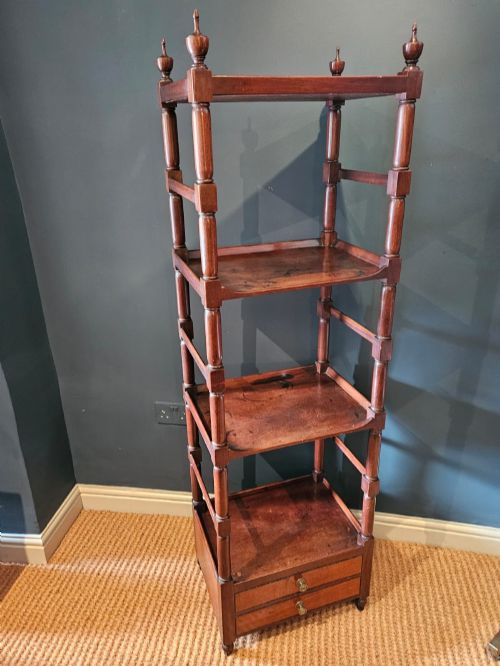
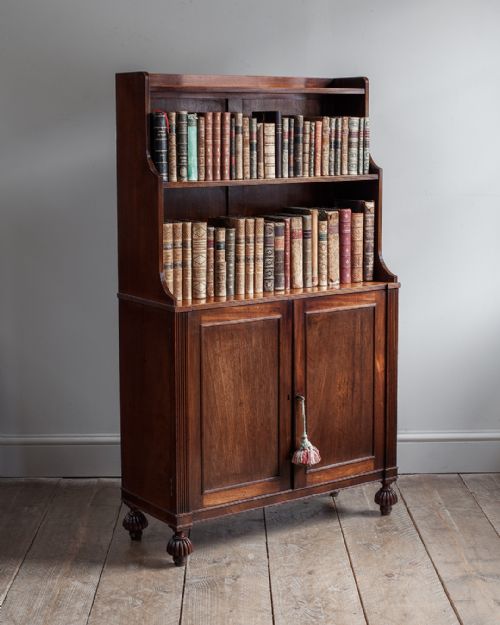
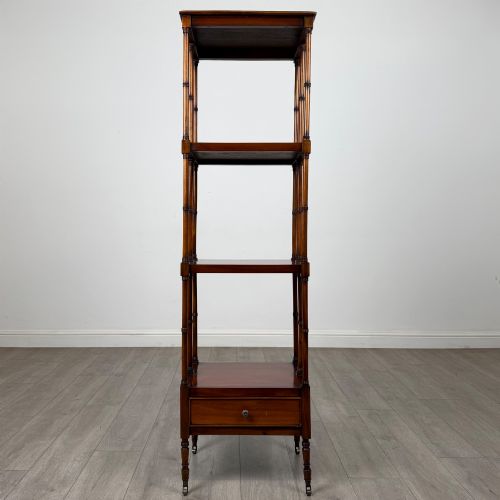
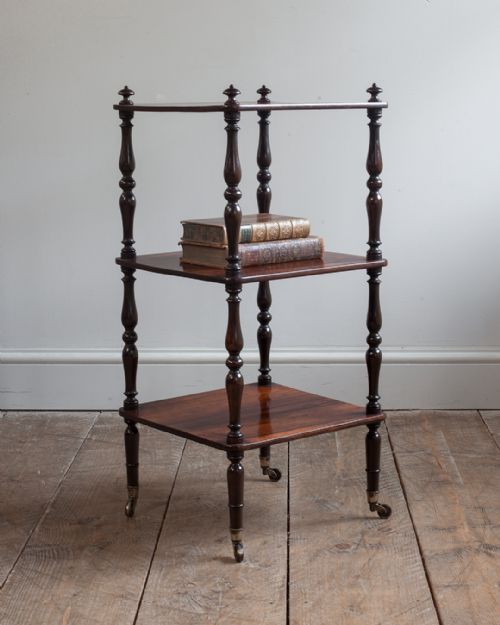
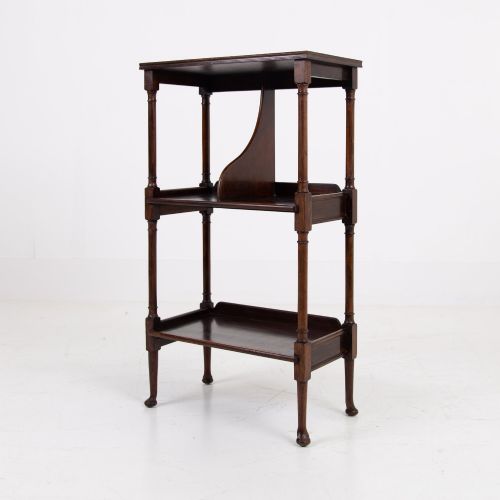
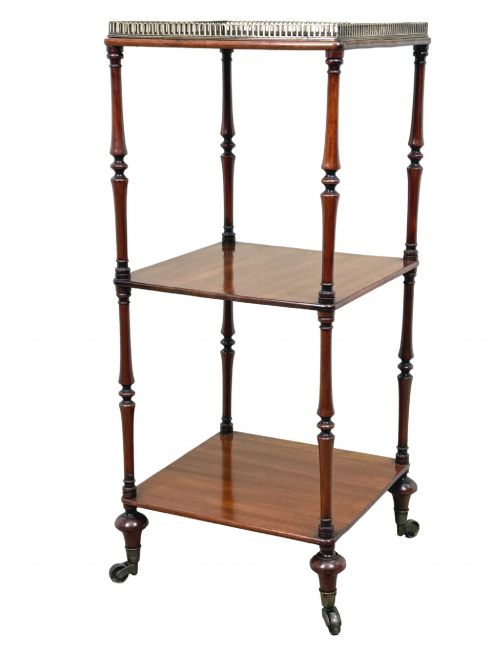
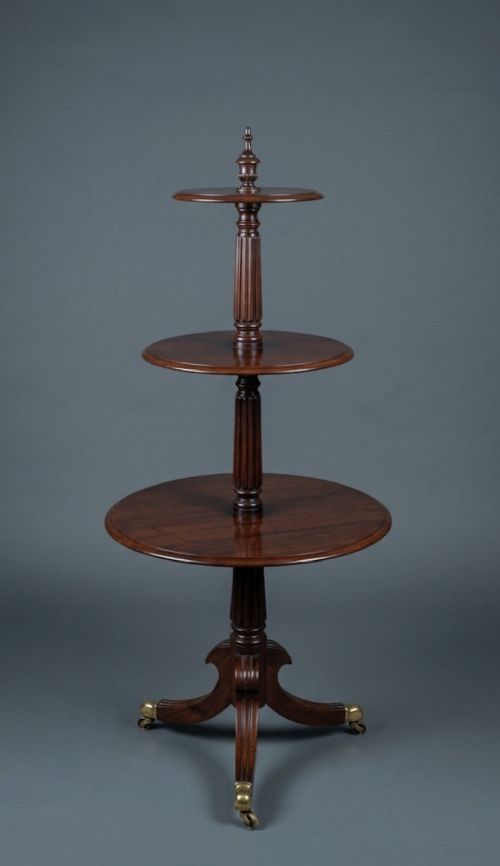
Regency Mahogany Tier Stand
These pieces for a regency mahogany tier stand bring multi-level display to a room, offering practical tiers in rich timber.
Regency Mahogany Tier Stand
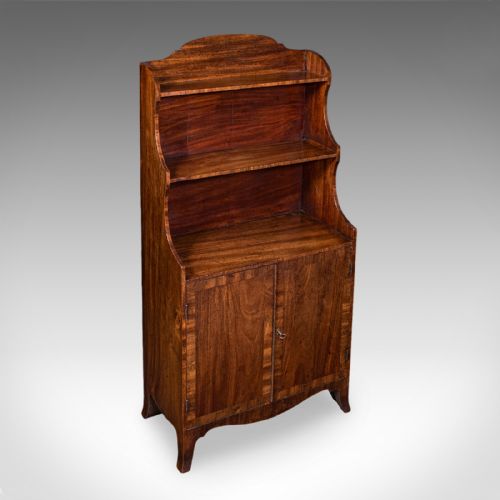
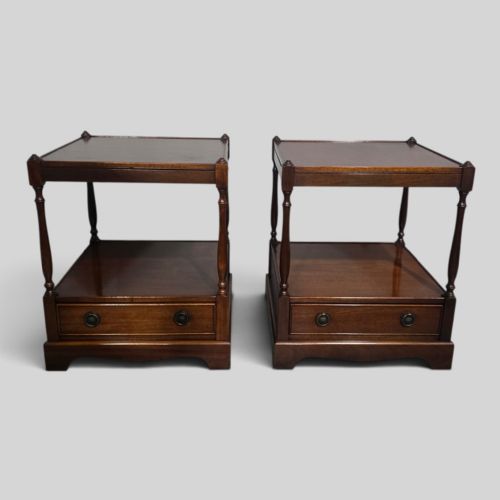
A regency mahogany tier stand brings together multi-level furniture forms designed for display, books, and serving. You meet items such as whatnots, bookcases, dumb waiters, and étagères across this page.
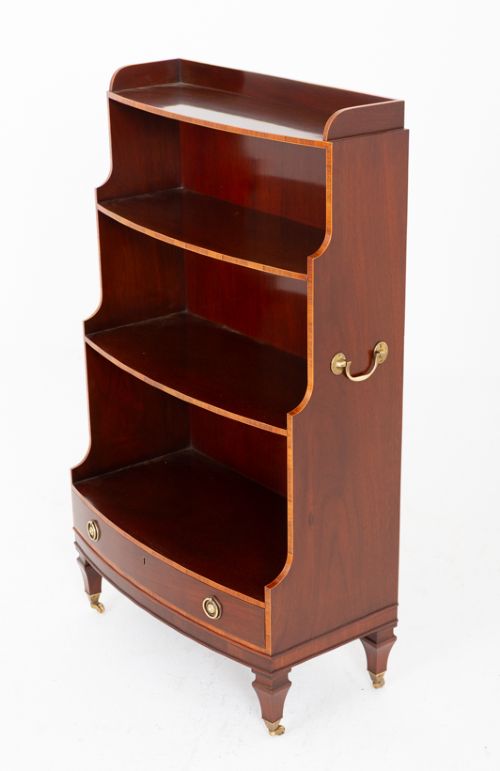
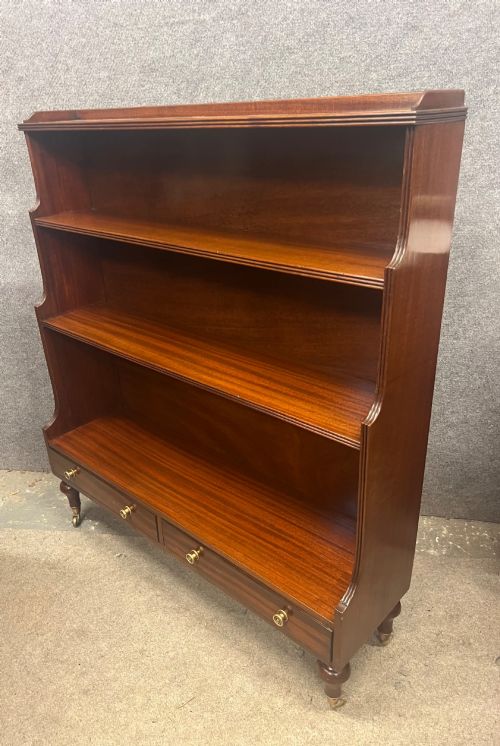
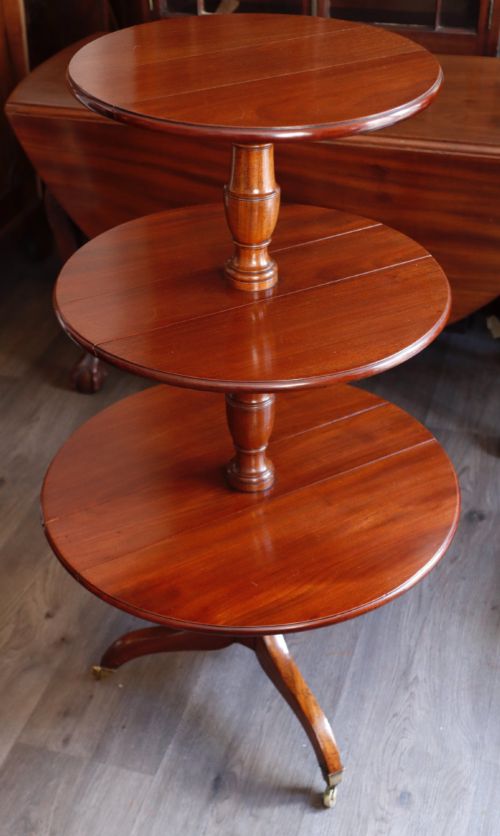
The material record spans the Regency period, Georgian eras, and the 19th century, alongside later revivals from the early 20th century. Forms range from corner stands and waterfall bookcases to revolving dumb waiters with multiple tiers.
Makers and workshops of the past constructed these multi-tiered pieces for specific domestic utility, whether holding books in a library, serving food in a dining room, or displaying ornaments in a parlour.
How they were made
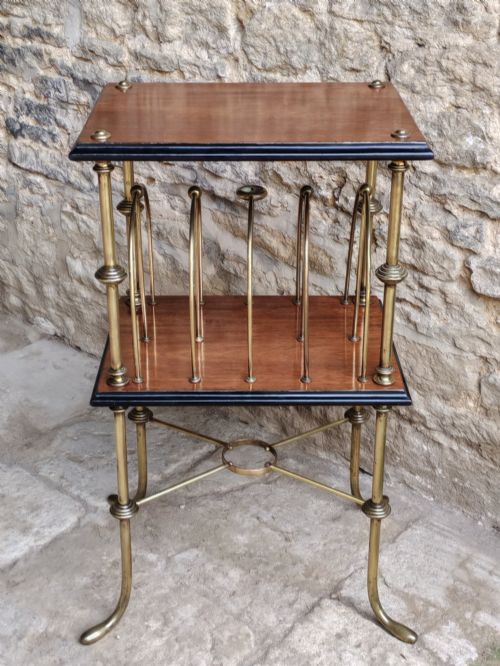
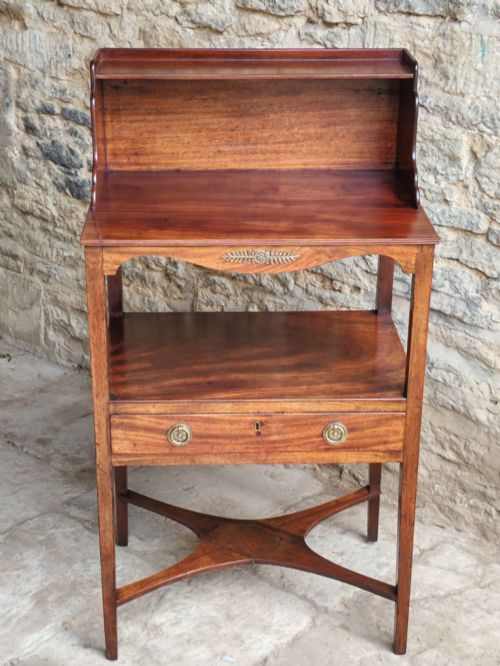
Makers built these pieces primarily using solid mahogany and mahogany veneers, occasionally incorporating flame mahogany figures for visual depth. Secondary woods and decorative elements include boxwood stringing, brass fittings, and cane or wire details.
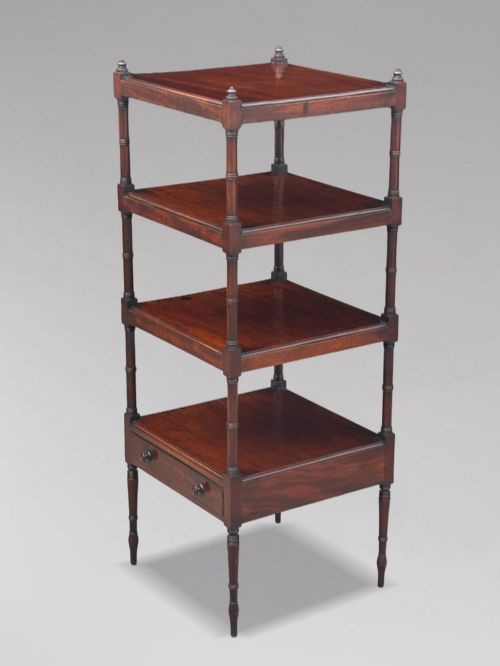
Construction techniques involve tiered platforms supported by turned or column uprights, sometimes with revolving mechanisms in dumb waiters or folding shelves in reading tables. Surfaces rely on timber grain and polished finishes rather than heavy carving.
Several items double as cellarettes and music stands, proving past generations needed furniture to hold both wine and sheet music.
What varies in quality
Quality rests upon the choice of timber figure, such as well-matched flame mahogany, and the crispness of turned supports and brass details. Pieces from the Regency and Georgian periods show tighter joinery and finer proportions than later revival items.
Proportion and stability define the upper end of the range, where tiers remain level and uprights support weight without looseness. Finer examples integrate thoughtful additions like brass galleries, casters, or functioning drawers.
The Regency Mahogany Tier Stand Glossary
- Whatnot
- A piece of furniture with multiple shelves or tiers used for displaying small objects, books, or ornaments. These usually stand upright against a wall or in a corner.
- Dumb waiter
- A tiered serving stand, often circular or revolving, designed to hold dishes or bottles during meals. They sit on a central column with tripod or tetrapod legs.
- Étagère
- A French term for a piece of furniture consisting of a set of open shelves for displaying articles. You find them used interchangeably with whatnots in many historical records.
- Waterfall bookcase
- A tiered open bookcase where each successive shelf is set slightly further back than the one below it. The resulting profile resembles the stepped tiers of a cascade.
- Flame mahogany
- A veneer cut from the fork of a mahogany tree where the branches join the trunk. This creates a distinctive, fiery flame-like pattern across the timber surface.
Regency Mahogany Tier Stand: Frequently Asked Questions
What is a regency mahogany tier stand used for?
These tiered pieces served varied domestic purposes in dining rooms, libraries, and parlours. They held books, displayed porcelain, or supported serving dishes during meals.
Today, owners utilise them as lamp tables, plant stands, or open shelving units for books and collections in modern rooms.
How do I identify a Regency period piece?
Regency items date roughly from the early 19th century, showing classical restraint, mahogany timbers, and slender turned supports. They often feature brass details or reeded legs.
Later revival pieces from the Edwardian era or the 1920s imitate these proportions but use different secondary woods and modern fixings.
Are dumb waiters stable enough for daily use?
Most multi-tiered stands rely on a central column or corner uprights designed to bear standard weight evenly. Revolving versions balance their load across a central pivot.
Placing heavier items on the lower tiers ensures the structure remains balanced and secure during everyday use in a home.
What is the difference between a whatnot and an étagère?
Both terms describe tiered open shelving units intended for display, though étagère leans toward a French influence. In practice, makers and cataloguers applied both names to similar multi-shelf furniture.
Selection depends entirely on the specific configuration of tiers, whether corner-fitting, rectangular, or waterfall-shaped.