


Tiered Book Stand
A tiered book stand organises volumes across multiple levels while keeping reference texts within arm's reach.
Tiered Book Stand
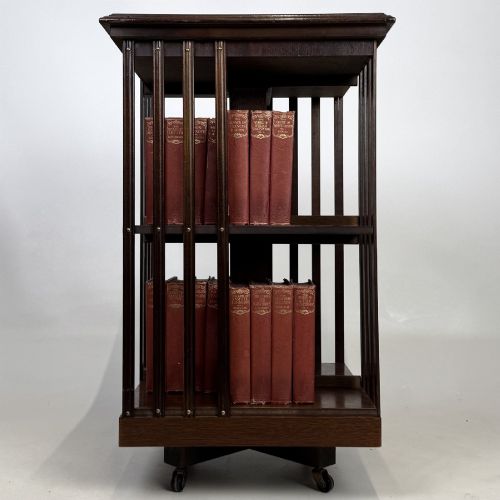
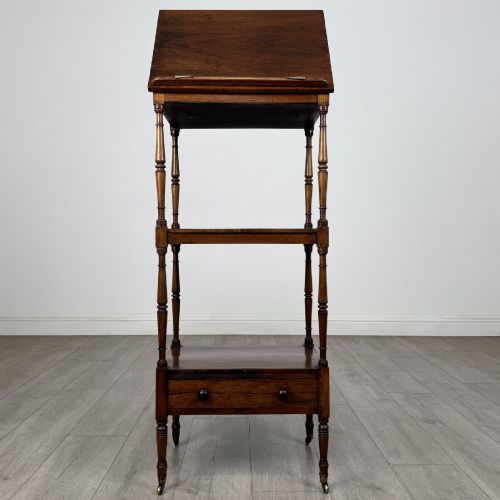
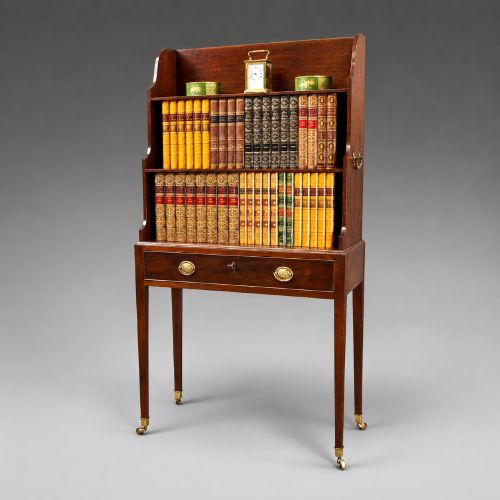
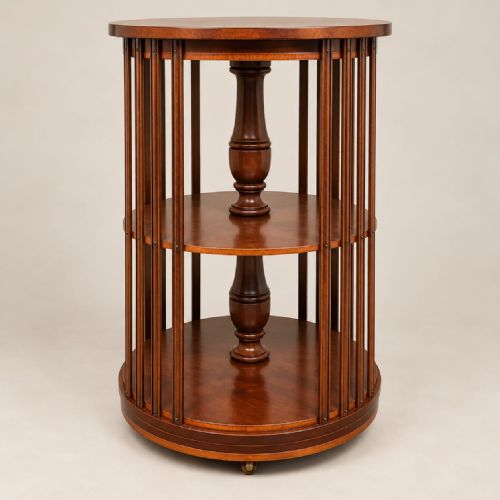
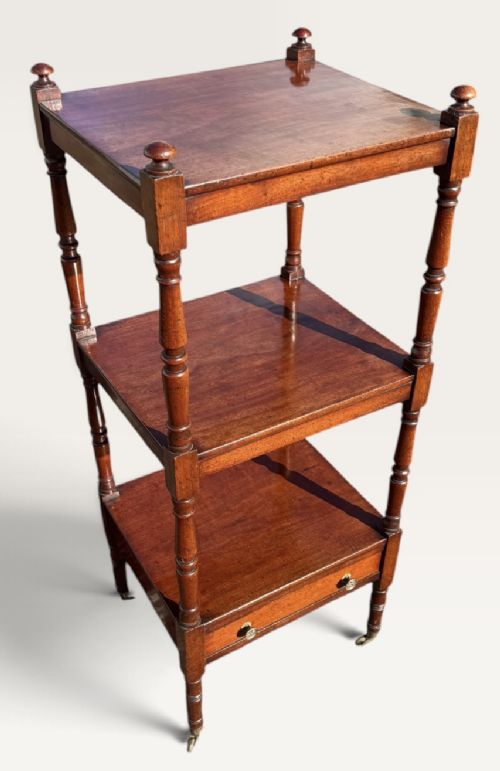
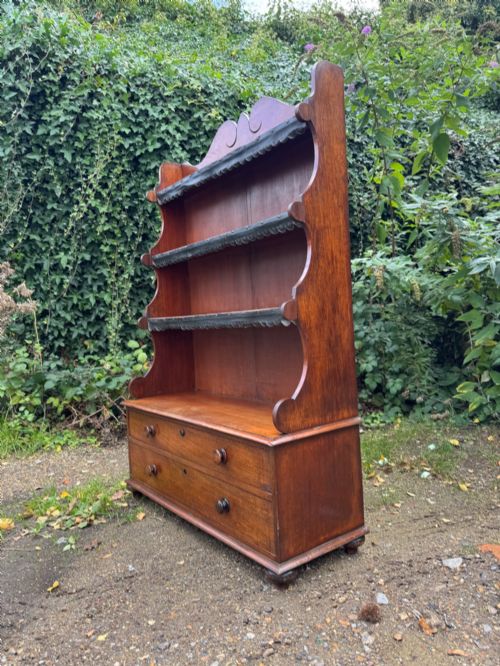
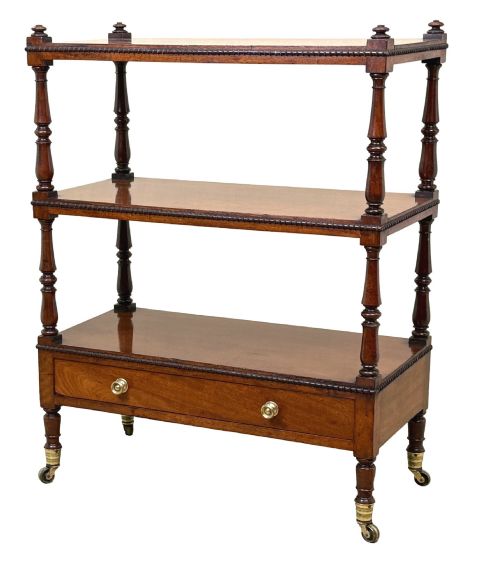
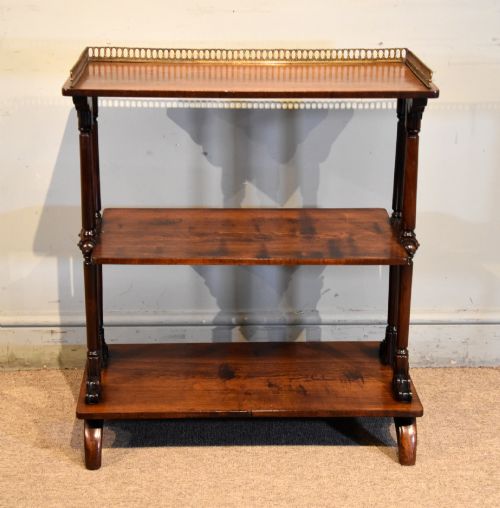
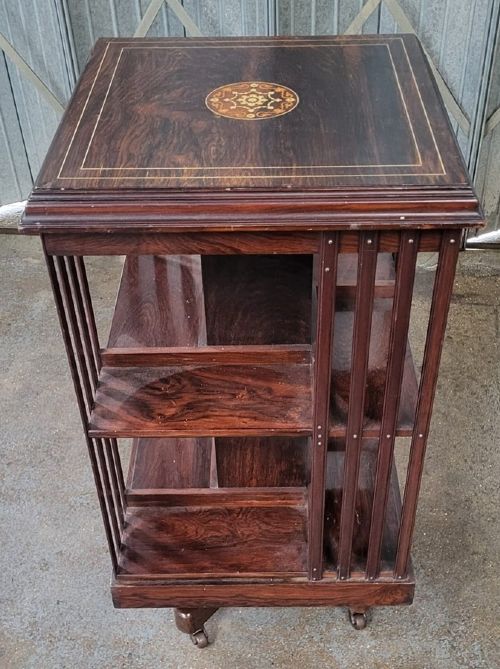
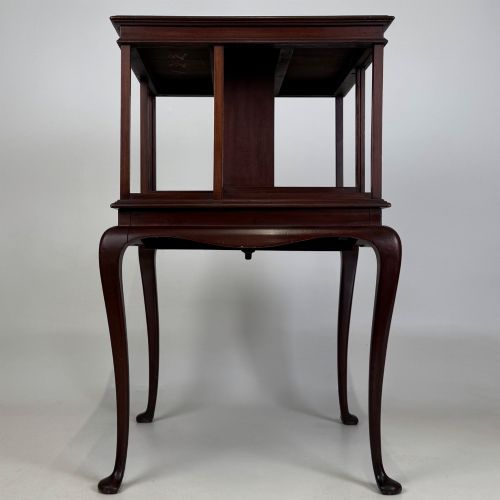
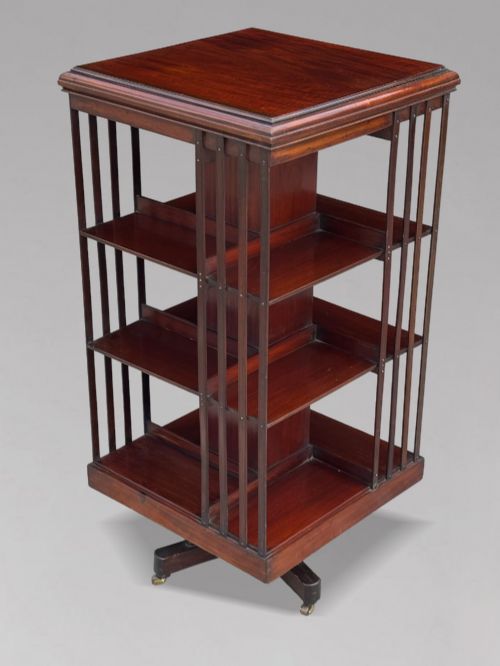
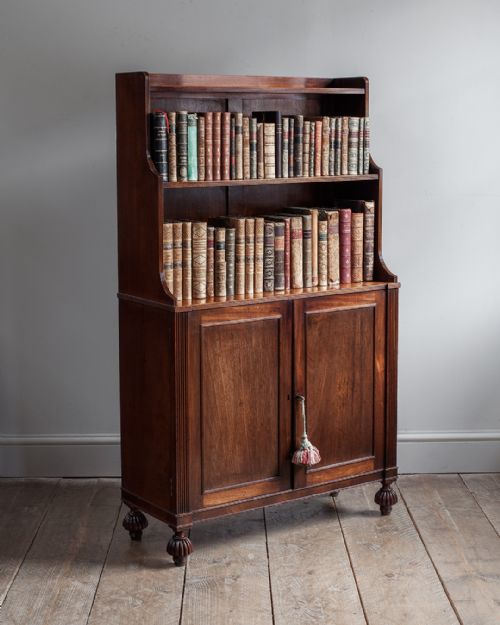
A tiered book stand appears across various historical periods, frequently taking the form of a revolving bookcase, a multi-level whatnot, or a waterfall bookcase. These pieces serve to display and organise volumes in studies, libraries, and living spaces.
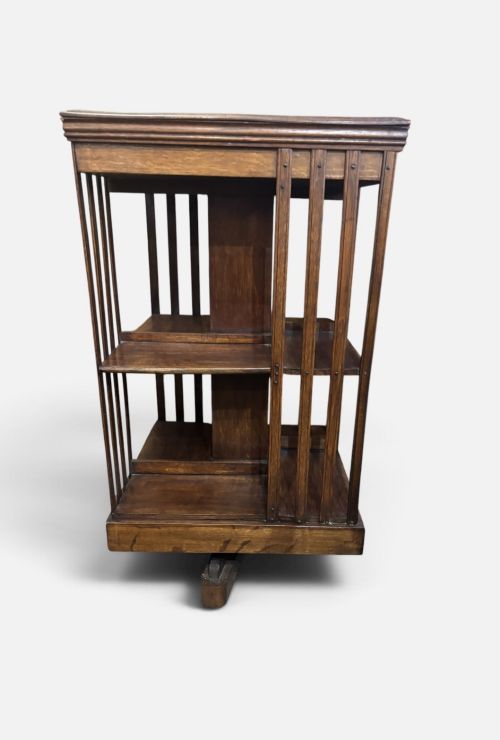
The pieces on this page span the Regency, Victorian, Edwardian, and Art Deco eras, constructed from timbers such as mahogany, oak, and rosewood. Edwardian revolving bookcases in mahogany and oak emerge most frequently among the current selection.
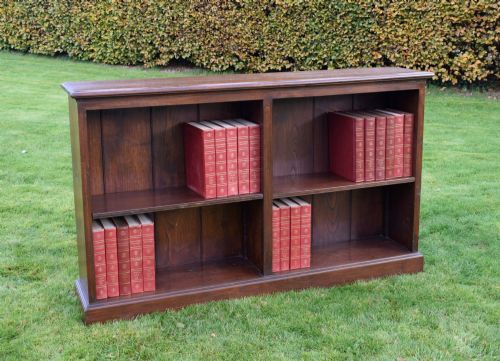
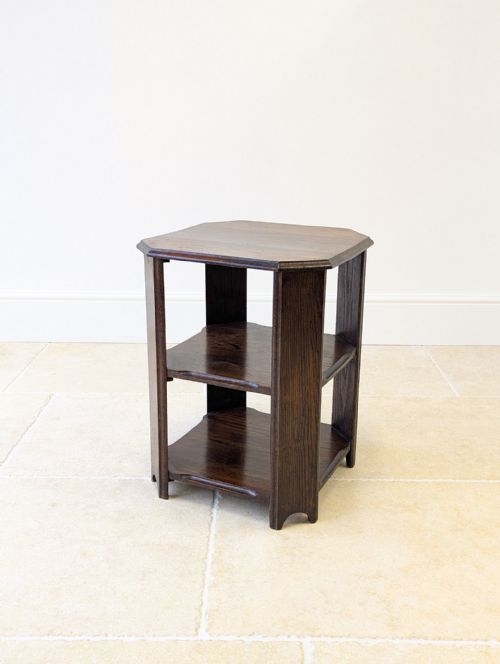
Makers designed these items to utilise vertical space efficiently, offering tiered shelving that accommodates books, magazines, and display objects. Formats range from rotating table models to freestanding open shelving units and tiered side tables.
Materials and construction
Cabinet makers utilised dense hardwoods like mahogany, oak, walnut, and rosewood for their durability and grain patterns, often enhancing surfaces with decorative inlay or flame veneers. Brass hardware frequently appears on castors and revolving mechanisms to assist movement.
Construction techniques involve traditional joinery to support multiple tiers of weight, with rotating models incorporating internal cross-framing for balance. Finish details include limed oak treatments and polished timber surfaces that highlight the natural material.
Tiered Book Stand Retail Price Guide 2026
Typical asking prices for tiered book stand among the pieces listed under this phrase on Sellingantiques today, from the lower quarter to the upper quarter. They describe what is for sale here now, not the wider market.
Library carts make reading mobile when you prefer your books to follow you from room to room.
Assessment of standard
Quality rests upon the selection of timber veneers, the precision of inlaid details, and the stability of the tiered structure. Superior examples display careful matching of grain patterns across multiple shelves and smooth operation in revolving or mobile components.
Finishing work distinguishes finer pieces from simpler utility items, with hand-polished surfaces and robust internal pivot mechanisms showing the maker's intent. The integrity of the joints across each shelf tier indicates the original standard of craftsmanship.
The Tiered Book Stand Glossary
- Whatnot
- An open tiered piece of furniture with three or more shelves used for displaying books or ornaments. It gained popularity during the 19th century.
- Revolving bookcase
- A freestanding book stand designed to rotate on a central base or spindle. This allows access to volumes from all sides without moving the unit.
- Waterfall bookcase
- A set of open shelves where each upper tier is shallower than the one below, forming a stepped profile resembling cascading water.
- Étagère
- A piece of furniture consisting of a set of open shelves for holding small objects or books. The term originates from French furniture design.
- Flame mahogany
- A decorative veneer cut from the fork of a mahogany tree where the branch joins the trunk. It produces a distinctive flickering flame pattern.
Tiered Book Stand: Frequently Asked Questions
What is a tiered book stand?
A tiered book stand is a multi-level piece of furniture designed to hold and display books within easy reach. These items provide vertical storage solutions for studies and living areas.
Designs vary from revolving table models to stationary wooden whatnots and waterfall bookcases spanning the 19th and 20th centuries.
How do revolving bookcases work?
Revolving bookcases sit on a concealed internal mechanism with ball bearings or a pivot spindle that allows the upper tiers to turn smoothly. This lets users browse titles from a single seated position.
The rotating base supports the weight of the volumes while maintaining stability across all sides.
Where should I place a whatnot?
A whatnot suits corners, beside armchairs, or against walls where multi-level storage is beneficial without occupying excessive floor space. Their open shelves allow light to pass through while holding books or decorative items.
Smaller tiered tables function well beside seating as companion surfaces for daily reading materials.
How do I identify an Edwardian book stand?
Edwardian book stands frequently feature inlaid satinwood or lighter stringing on dark mahogany or oak frames, reflecting the aesthetic tastes of the early 20th century. These pieces often take the revolving bookcase format.
Construction methods from this period show machine-assisted precision alongside traditional hand-finishing techniques.