
Three Tiered Stand
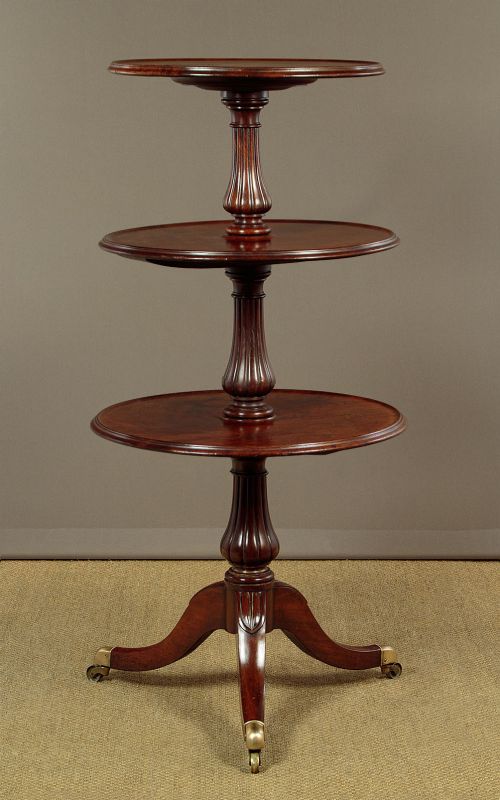
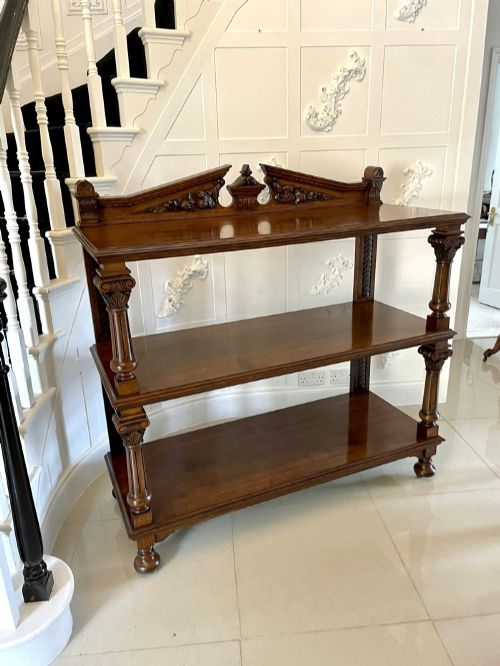
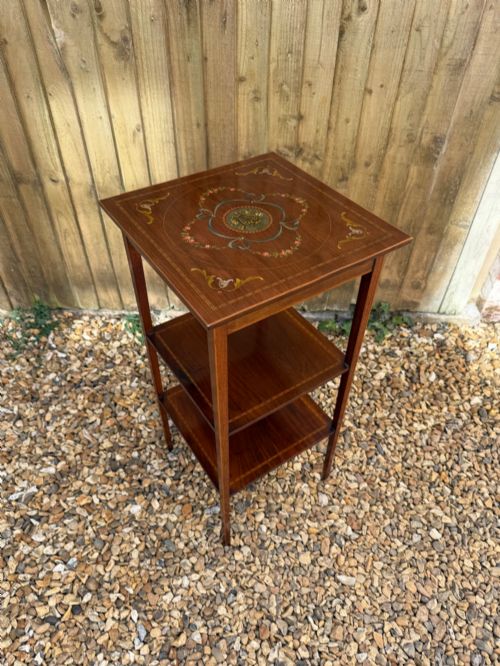
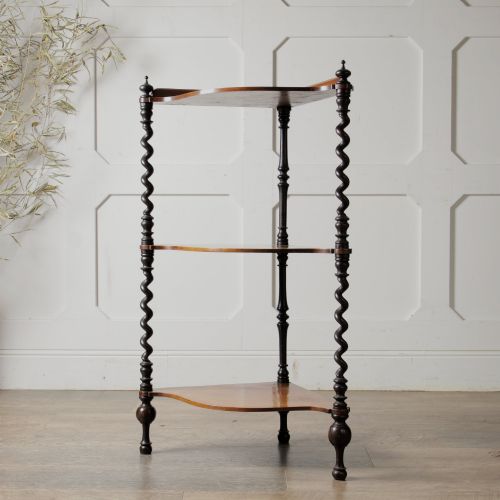
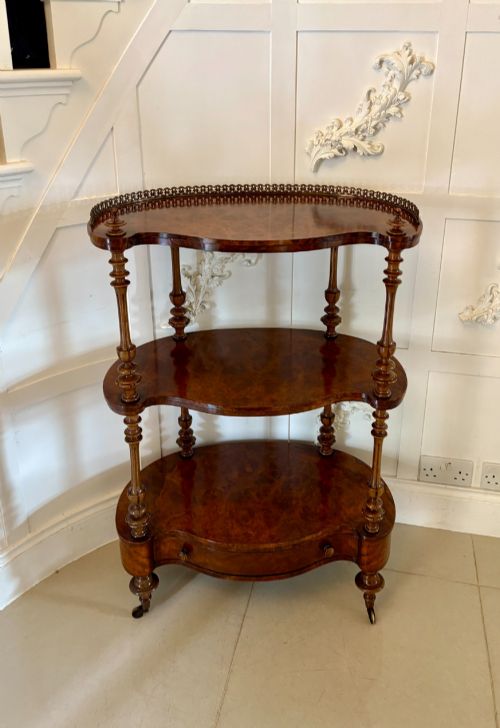
A three tiered stand provides vertical display and service space, appearing as an etagere, whatnot, or dumb waiter across multiple periods.
Three Tiered Stand
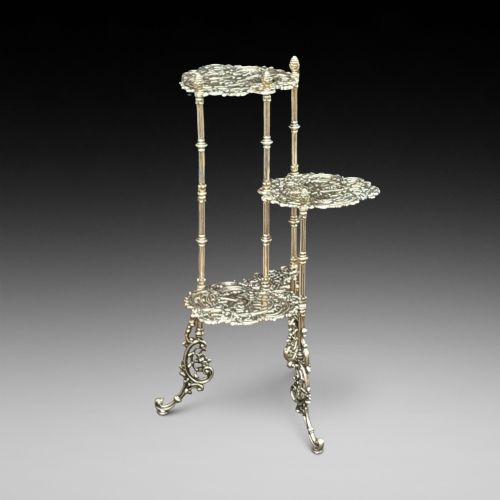
When you search for a three tiered stand, you encounter a versatile class of multi-level furniture designed to hold books, food, or decorative objects without occupying a large floor footprint. These items span various forms including whatnots, etageres, dumb waiters, cake stands, and buffets across domestic interiors.
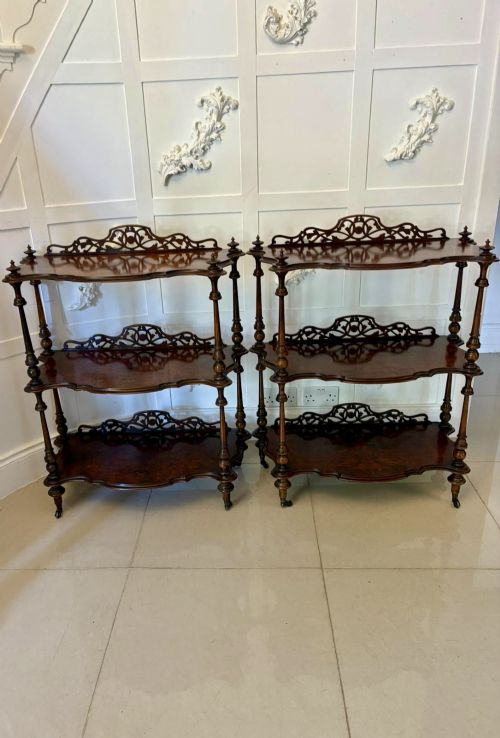
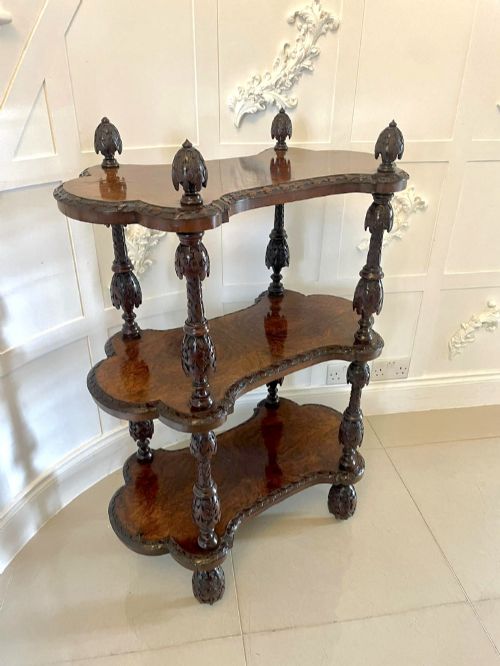
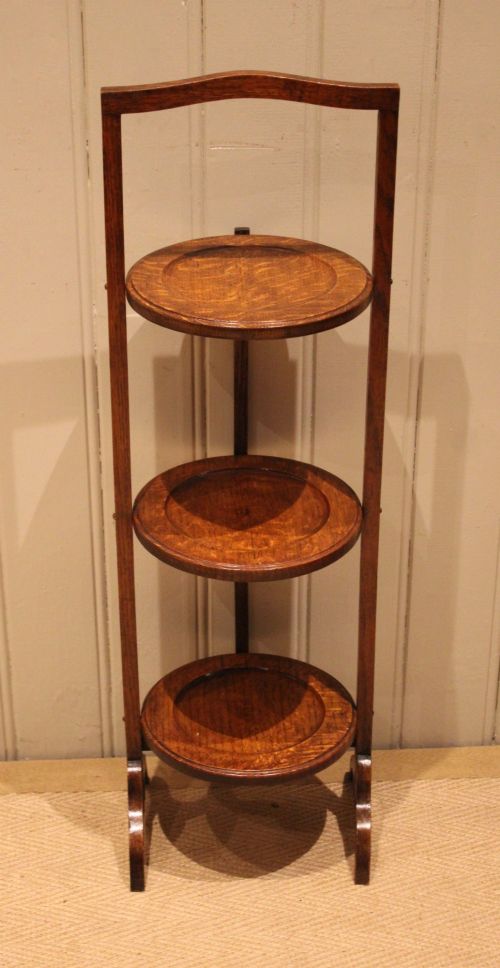
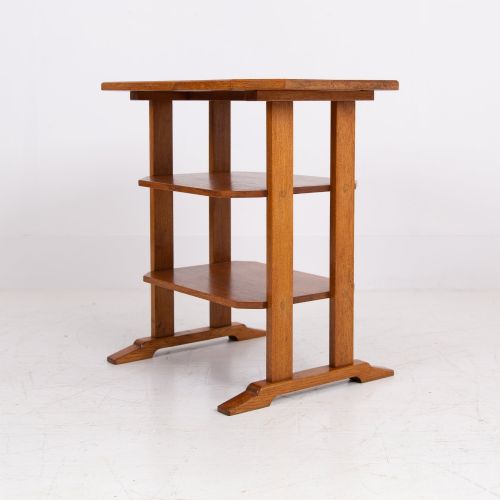
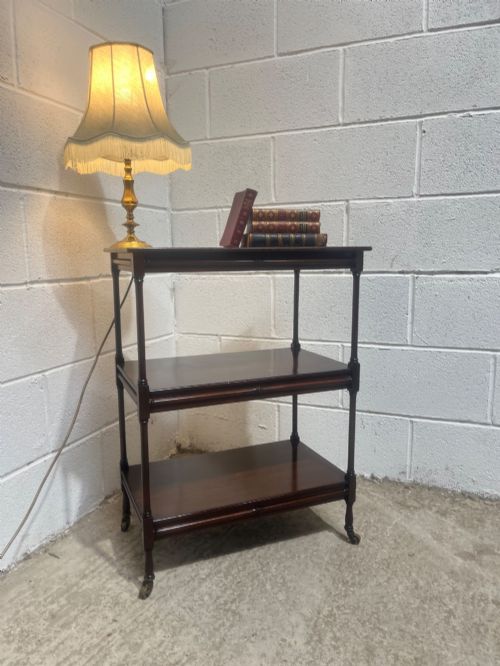
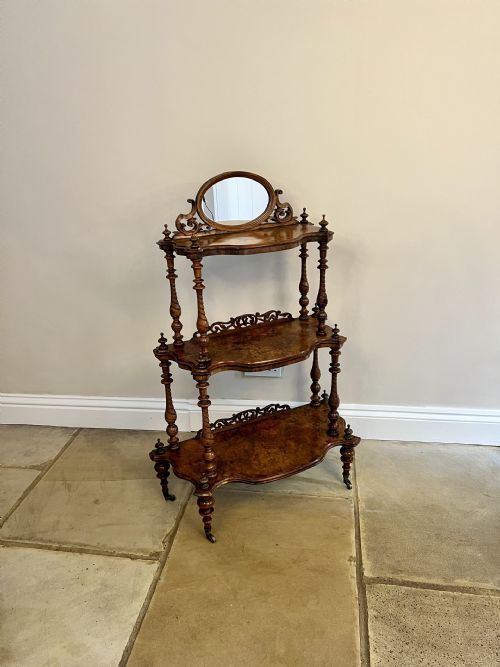
The pieces on this page are most commonly encountered in mahogany and walnut timbers from the Victorian and Edwardian eras, alongside earlier Georgian examples and later arts and crafts items. Formats range from revolving oak cake stands to serpentine burr walnut display shelves and tiered serving tables.
Originating as practical dining room accessories or parlour display units, these three-tiered pieces suit modern living spaces as side tables, bedside surfaces, or book storage. Their stacked configuration creates functional tiers that elevate items off the main floor level.
Materials and construction methods
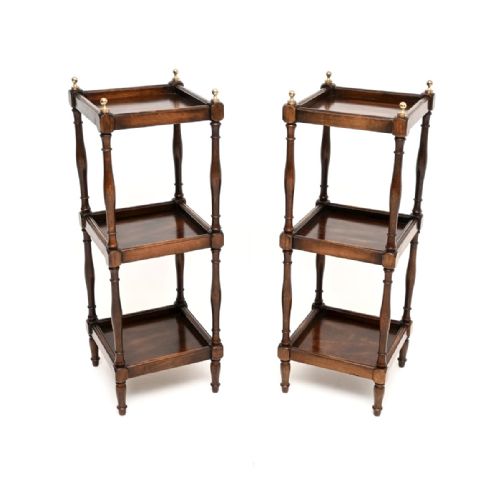
Cabinet makers utilised dense hardwoods such as mahogany, walnut, rosewood, and oak, frequently selecting burr veneers and parquetry inlay to create visual interest on the shelves and tops. Brass fittings, castors, and turned legs support these tiered structures.
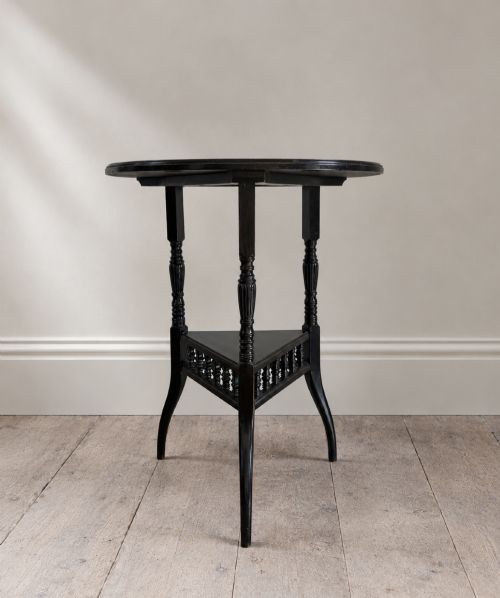
Joinery methods involve turned columns, barley twist supports, and delicate framing to connect the graduated platforms securely while maintaining an overall sense of balance and proportion.
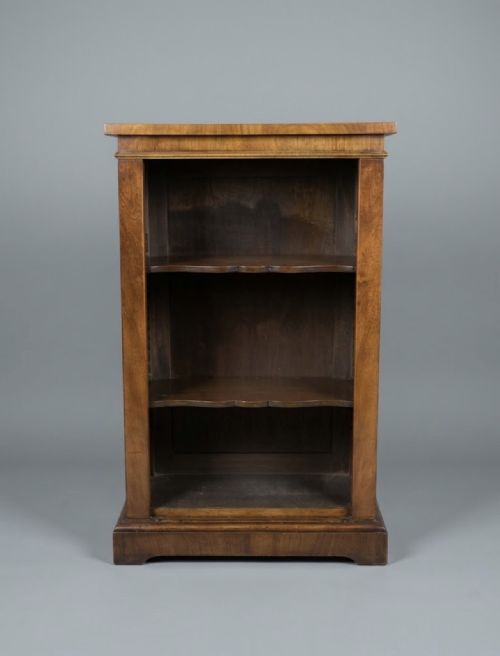
Object forms include occasional tables, whatnots, cake stands, bookcases, side tables, dumb waiters, and etageres.
Factors influencing quality
The standard of a three tiered stand rests upon the selection of timber grain, such as figured burr walnut or rich mahogany, and the crispness of carved or turned supports. Superior examples exhibit refined proportions where each tier steps back harmoniously.
Joinery execution and stability dictate longevity, distinguishing robustly constructed furniture intended for daily domestic use from purely decorative items with loose joints or warped shelves.
The Three Tiered Stand Glossary
- Etagere
- A piece of furniture consisting of a set of open shelves for displaying small objects. These tiered display stands became particularly popular during the nineteenth century.
- Dumb Waiter
- A tiered piece of furniture traditionally used in dining rooms for holding dishes or serving food without servants present. They often feature circular rotating or stationary graduated trays.
- Buffet
- A sideboard or tiered serving table used for food and drink presentation. These items provide robust multi-level surfaces for dining rooms and hallways.
- Parquetry
- Geometric mosaic woodwork used for decorative surface patterns on tabletops and shelves. This technique showcases contrasting timber tones.
Three Tiered Stand: Frequently Asked Questions
What is a three tiered stand used for?
These pieces serve multiple functions around the home, originally acting as dining room dumb waiters for courses or parlour whatnots for ornaments and books.
Today they function effectively as side tables, bedside units, or plant stands where vertical display space is required.
How do I identify a Victorian whatnot?
Victorian examples frequently employ dark timbers like walnut or mahogany, often featuring turned supports, barley twists, or elaborate fretted galleries around the shelves.
They generally exhibit heavier construction than Georgian pieces and prioritize display and storage in domestic drawing rooms.
Are cake stands considered tiered stands?
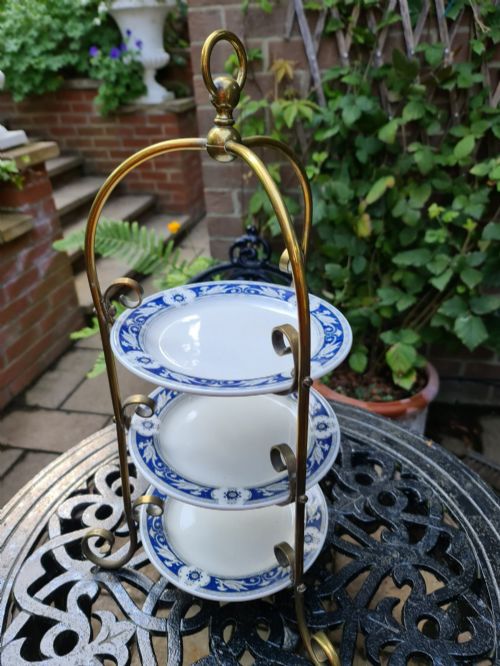
Edwardian folding cake stands and static wooden versions provide multiple tiers specifically designed for serving afternoon tea or holding smaller display items.
Many fold flat for convenient storage when not in use.
What timber is most common?
Mahogany and walnut appear most frequently across the inventory, spanning Georgian, Victorian, and Edwardian periods in both plain and figured burr varieties.
Oak is also widely used, particularly in Arts and Crafts and early twentieth-century pieces.