



Three Tier Shelf Table
A three tier shelf table offers stepped display space across multiple surfaces, combining practical storage with elegant proportions for period interiors.
Three Tier Shelf Table
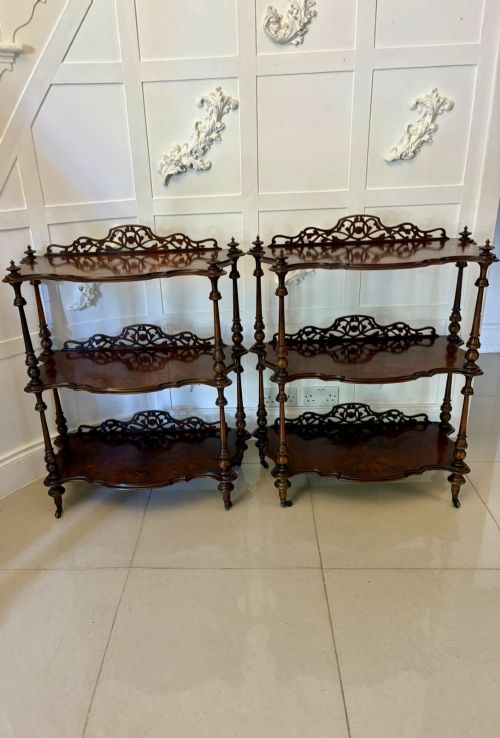
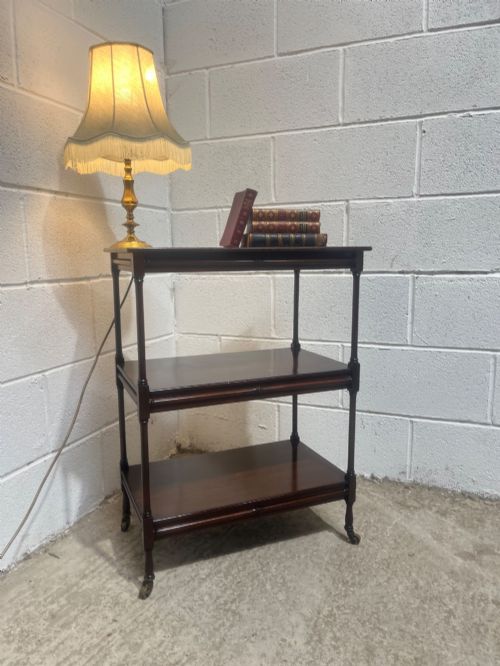
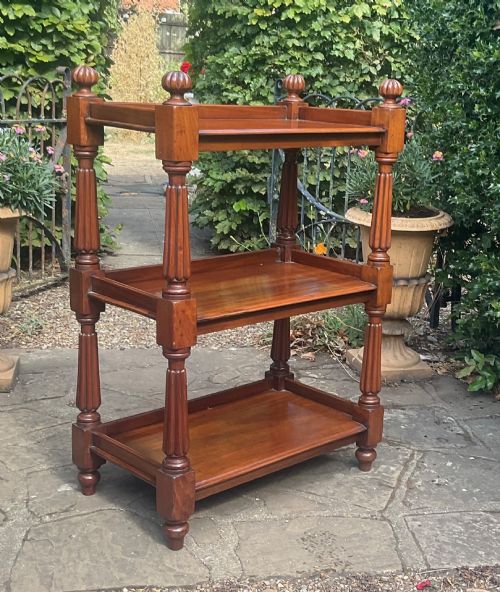
When searching for a three tier shelf table, you are looking at multi-level display pieces commonly catalogued as whatnots, etageres, buffets, and trolley tables. These tiered items provide three distinct platforms for books, ornaments, and decorative objects, using vertical space efficiently within a room.
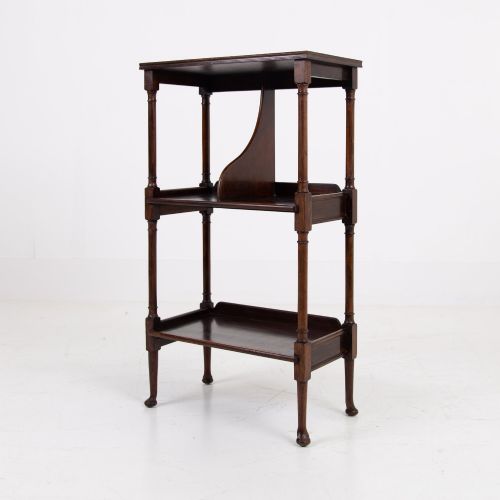
The selections on this page span the Georgian, Regency, and Victorian eras through to the Edwardian period, with nineteenth-century examples appearing most frequently. You will encounter freestanding pieces alongside corner or bedside variations designed for specific domestic corners.
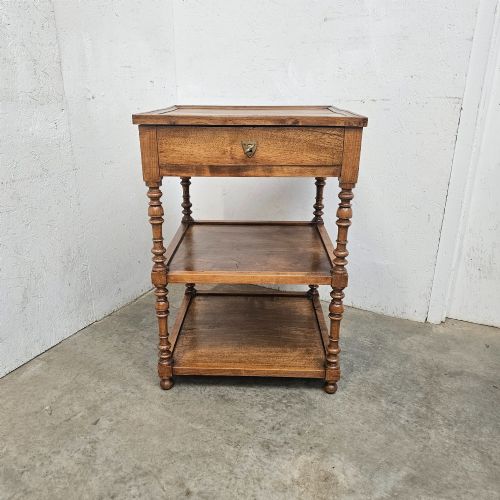
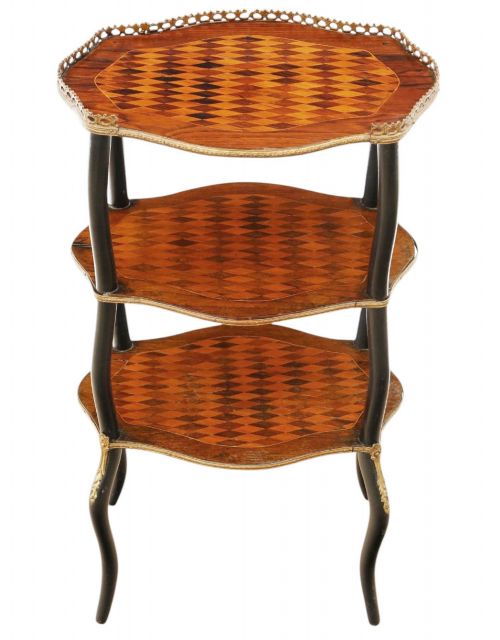
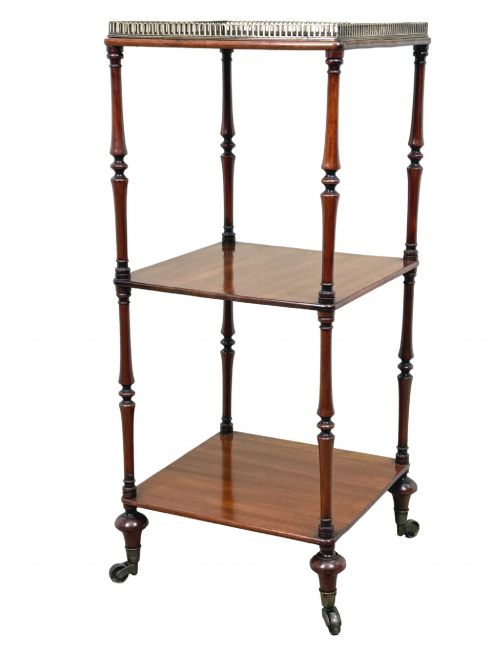
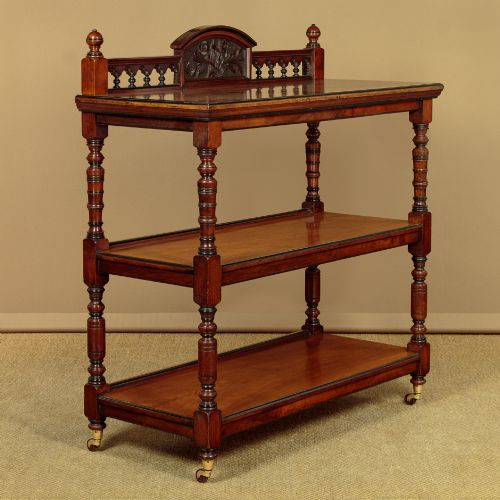
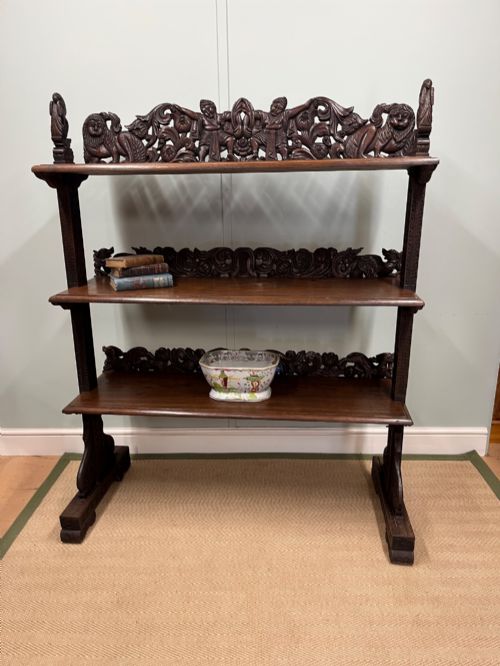
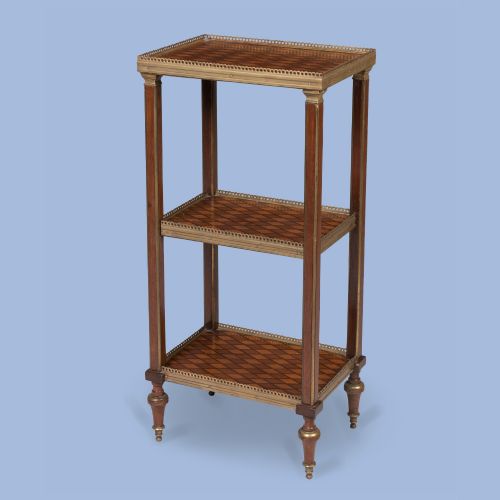
Forms range from simple mahogany or walnut tiered stands to brass-mounted campaign washstands, French-influenced etageres with marquetry, and robust oak buffets. This variety reflects how nineteenth-century makers adapted the basic tiered concept for drawing rooms, dining rooms, and bedrooms alike.
Materials and construction methods
Timbers dominate the construction of these tiered pieces, with solid and veneered mahogany, burr walnut, rosewood, and oak forming the primary structures. Workshops utilised these dense hardwoods to support slender uprights and multiple stacked platforms without structural sagging.
Decorative detailing relies on brass mounts, ormolu accents, parquetry, and inlaid marquetry, particularly in pieces influenced by French design traditions. Turned legs, fine corner columns, and original castors frequently support the tiers, allowing the smaller tables to be moved easily.
Distinctions in quality
The calibre of a tiered table rests on the selection of timber veneers, such as figured burr walnut, birdseye maple, or pollard oak, and the precision of their bookmatching. Superior pieces display crisp hand-carving on the supports and finely turned uprights rather than plain, machine-cut components.
Hardware and secondary elements also separate standard examples from exhibition pieces, evidenced by heavy cast brass mounts, original castors, and tight, stable joinery across all three tiers.
Gillows
The Three Tier Shelf Table Glossary
- Whatnot
- A piece of furniture consisting of several open shelves for displaying small objects, popular throughout the nineteenth century. These multi-tiered stands were placed in drawing rooms to hold ornaments and books.
- Etagere
- A French-derived term for a piece of furniture with a series of open shelves for displaying ornaments. They often feature delicate supports and decorative marquetry inlay.
- Dumb waiter
- A tiered side table or serving stand used in dining rooms for holding dishes or bottles. They allow items to be kept close at hand without requiring constant staff service.
- Campaign washstand
- A folding or portable tiered piece designed for travel, typically fitted with brass mounts and carried by officers. They utilise sturdy timbers to withstand frequent transport.
- Marquetry
- Decorative patterns formed by inserting small pieces of wood, ivory, or shell into a veneered surface. This technique creates elaborate floral or geometric designs on tabletops and shelves.
Three Tier Shelf Table: Frequently Asked Questions
What is a three tier shelf table used for?
These tiered stands served primarily as display furniture for ornaments, books, and small prized possessions in nineteenth-century reception rooms. Their multiple levels allowed households to exhibit collections without cluttering primary tabletop surfaces.
In dining rooms or bedrooms, similar tiered forms functioned as serving tables or washstands, holding ceramics, bottles, and personal items within easy reach.
How do I date a three tier shelf table?
Dating relies on observing timber choices, construction methods, and stylistic details such as turned legs or brass mounts. Regency and early nineteenth-century pieces often feature clean architectural lines in mahogany or rosewood, while mid-to-late Victorian examples frequently showcase burr walnut veneers and heavier carving.
Later Edwardian iterations lean towards French-inspired marquetry inlay and ebonised finishes. Examining the joinery and underside hardware provides further clues to the period of manufacture.
Are these tables sturdy enough for daily use?
Most pieces are built from dense hardwoods like mahogany, oak, or walnut, making them structurally sound for everyday domestic placement. However, their slender uprights and multiple shelves mean they are better suited to holding lamps, books, and decorative objects rather than heavy loads.
Placing them on level flooring prevents undue strain on the corner columns and joints connecting the tiers.
What is the difference between a whatnot and an etagere?
While both terms describe multi-shelved display furniture, a whatnot is traditionally the English term used from the Georgian era onwards for utilitarian or decorative tiered stands. An etagere generally denotes pieces with a distinct French influence, often featuring more ornate marquetry, ormolu mounts, and delicate display surfaces.
In practice, antique dealers and cataloguers have used both terms interchangeably for over a century.