

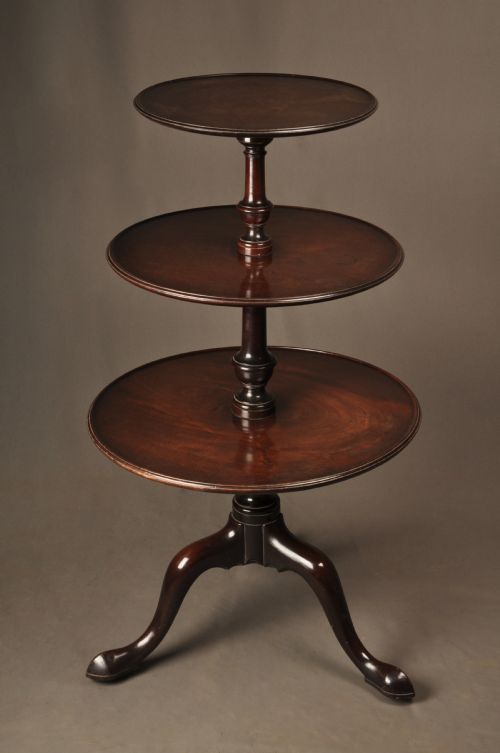
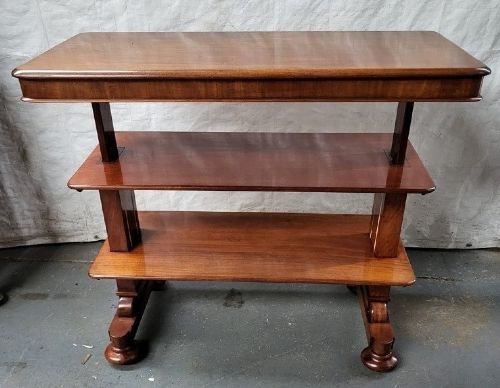

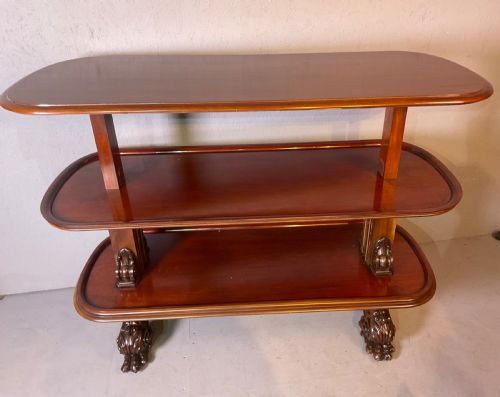


Three Tier Serving Table
A three tier serving table offers stacked display and surface space, bringing practical tiered architecture to dining rooms.
What a three tier serving table is
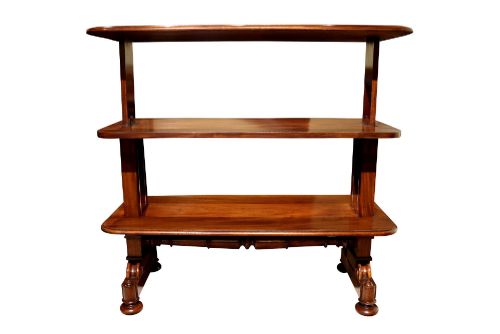
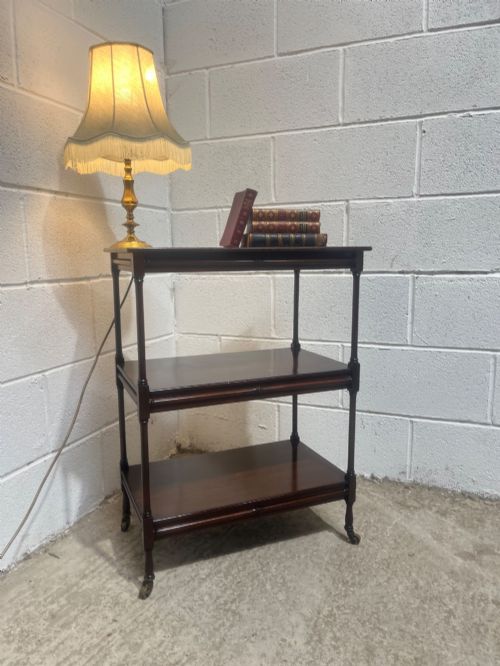
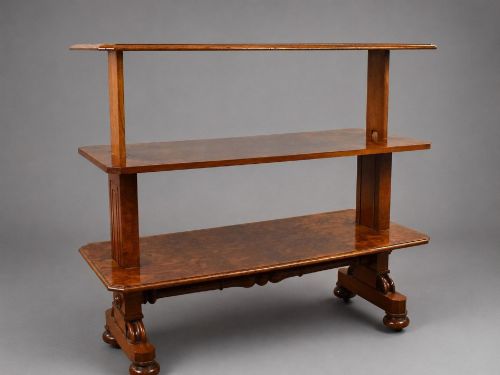
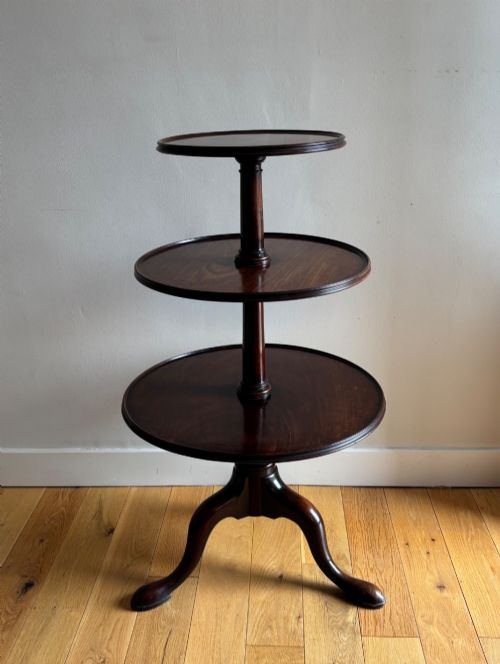
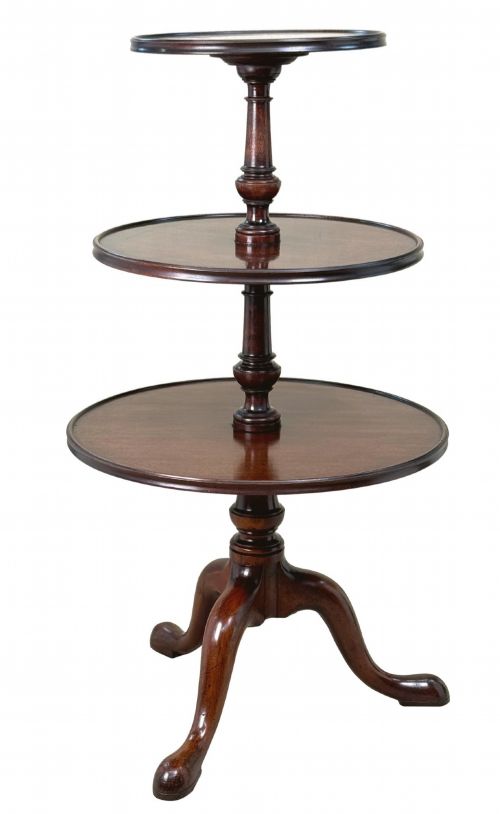
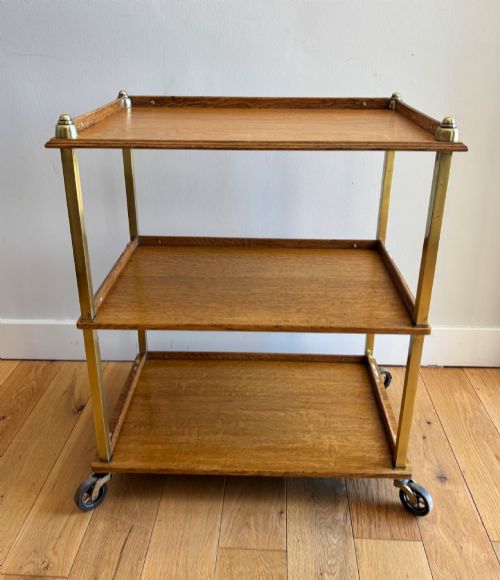
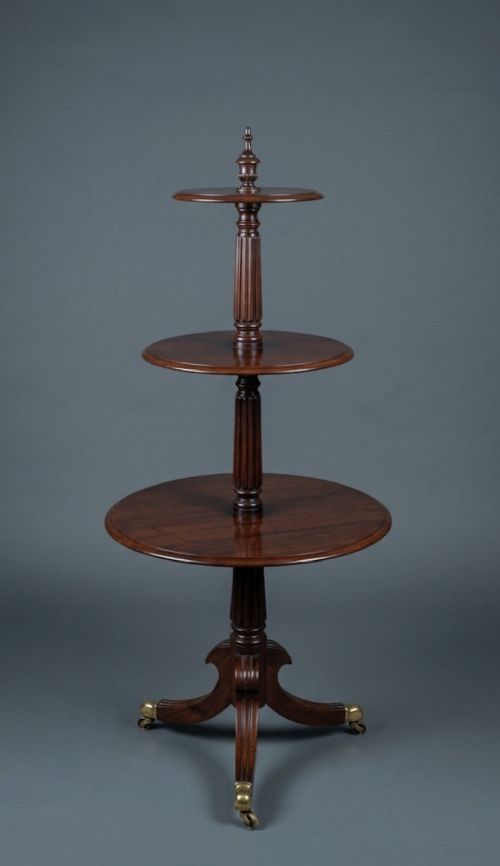
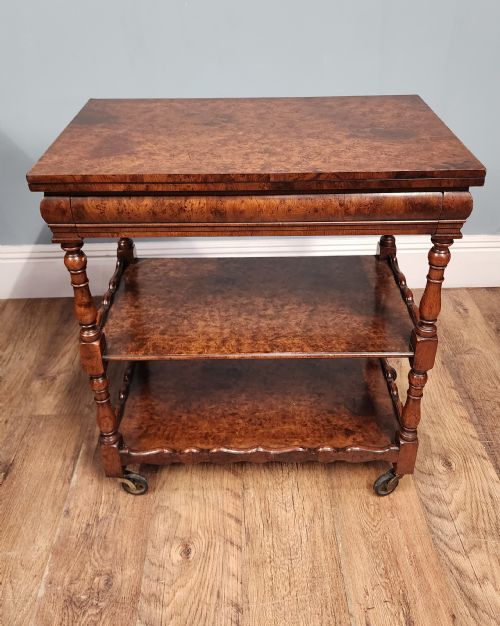
A three tier serving table combines the vertical capacity of a dumb waiter with the long surface of a buffet, creating a graduated piece designed for dining spaces. These tiered items emerge primarily from the Victorian and Edwardian eras, spanning periods from mid-nineteenth century examples up to nineteen-hundred. They appear in forms categorised as buffets, servers, and dumbwaiters.
The pieces on this page are overwhelmingly constructed from timber with three distinct levels supported by columns, pilasters, or rising mechanisms. While nineteenth-century pieces dominate the selection, styles range from William IV heaviness to lighter Victorian and Edwardian formats. A single archival piece demonstrates a chinoiserie variation within the broader family of tiered serving furniture.
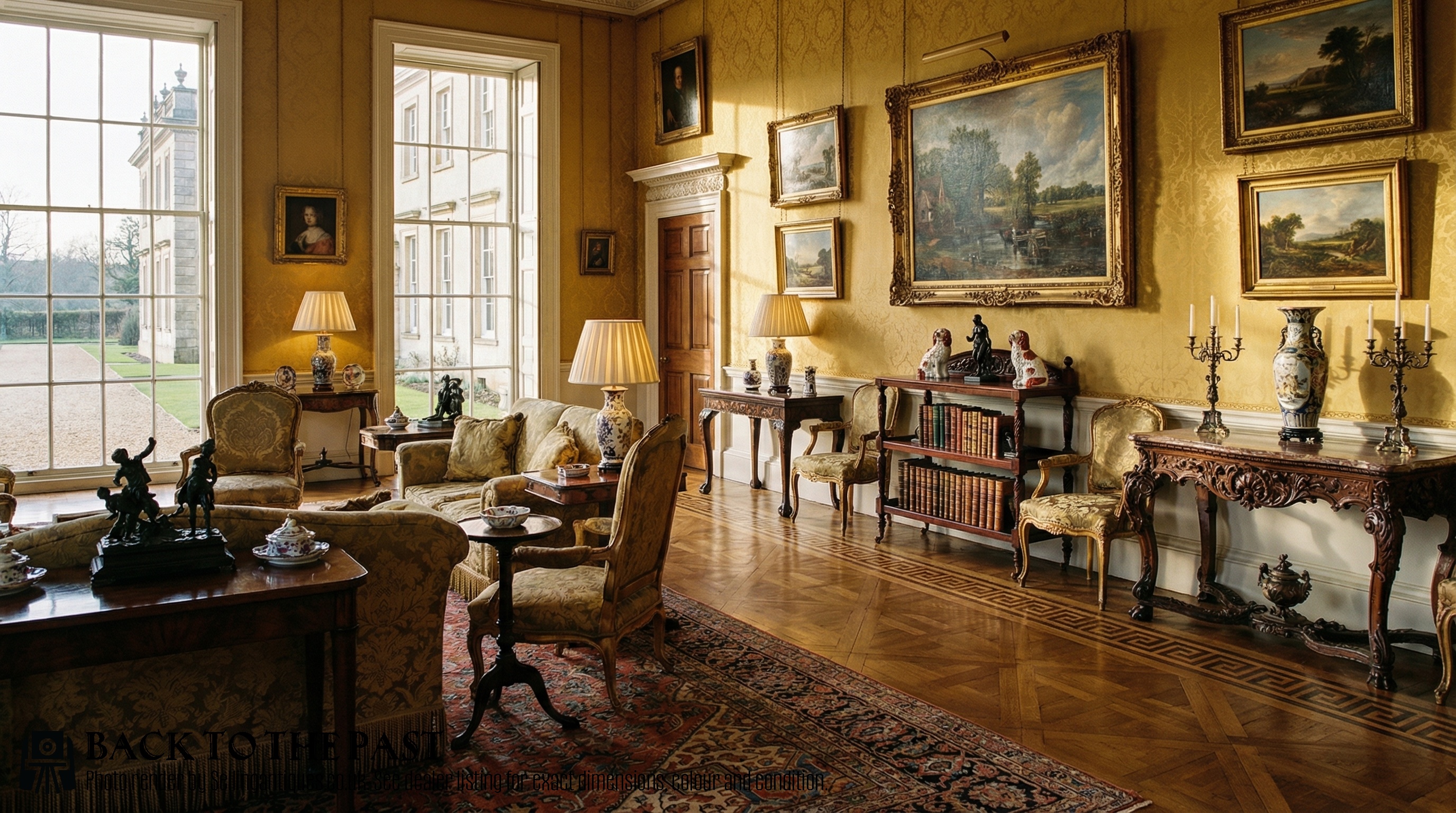
How they were made
Makers built these tables from solid timbers and veneers, predominantly selecting mahogany, walnut, oak, and occasionally incorporating brass fittings. These materials provided the structural integrity required to support multiple heavy tiers loaded with china, silver, or food during service.
Joinery methods of the period involved traditional framing to secure the vertical supports between each shelf. Certain iterations incorporated mechanical elements, such as rise and fall mechanisms, allowing sections of the table to adjust in height.
Retail Price Guide 2026
Typical UK retail prices for three tier serving table, calculated from the Sellingantiques database of over a million retail prices indexed since 2003. This retail price guide relies exclusively on Sellingantiques data; no external sources or auction records are used, so the figures do not describe the wider market.
The documented timber palette across these listings consists of mahogany, walnut, oak, and brass.
What varies in quality
Quality rests in the choice of timber figure, the crispness of turned or carved supports, and the structural stability of the tiered frame. Higher-grade examples utilise rich mahogany or figured walnut with substantial stock, whereas lesser pieces employ thinner boards and simpler joinery.
The sophistication of the design dictates distinction, moving from standard three-tier shelving to complex configurations featuring rise and fall mechanisms or elaborate architectural mouldings.
The Three Tier Serving Table Glossary
- Dumb waiter
- A tiered piece of dining furniture designed to hold dishes and serving items without domestic staff present. These items feature multiple shelves stacked vertically.
- Buffet
- A side table or sideboard used for serving food and displaying silver. In tiered formats, it provides expansive surface area across several levels.
- Rise and fall
- A mechanical function allowing tiers to adjust in height. This mechanism uses weighted columns or ratchets to alter the vertical position of the shelves.
- Chinoiserie
- European interpretation of Chinese decorative arts, often featuring painted or lacquered motifs. It appears on select serving tables to introduce orientalist decoration.
Frequently Asked Questions
What is a three tier serving table used for?
These tables served dining rooms by holding extra dishes, glassware, and silver during meals. Their vertical design maximised floor space while keeping serving items close at hand.
Today, they function as display units for collections, plants, or books in living spaces and hallways. The multiple tiers allow for layered arrangement of decorative objects.
How do I date a three tier serving table?
Dating relies on identifying timber choices, construction methods, and stylistic markers associated with specific periods. Victorian pieces often display heavy mahogany or walnut framing, while Edwardian versions can be lighter.
Reference points include William IV characteristics for earlier heavy pieces and mid-nineteenth-century cabinetmaking traits. Comparing turnings and edge moulding profiles helps narrow the decade of production.
What woods were used for these tables?
Cabinetmakers primarily employed mahogany, walnut, and oak for these tiered structures. These dense hardwoods offered the necessary strength to support heavy stacked shelves.
Secondary woods often lined the underside of shelves or interior framework. Brass components appeared occasionally as castors or structural capitals on columns.
How do I care for a antique serving table?
Maintain the timber surfaces by applying appropriate furniture wax periodically and avoiding direct sunlight. Keep the tables away from extreme temperature fluctuations to prevent timber splitting.
Inspect the joints connecting the tiers to the vertical supports to ensure stability. Clean brass fittings gently with non-abrasive cloths to preserve the metal finish.