
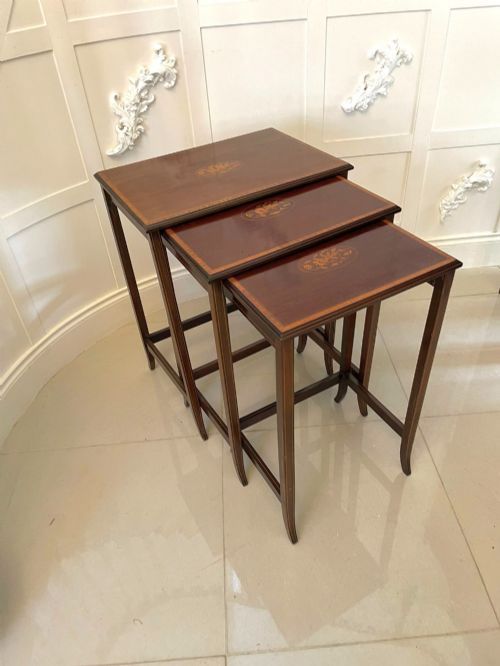
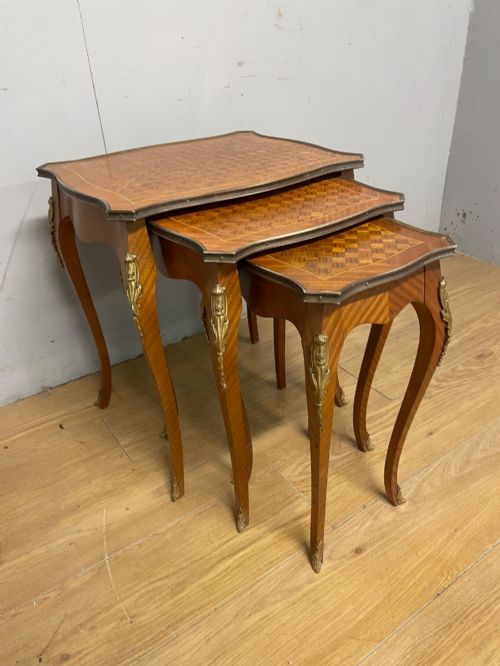
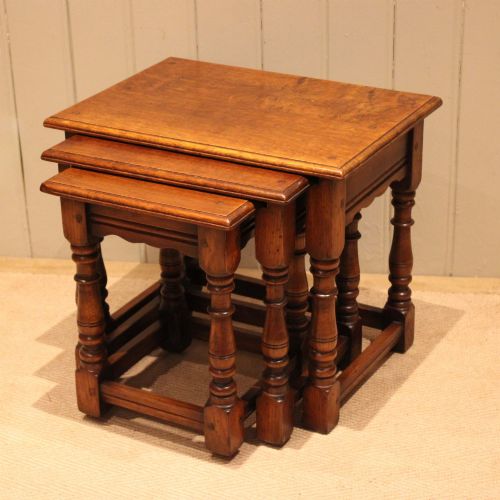
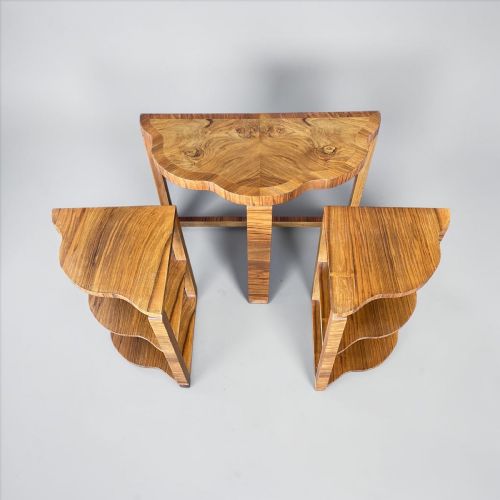


Three Tier Nest Tables
Three tier nest tables are practical sets of graduating occasional surfaces that tuck neatly away when floor space matters.
Three Tier Nest Tables
Three tier nest tables combine everyday utility with compact design, offering three graduated surfaces that slide beneath one another. When you browse three tier nest tables here, you encounter examples spanning the Edwardian era through the nineteen-forties.
Most pieces on show adhere to classic British and continental aesthetics, including Edwardian styles alongside Louis XV and XVI revivals. Art Deco influences also appear among the later nineteen-forties pieces.
How they were made
Cabinetmakers utilised solid timbers and decorative veneers to build these surfaces, frequently employing mahogany, walnut, and oak. Finer examples incorporate kingwood veneers and intricate parquetry top patterns.
Metal mounts provide decorative accents on specific continental interpretations, utilising cast brass and ormolu details. Joinery relies on traditional woodworking techniques suited to sustaining everyday movement.
Tables secretly practice the art of nesting like Russian dolls, ready to emerge when tea is served.
What varies in quality
Distinction across the range rests upon the selection of timber and the precision of the veneer work. Plain oak and mahogany tables prioritise robust utility, whereas parquetry tops and kingwood surfaces demonstrate higher decorative ambition.
Hardware and metal ornamentation also divide the simple pieces from the elaborate ones. Ormolu mounts and cast brass details elevate the craftsmanship of revival pieces beyond standard utility items.
The Three Tier Nest Tables Glossary
- Nest of tables
- A set of graduating occasional tables designed to fit one beneath another to save space. They provide multiple surfaces while occupying the footprint of a single small table.
- Parquetry
- A geometric mosaic of wood pieces used for decorative floors and tabletop surfaces. This technique creates patterned designs utilising contrasting timber tones.
- Ormolu
- Gilded bronze or brass applied as decorative mounts on furniture. This finish was favoured in French revival styles during the nineteenth and early twentieth centuries.
- Kingwood
- A dense, richly figured exotic timber used extensively in high-end cabinetmaking. Its distinct grain patterns make it a signature material for decorative veneering.
Three Tier Nest Tables: Frequently Asked Questions
How do I use a nest of tables?
These sets separate easily to serve drinks or hold books around a room when guests visit. They stack back together into a single compact column when floor space is needed.
Their modular nature makes them adaptable for smaller sitting rooms or corners where a permanent large table would crowd the space.
What woods were used for these tables?
Cabinetmakers relied heavily on mahogany, oak, and walnut for everyday strength and traditional appearance. More decorative examples incorporated exotic veneers like kingwood alongside intricate parquetry.
Metal components in brass or ormolu appear on specific continental revival pieces to add decorative contrast to the wood.
How do I date an Edwardian nest?
Edwardian examples typically feature lightweight mahogany frames and simple proportions reflecting the tastes of the early twentieth century. Construction details and lighter timber choices distinguish them from heavier Victorian pieces.
Later pieces from the nineteen-forties often adopt Art Deco geometry or simpler utility-style construction methods.
Are these tables sturdy enough for daily use?
Traditional joinery and dense hardwoods ensure these graduating surfaces withstand regular handling. The smaller tables are designed to be pulled out and moved about frequently.
Care should be taken with veneered surfaces to avoid moisture damage and heavy impacts on the edges.