





Three Tier Bar Cart
A three tier bar cart offers layered serving space in brass, walnut, and mahogany, bringing period mobility to entertaining.
Three Tier Bar Cart
A three tier bar cart provides stacked surfaces for serving drinks and holding glassware, appearing across several distinct historical periods on this page. These pieces span from the 19th century and Victorian eras through the Edwardian period into the 1930s.
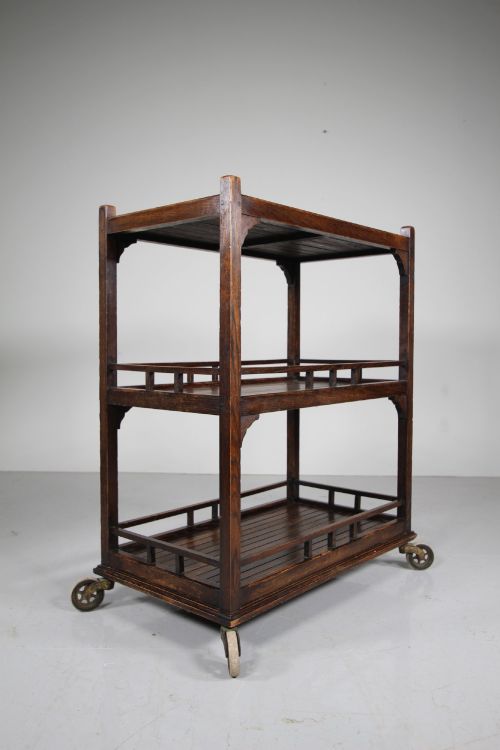
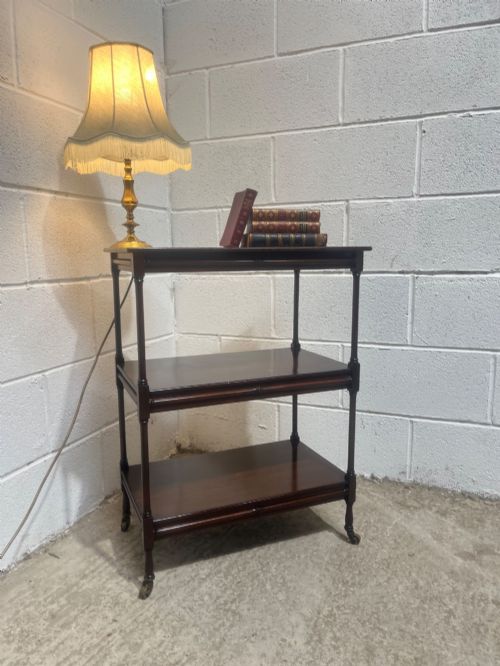
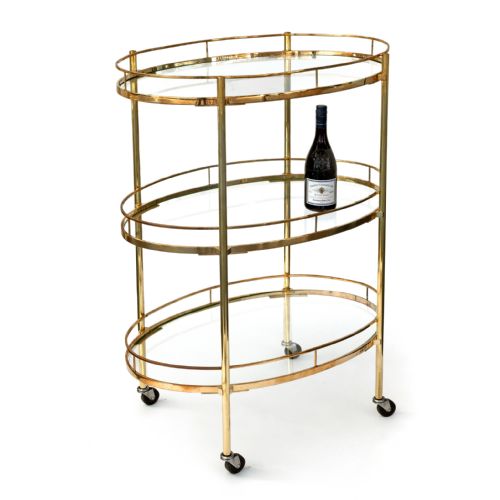
The forms range from circular walnut drinks carts and streamline hostess trolleys to barley twist tea trolleys in oak. One encounters brass and glass etageres alongside carved Chinese hardwood trolleys and French display stands.
Most examples function as mobile drinks trolleys or tea trolleys, utilising multiple tiers to maximise surface area while maintaining a compact footprint. Buyers meet these versatile serving pieces in styles from Art Deco and French Neoclassical to Chinese Export.
Materials and construction methods
The construction relies on solid timbers like oak, mahogany, and walnut, frequently showing figured veneers on circular Art Deco serving trolleys. Metal frames utilise brass, sometimes paired with glass tiers or constructed as galleried display stands.
Joinery and detailing include carved elements on Chinese hardwood and traditional turning such as barley twists on Edwardian oak frames. Galleried edges on brass stands and trolleys secure glassware during movement.
Three Tier Bar Cart Retail Price Guide 2026
Typical asking prices for three tier bar cart among the pieces listed under this phrase on Sellingantiques today, from the lower quarter to the upper quarter. They describe what is for sale here now, not the wider market.
Even the tea trolley managed to dress up for the 1930s, trading sensible oak for sleek circular walnut and streamline curves.
Judging quality in tiered carts
Quality reveals itself in the selection of materials, such as richly figured walnut veneer on circular Art Deco frames or substantial brass casting on galleried display stands. Refined carving on hardwood and crisp turning on timber uprights distinguish superior examples.
Proportion and structural integrity dictate the success of the piece, ensuring the three tiers balance visual weight with practical mobility. The integration of materials, whether glass set into brass or polished wood joints, determines the overall execution.
The Three Tier Bar Cart Glossary
- Etagere
- An open piece of furniture with multiple shelves or tiers for displaying small objects or serving drinks. These tiered structures provide accessible display space from all sides.
- Galleried
- Having a raised decorative rim or rail around the edge of a shelf or tabletop. This rail prevents items from sliding off during movement.
- Barley Twist
- A decorative turning on furniture legs or uprights that resembles a twisted rope. This style appears frequently on Edwardian tea trolleys.
- Streamline
- An aerodynamic design style of the 1930s characterised by smooth curved lines and horizontal emphasis. It defines several Art Deco bar carts.
- Figured Walnut
- Walnut timber possessing an attractive, highly figured natural grain pattern. Cabinetmakers select this wood for decorative veneer surfaces.
Three Tier Bar Cart: Frequently Asked Questions
What is a three tier bar cart used for?
These pieces serve primarily as mobile stations for holding bottles, glassware, and serving accessories during gatherings. The multiple levels allow hosts to separate drinks, ice, and glassware across distinct surfaces.
Beyond entertaining, they function as static display stands in living spaces for books, plants, or decorative objects. Their mobility permits easy repositioning within a room depending on the occasion.
How do I distinguish an Edwardian trolley from a 1930s cart?
Edwardian examples often feature traditional turned woodwork such as barley twists and solid oak or mahogany construction. They frequently serve as tea trolleys with a domestic, classical aesthetic.
Cart designs from the 1930s typically embrace Art Deco or streamline styling, utilising circular walnut frames, figured veneers, and sometimes combinations of brass and glass. The geometric shapes and curved silhouettes mark a distinct shift away from earlier Edwardian revival styles.
Are brass and glass trolleys sturdy?
Metal frames paired with glass tiers provide stable surfaces when constructed with secure joints and proper gallery rails. The metal framework supports the weight of glassware while keeping the overall profile visually light.
Maintenance involves ensuring the glass shelves rest securely within their frames and checking that any wheels or casters move smoothly. These brass and glass etageres balance functional durability with an open aesthetic.
Where were Chinese hardwood trolleys made?
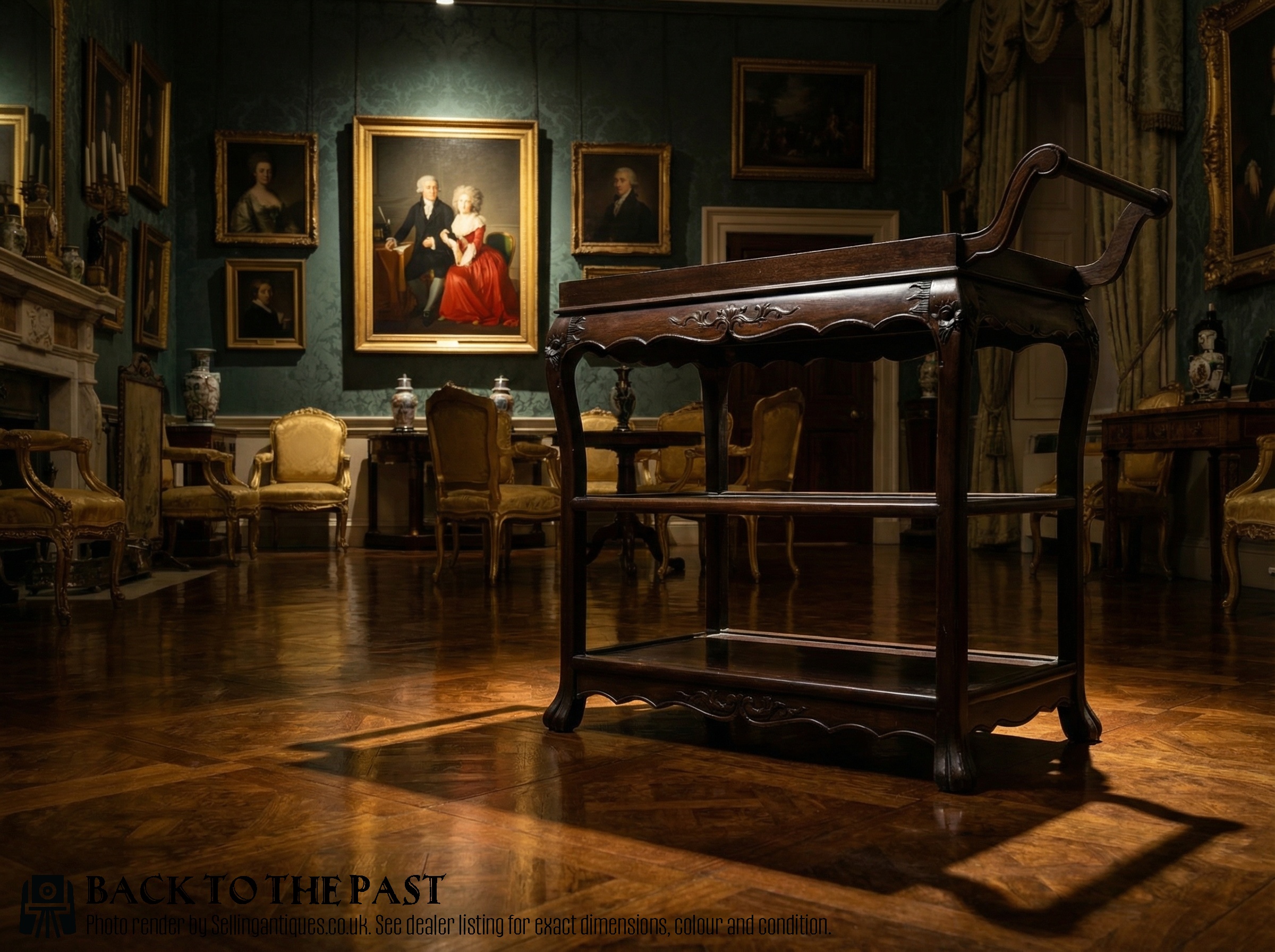
Carved hardwood trolleys reflecting Chinese Export styles were produced for international markets, combining traditional Asian woodworking techniques with European furniture forms. They utilise dense hardwoods capable of supporting intricate hand-carved details.
These pieces integrate multi-tiered serving formats with regional decorative motifs, offering an alternative to standard English or French trolley designs found from the same periods.