



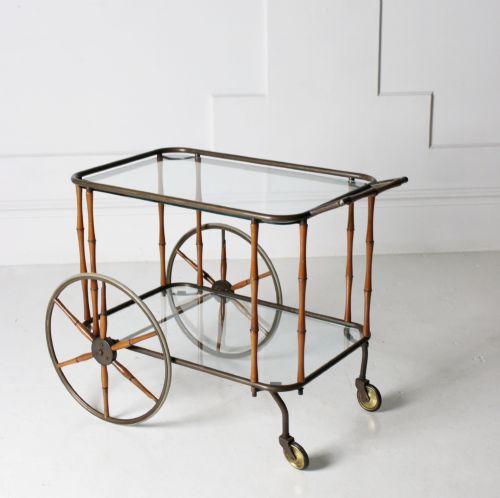
Brass Bar Cart
These brass bar carts bring period charm and hospitality to any room, offering versatile service and display surfaces.
Brass Bar Cart
A brass bar cart is an essential piece for serving drinks and entertaining, appearing in various forms from compact tiered étagères to rolling service tables. When searching for a brass bar cart, buyers encounter diverse designs spanning Edwardian serving trays, French mid-century pieces, and Art Deco cocktail carts.
The pieces listed on this page showcase a rich variety of origins and periods, including Edwardian inlaid drinks tables, Victorian étagères, and French modern models. Materials range widely alongside the primary brass and glass, incorporating mahogany, oak, burr amboyna, goatskin, and gilt metal.
Makers such as Maison Baguès, Maison Jansen, and Aldo Tura represent the finer creations within this category. Buyers are most likely to meet multi-tiered stands, galleried display tables, and wheeled trolleys designed for practical hospitality.
Construction and materials
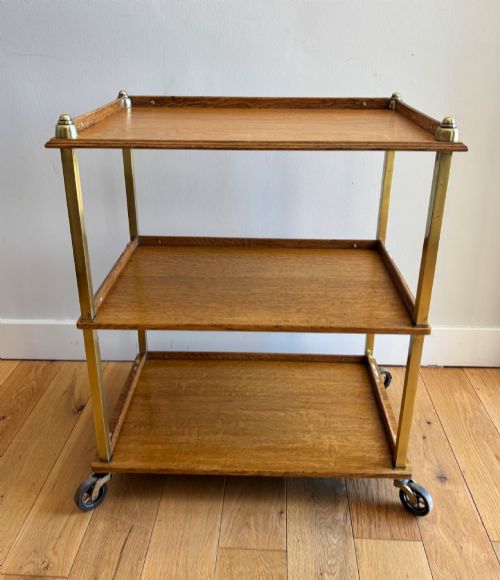
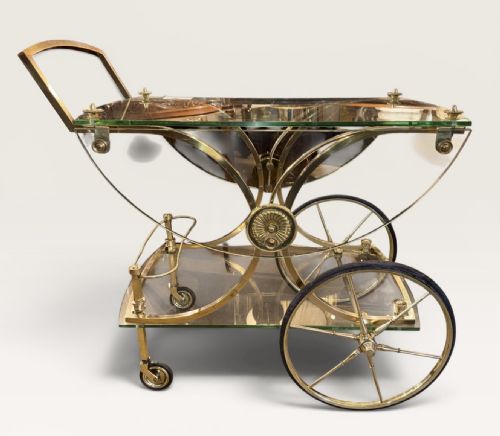
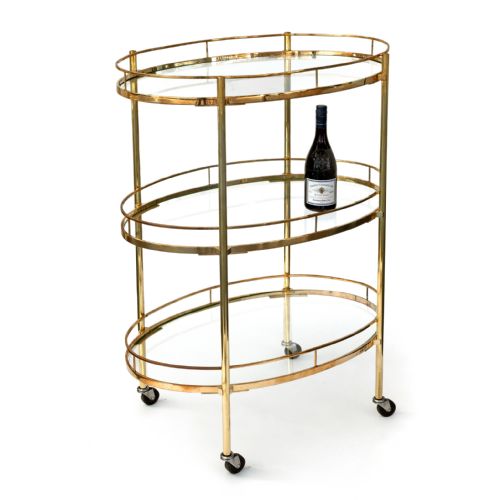
Makers utilised structural brass and gilt metal frames to support inset glass shelves, mirrored panels, or polished wooden surfaces. Wood elements such as mahogany, oak, and burr amboyna provide robust tabletops and internal framing for selected carts.
Current listings feature pieces spanning the Victorian era through the 1960s, incorporating glass, brass, gilt metal, oak, burr amboyna, mahogany, and goatskin.
Evaluating quality and craftsmanship
Quality in a brass bar cart rests on the crispness of the metal casting, the weight and stability of the frame, and the integration of secondary materials like exotic woods or goatskin. Superior examples demonstrate refined proportions and meticulous joinery that remain sturdy through decades of movement.
Attribution to esteemed workshops like Maison Baguès or Aldo Tura elevates a piece through distinctive decorative vocabulary and superior finishing. Lesser pieces rely on simpler construction without the bespoke detailing or signed markers found on high-end French and Edwardian models.
Maison Baguès·Aldo Tura·Maison Jansen
The Brass Bar Cart Glossary
- Étagère
- A set of open shelves for displaying small objects or serving drinks. These multi-tiered stands maximise surface area while maintaining a light visual presence in a room.
- Galleried
- Featuring a raised decorative rim around a tray or shelf to prevent items from sliding off. This metal or wooden border is typical of fine serving trolleys.
- Burr amboyna
- A highly figured hardwood veneer prized for its rich swirling grain patterns. It adds warmth and texture to Art Deco cocktail furniture.
- Faux bamboo
- A decorative treatment where metal or wood is carved and painted to resemble natural bamboo stalks. This style gained popularity in French mid-century design.
- Gilt metal
- Metal coated with a thin layer of gold paint or leaf to give a bright golden appearance. It provides an opulent finish without the weight of solid gold.
Brass Bar Cart: Frequently Asked Questions
What is a brass bar cart used for?
These pieces serve primarily as mobile drink stations, holding glassware, bottles, and cocktail accessories during gatherings. They also function as permanent display surfaces for decorative objects in living spaces.
Their mobility allows hosts to wheel refreshments between rooms with ease, combining practical utility with decorative presence.
How do I identify an Edwardian drinks table?
Edwardian examples often feature delicate inlaid woodwork, gilt metal mounts, and refined glass serving trays dating from the early twentieth century. They frequently emphasise craftsmanship in wood alongside metal frameworks.
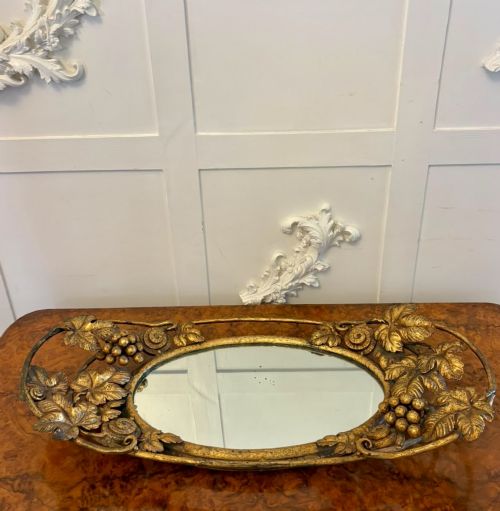
Look for period-specific details such as mirrored grape vine motifs and traditional Edwardian proportions that distinguish them from later mid-century designs.
Where were these trolleys made?
The pieces originate from various European centres, with a strong representation of French design houses and British workshops. Makers in France, such as Maison Baguès and Maison Jansen, produced notable mid-century variations.
English makers contributed Edwardian and Victorian serving tables, utilising local timbers like oak and mahogany alongside imported brass.
How do I care for a vintage drinks trolley?
Maintain the brass frame with gentle cleaning using a soft cloth to preserve the metal finish without stripping patination. Glass shelves and mirrored surfaces require standard glass cleaner applied carefully to avoid surrounding wood or metal.
Protect wooden elements like burr amboyna and mahogany from excessive moisture and direct sunlight to maintain their natural grain and colour.