



Three Panel Oak Chest
A three panel oak chest offers robust storage and honest construction, carrying centuries of domestic history in its timber.

Three Panel Oak Chest
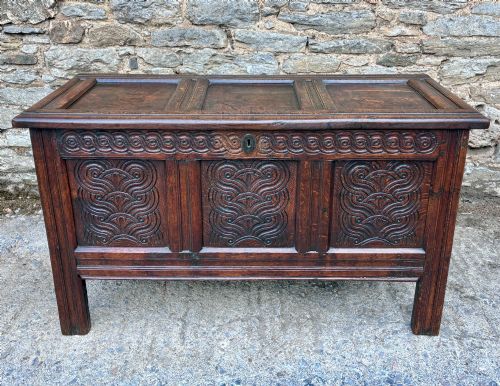
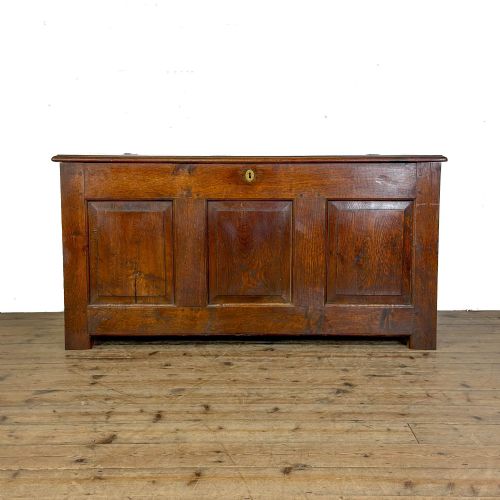
A three panel oak chest represents a traditional form of domestic storage, constructed with a tripartite division across the front facade. These pieces frequently appear from the seventeenth and eighteenth centuries, reflecting enduring joinery methods used across English households.
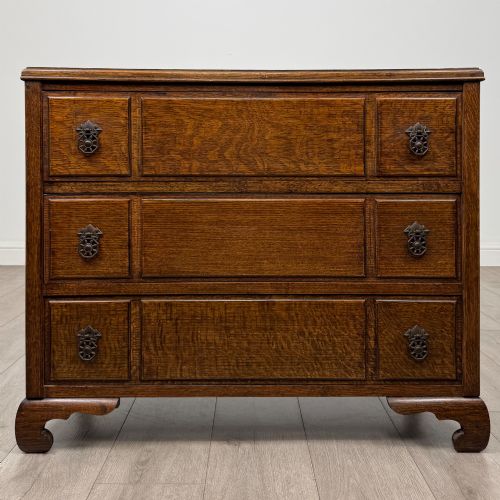
Buyers will encounter various formats within this search, including standard coffers, blanket chests, and mule chests fitted with lower drawers. The timber displays the characteristic grain and medullary rays of solid oak, often showing the patina of long usage.
Materials and construction
Makers utilised solid oak for the structural framework and panels, assembling the joints with pegged tenons rather than modern fasteners. Iron or brass hardware, such as hinges and lock plates, secured the lid and contents.
Surface treatment relied on natural waxing or early carving techniques, leaving linear patterns or arched details directly upon the timber panels. Internal fittings occasionally included a candle box fixed to the side.
Three Panel Oak Chest Retail Price Guide 2026
Typical asking prices for three panel oak chest among the pieces listed under this phrase on Sellingantiques today, from the lower quarter to the upper quarter. They describe what is for sale here now, not the wider market.
Listings feature solid oak combined with iron and brass hardware, spanning periods from the seventeenth century through the Georgian era.
Assessing quality in joined chests
Quality rests upon the integrity of the original joined framework and the preservation of the timber surface. Examples retaining their initial hinges, floor boards, and uncompromised lids command greater interest.
The depth and clarity of any carved decoration on the panels distinguish standard utility pieces from more ambitious commissions. Alterations to the base, such as the later addition of drawers, change the original balance of the piece.
The Three Panel Oak Chest Glossary
- Joined chest
- A piece of furniture constructed using mortise and tenon joints rather than simple boards nailed together. This method provided exceptional strength for domestic storage.
- Mule chest
- A storage chest featuring one or more drawers positioned beneath the main compartment. It bridges the transition between a traditional coffer and a chest of drawers.
- Candle box
- A small internal compartment fixed inside the chest near the top corner. It protected small items and tallow candles from damage.
- Medullary rays
- Natural silver-grain markings visible in quartersawn oak. These growth lines indicate high quality conversion of the timber.
Three Panel Oak Chest: Frequently Asked Questions
What is a three panel oak chest?
A three panel oak chest is a traditional storage box constructed with a front divided into three distinct wooden sections framed by stiles and rails. These pieces served generations of households for storing textiles, documents, and valuables.
They appear across various periods, notably the seventeenth and eighteenth centuries, showing straightforward rectangular proportions and durable pegged joinery.
How were mule chests different?
Mule chests combine the deep upper storage of a traditional coffer with one or more functional drawers built into the base. This design allowed access to everyday items without requiring the heavy lid to be lifted constantly.
Such examples frequently date from the Georgian era and provide added versatility for modern domestic interiors.
Where was the candle box placed?
The candle box is a small, lidded internal trough fixed to the interior side panel near the top rim. It kept fragile items separated from heavier contents stored in the main well.
Its presence inside an antique chest indicates original interior arrangements remain intact.
How do I care for antique oak?
Antique oak benefits from stable room temperatures and protection from direct sunlight or excessive dry heat. Applying occasional traditional beeswax preserves the natural lustre of the timber.
Avoid using modern silicone sprays or abrasive cleaners which can damage the aged surface.