

Three Leg Occasional Table
A three leg occasional table is a compact support for daily use, appearing here in oak, mahogany and walnut across several centuries.
Three Leg Occasional Table
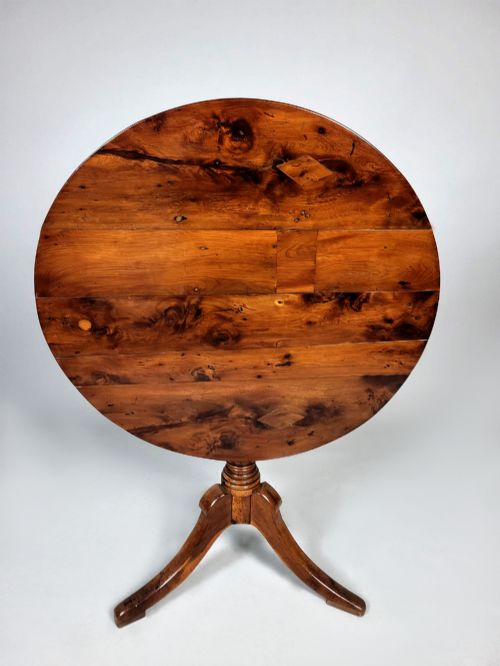
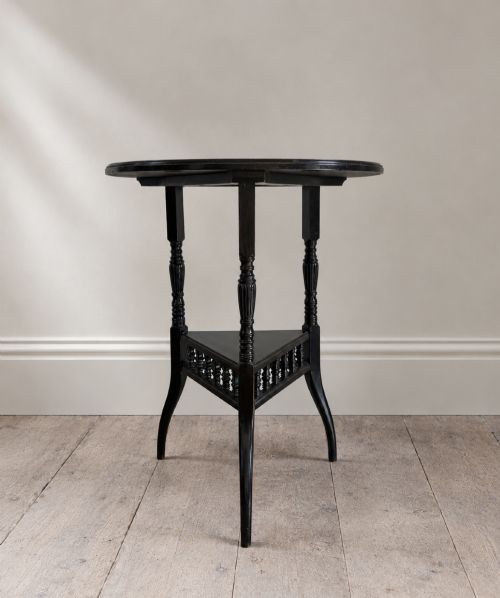
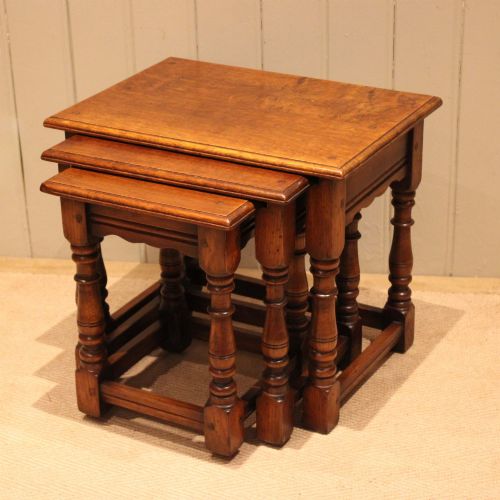
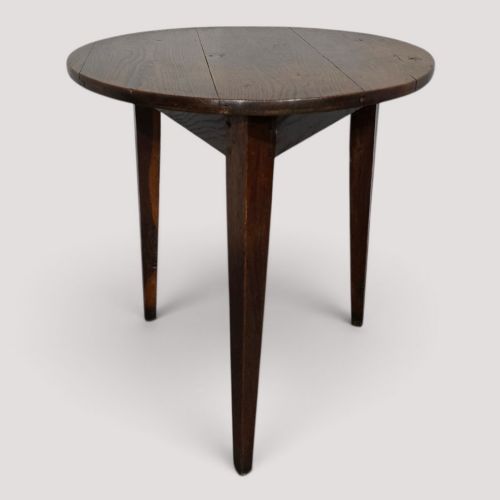
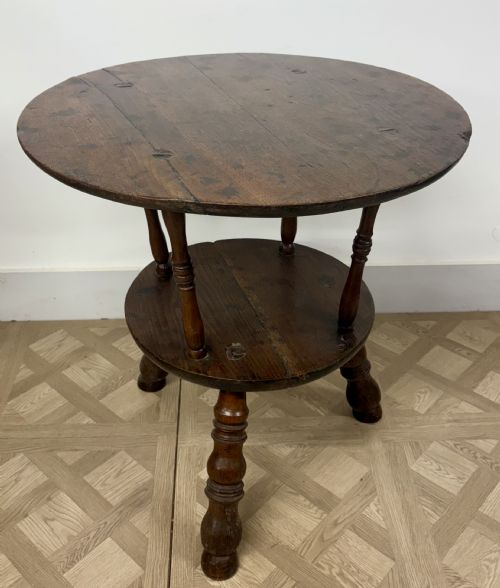
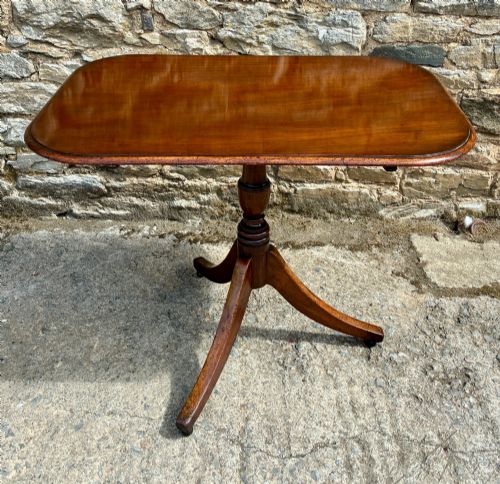
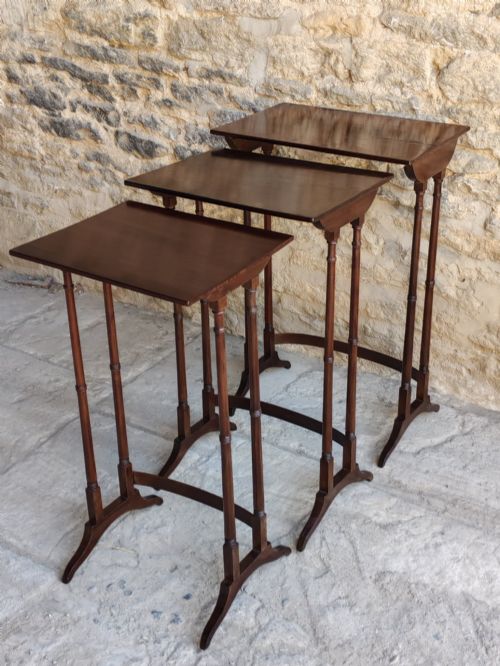
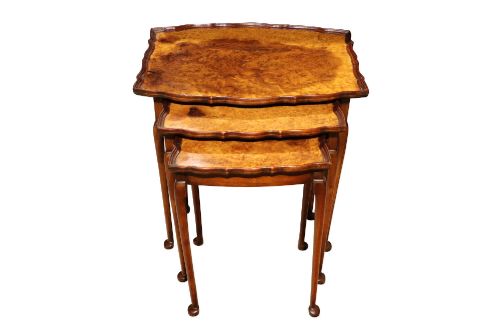
A three leg occasional table takes many forms on this page, spanning cricket tables, wine tables, nests and plant stands. These pieces serve as flexible surfaces in sitting rooms and hallways, designed to hold lamps, drinks or small objects without crowding a floor plan.
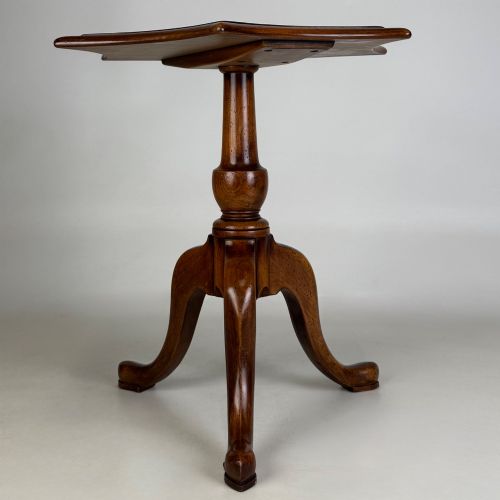
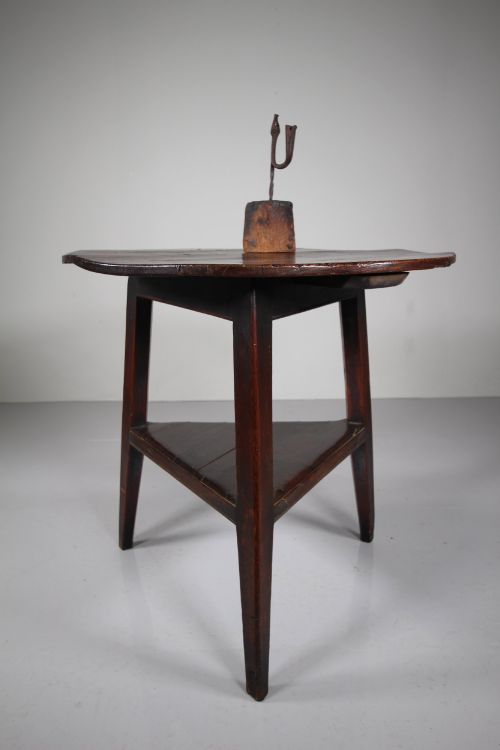
The selection ranges from robust 18th century oak cricket tables with plank tops to refined Georgian mahogany tripod wine tables and later 19th century ebonised or walnut designs. Regional examples, including Welsh and English country pieces, sit alongside continental and imported work.
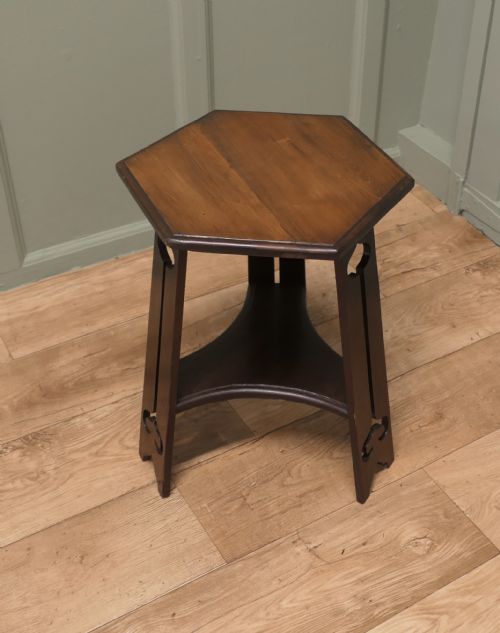
Makers and workshops of the Arts and Crafts period also contributed geometric and clover shaped variants, alongside Edwardian walnut and mahogany side tables. Buyers encounter forms ranging from simple rustic elm and pine to structured multi-tier tables.
Materials and Construction
Cabinet makers and country joiners relied on solid timbers such as oak, mahogany, elm, walnut and pine, often matching heavy plank tops with turned or chamfered uprights. Tripod constructions required precise jointing to balance the top firmly on three supports without wobble.
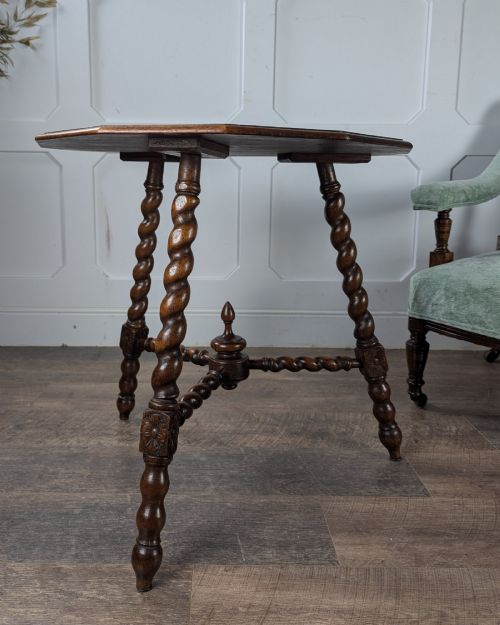
Decorative touches include chip-carving, barley twist turnings, marble tops inset with gilded brass, and painted or ebonised finishes on hardwood. Woods like yew, ash and pollard oak provided varied grain patterns for distinct regional and period tastes.
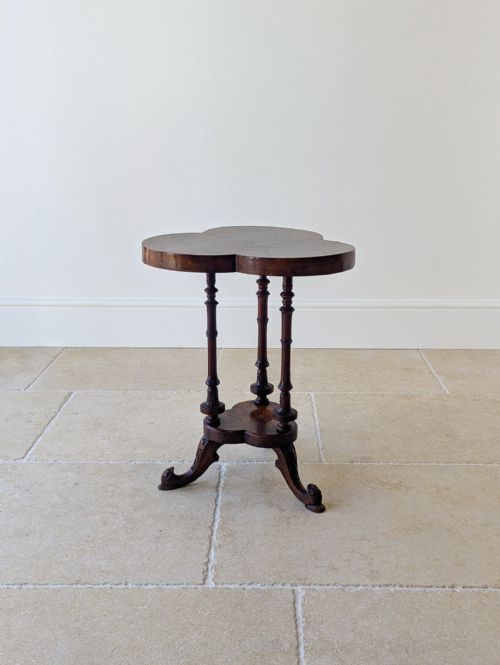
Several tables take their structural cue from clover leaves and triquetras, proving that three legs love a curve.
Judging Quality
Quality rests in the choice of timber and the integrity of the three-legged frame, where well-turned joints and stable weight distribution determine lasting utility. Untouched surfaces with deep patination hold more distinction than later alterations or heavy refinishing.
Finer pieces show careful proportioning in the turning of legs and the thickness of plank or tilt-top surfaces, whereas utilitarian examples prioritize simple service. The handling of carved details, such as Gothic tracery or chip-carving, separates standard workshop output from more ambitious designs.
The Three Leg Occasional Table Glossary
- Cricket table
- A sturdy English table with three splayed legs and a round wooden top, traditionally used in country houses.
- Tripod table
- Any small table supported by a central pillar above three spreading legs, offering stable placement on uneven floors.
- Tilt top
- A table mechanism allowing the top to hinge vertically for storage against a wall when not in use.
- Trefoil
- A three-lobed shape resembling a clover leaf, frequently seen in the design of tabletops and plant stands.
- Ebonised
- Wood treated with a dark stain or finish to imitate the appearance of ebony, common in late Victorian pieces.
Three Leg Occasional Table: Frequently Asked Questions
What is a cricket table?
A cricket table is a traditional English form featuring a solid wooden top supported by three splayed legs.
These pieces were built for stability on uneven farmhouse floors and usually constructed from oak, elm or pine.
How do I use a tripod table?
A tripod table functions well as a bedside support, lamp stand or small surface beside a chair.
Because they occupy a small footprint, they fit easily into corners and narrow spaces where four-legged tables do not.
What woods were used?
Cabinet makers utilised native hardwoods like oak, mahogany, walnut and elm for durability and grain pattern.
Pine and ash appear frequently in regional country pieces, while exotic woods and ebonised finishes emerge in later Victorian work.
How do I date a table?
Dating relies on observing construction methods, timber choice, tool marks and the style of the leg turnings.
Georgian and 18th century examples show pegged joints and hand-sawn boards, whereas later pieces display machine-cut elements and distinct revival motifs.