

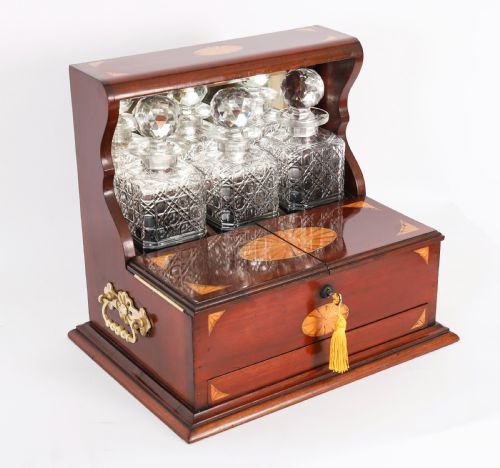


Three Glass Decanters
When you search for three glass decanters, you are looking at sets of matching drinks vessels housed in frames or stands that have served dining rooms for centuries.
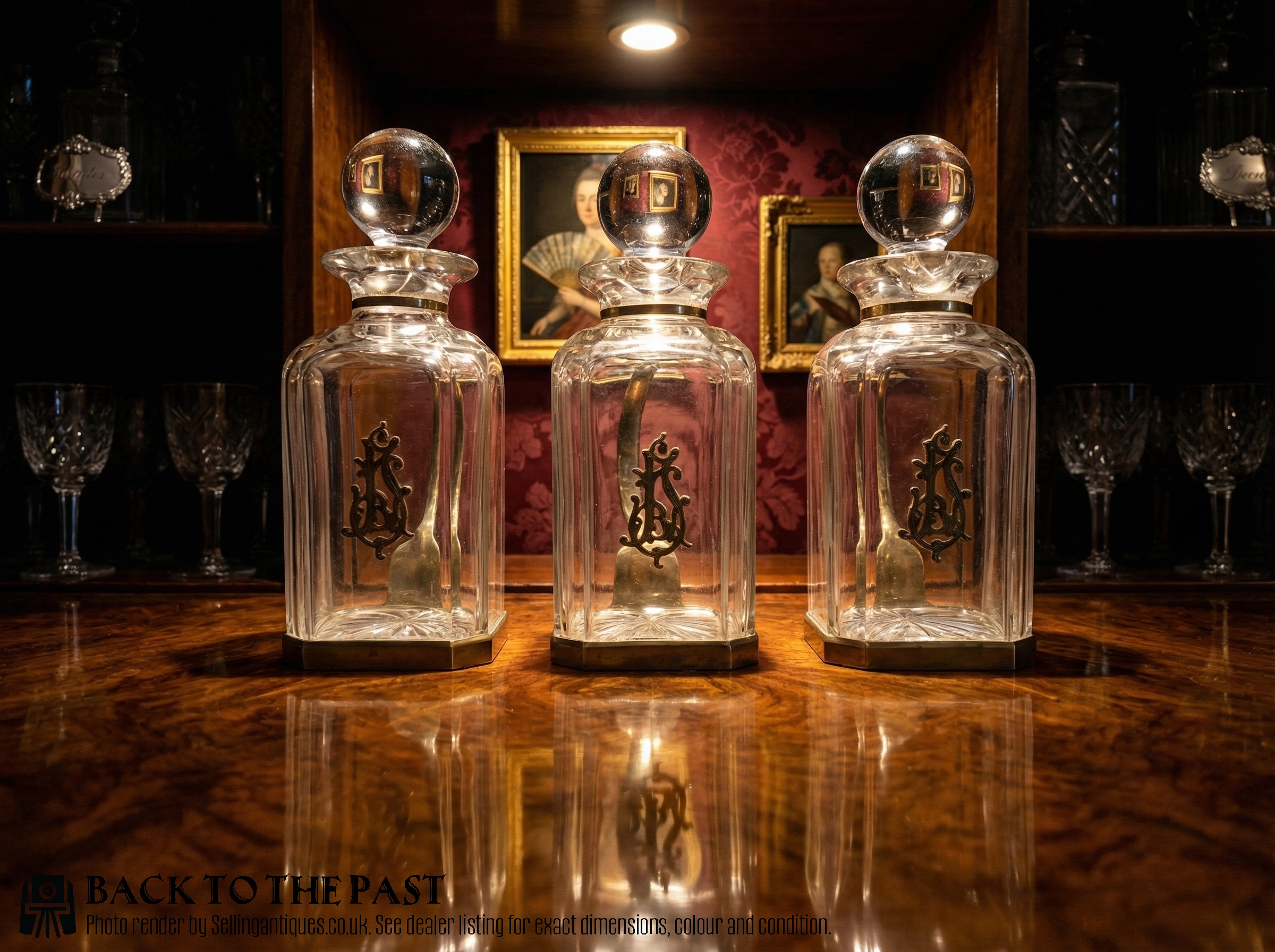
Three Glass Decanters
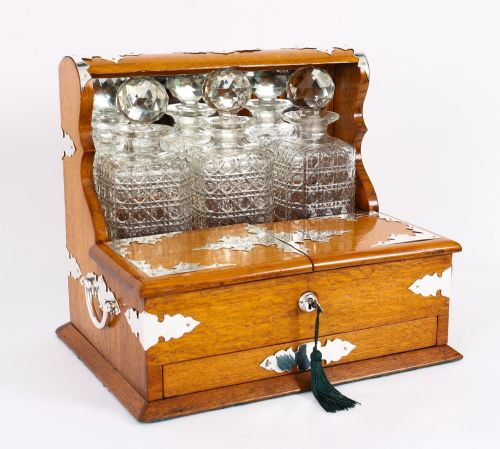
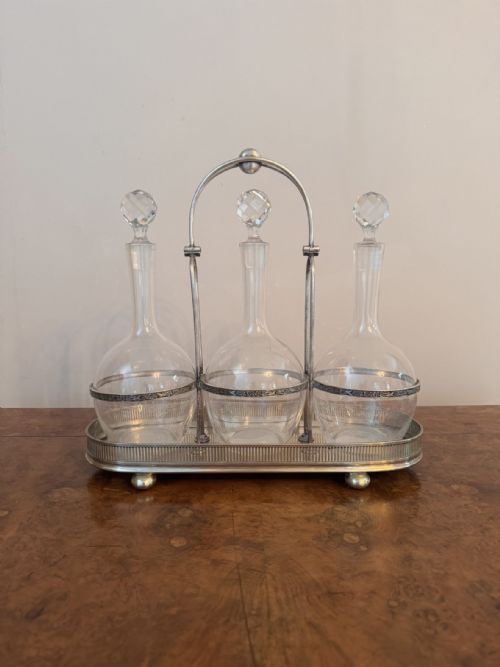
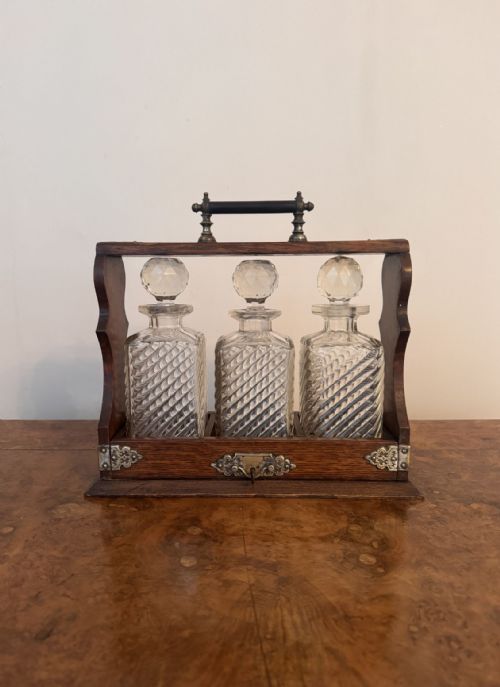
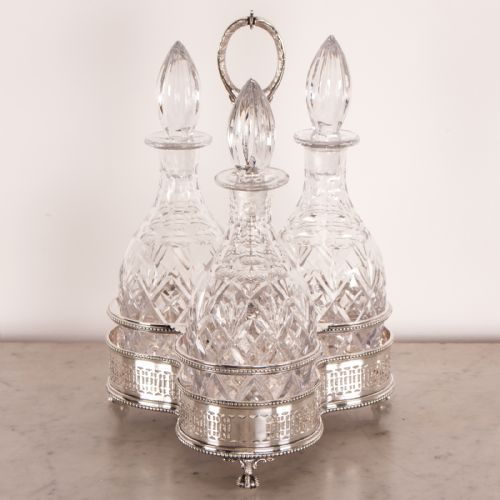
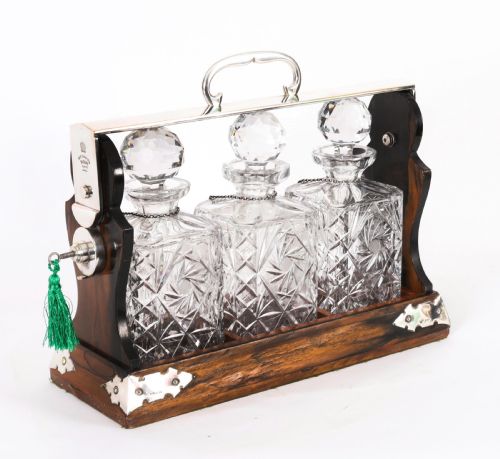
Sets of three glass decanters frequently appear housed in secure locking frames known as tantaluses, or carried in silver-plated and metal stands designed for the dining table. These groupings span Georgian, Victorian, and Edwardian periods, accommodating spirits, wine, and liqueurs within matched vessels.
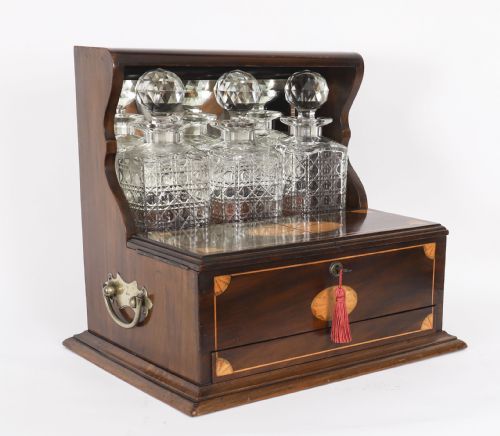
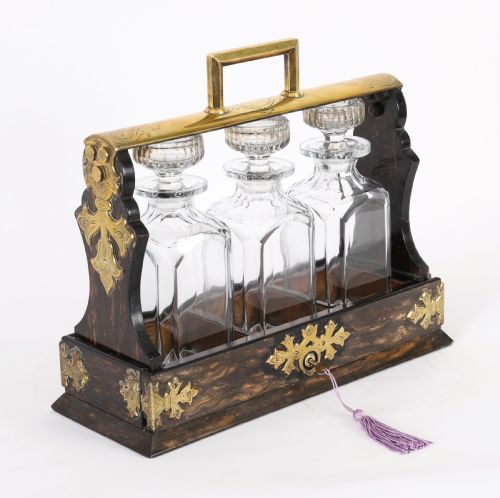
Many examples combine cut crystal or coloured glass bottles with fitted timber cabinetry in oak, coromandel, or walnut, sometimes incorporating games compendiums. Standalone sets in frames, cruets, and barware groupings also emerge regularly from the nineteenth and early twentieth centuries.
Buyers encounter everything from plain Georgian ringed wine decanters to late Victorian locking oak frames containing heavy cut crystal bottles. The configuration typically involves three identical or harmonised vessels meant to sit together as a complete suite.
Materials and construction
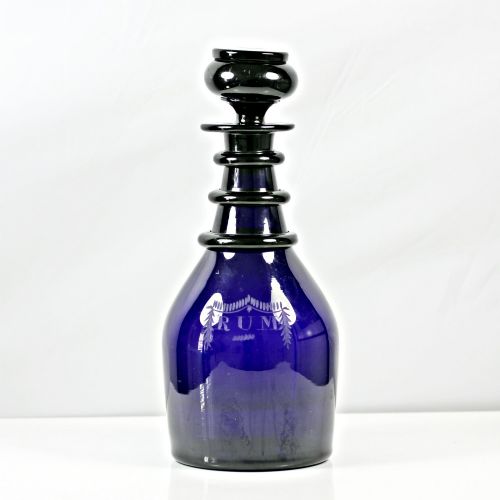
Makers utilised heavy lead crystal and blown glass, often employing deep cutting, facet work, or colour over crystal overlays in shades of blue, green, cranberry, and ruby. Bottles frequently feature three neck rings and hand-shaped stoppers.
Frames and stands combine cast or hallmarked silver plate, brass, and Old Sheffield plate with cabinet timbers such as oak, satinwood, and coromandel. Locking mechanisms on tantaluses required precision engineering to secure the stoppers in place.
Victorian hosts locked their whisky away from the butler not for sobriety, but to prevent him from watering down the gin.
Quality factors
Quality rests upon the clarity and weight of the glass, the depth and precision of the cutting, and the original matching of all three bottles and stoppers. Maker attribution to firms such as Betjemann or Walker & Hall elevates a piece.
The sophistication of the housing influences value, from simple wirework frames to elaborate coromandel cabinets with marquetry stringing, working locks, and integrated games drawers. Complete sets retaining original silver labels show superior preservation.
Betjemann·Walker & Hall·Elkington·The Goldsmith Co·Jacques Adnet
The Three Glass Decanters Glossary
- Tantalus
- A locking drink cabinet that holds decanters securely so they cannot be removed without a key while the bar is locked. The design teases guests by displaying the bottles visibly.
- Prussian shape
- A distinct bottle profile featuring a broad base tapering up to a narrow neck encircled by applied glass rings. This form was common during the Georgian and Regency periods.
- Colour over crystal
- A manufacturing technique where a layer of coloured glass is cased over a clear crystal core before being cut through to reveal the clear glass beneath. This creates striking contrast.
- Cruet
- A stand or frame holding multiple bottles or jars for condiments or spirits at the dining table. They frequently incorporate silver-plated or metal carriers.
- Games compendium
- A fitted box containing boards and pieces for pastimes like chess or cards, often built beneath a tantalus holding three decanters. These multifunctional pieces date largely to the Victorian era.
Three Glass Decanters: Frequently Asked Questions
What is a tantalus?
A tantalus is a locking wooden or metal frame designed to hold three glass decanters securely by their necks. The locking mechanism prevents guests or servants from accessing the contents without a key.
The name derives from the mythological figure Tantalus, who was kept just out of reach of food and water. These frames became popular in the Victorian era for locking away expensive spirits.
How do I date these decanters?
Dating relies on the shape of the bottles, the depth of the glass cutting, and the style of any supporting stand. Georgian examples often feature hand-blown bodies with distinct neck rings.
Victorian and Edwardian sets frequently include mechanical tantalus frames or silver-plated carriers stamped with maker marks. Oak cabinets with marquetry and brass mounts point firmly to the late nineteenth century.
Were the stoppers always matched?
Original sets generally retain matching glass stoppers ground to fit each specific bottle neck. Because stoppers were easily broken and replaced over time, finding a set with three matching original stoppers is significant.
Examination of the ground glass seating helps determine whether stoppers belong to the original production. Slight variations in tint or cut pattern suggest a replacement.
How were three bottle sets used?
These sets served after-dinner drinks such as port, sherry, whisky, or brandy in the dining room or drawing room. The three bottles allowed hosts to offer a choice of different spirits.
When housed in a stand or tantalus, they remained on the sideboard ready for evening hospitality. Many also doubled as travel bars or formed part of larger games compendiums.