







Three Fold Room Divider
A three fold room divider partitions space with hinged panels of wood, leather or fabric.
Three Fold Room Divider
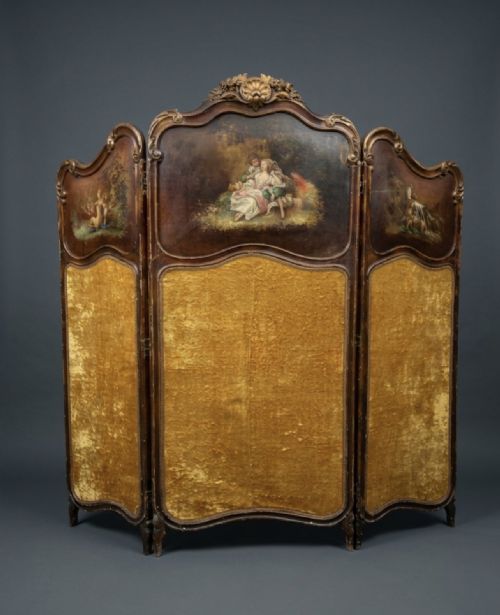
A three fold room divider creates distinct zones within large interiors using three hinged leaves. These folding screens appear in Victorian, Edwardian and earlier formats constructed from timber frames holding painted leather, glass or fabric panels.
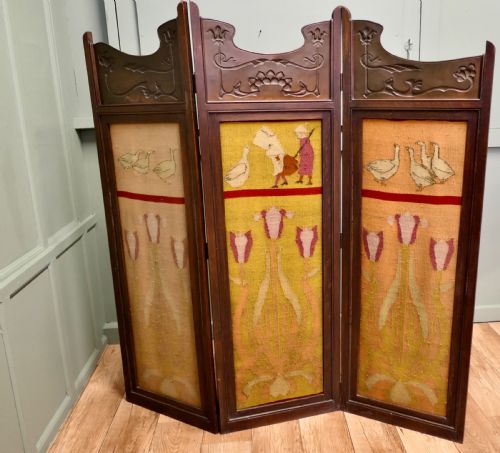
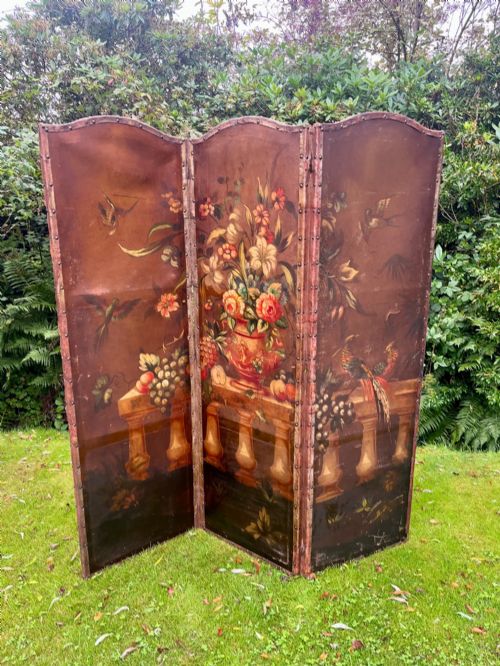
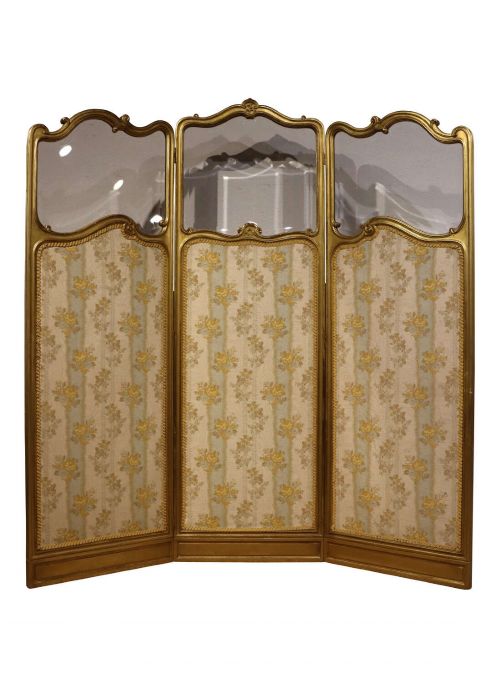
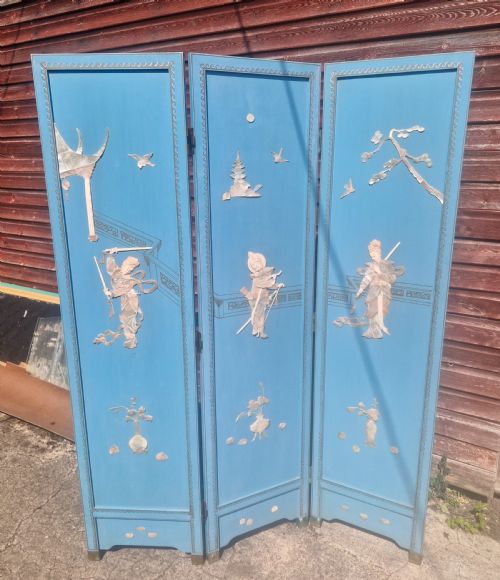
The version most commonly met on this page combines a wooden frame with decorative panels designed to screen dressing areas or divide drawing rooms. Many examples incorporate painted scenes, glazed sections or textile insertions.
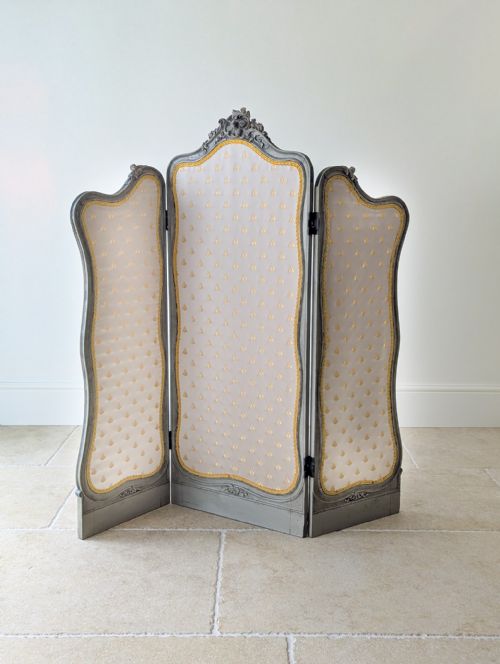
Makers utilised various regional styles, ranging from French Rococo Revival and Continental Baroque to Anglo-Indian and Art Nouveau interpretations. Each piece relies on sturdy hinges to allow the panels to angle flexibly across a floor.
Materials and construction
Frames rely primarily on solid woods such as oak, walnut, mahogany and giltwood, joined with hinges to permit multi-directional folding. Carved detailing and applied mouldings frequently enhance the structural uprights.
Panels incorporate diverse materials including hand-painted leather, bevelled glass, oil paint, silk, wool and velvet. Artisans fixed these inserts within the wooden framework using tbevelled glazing, upholstery tacks or specialised backing techniques.
Debating societies utilised folding screens to frame political meetings, proving that even arguments sometimes need a proper wooden backdrop.
Distinctions in quality
Quality depends on the execution of the decorative surface, whether hand-painted pastoral scenes, intricate needlework or detailed bone inlay. Finer panels display superior draftsmanship and richer materials like silk velvet or giltwood.
The integrity of the frame and the original hinges dictate the structural merit of a screen. Heavier hardwoods and robust joinery support taller glass or leather panels without sagging at the joints.
The Three Fold Room Divider Glossary
- Giltwood
- Wood that has been coated with gold leaf or a gold-coloured metallic finish. This treatment appears frequently on decorative frames from the nineteenth century.
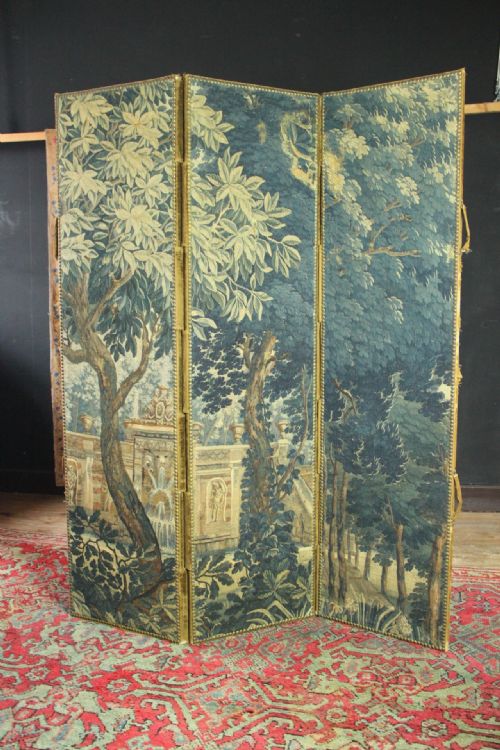
- Verdure
- A type of tapestry or painted landscape depicting lush foliage, trees and greenery. These scenes often cover large panel surfaces on antique screens.
- Modesty screen
- A small folding screen historically used in domestic spaces to shield occupants from drafts or observation. They share the hinged construction of larger room dividers.
- Decoupage
- The art of decorating a surface by applying cutout paper pieces and coating them with varnish. Screens utilising this technique feature layered scraps or printed motifs.
Three Fold Room Divider: Frequently Asked Questions
How are three fold room dividers used?
These screens partition large rooms, create private dressing areas and shield sitting spaces from draughts.
Their hinged design allows them to stand independently in zig-zag configurations across a floor.
What materials make up these screens?
Frames consist of woods like oak, walnut, mahogany and giltwood.
Inlays and panels feature painted leather, silk, wool, glass and bone.
How do I date a folding screen?
Dating relies on matching stylistic markers such as Art Nouveau curves, Victorian giltwood carving or Edwardian mahogany inlay.
Construction methods and textile types also offer clues to the period of manufacture.
Are these screens stable on floors?
Stability depends on the weight of the timber frame and the sturdy operation of the metal hinges.
Angling the three panels correctly ensures the screen supports its own weight safely.