

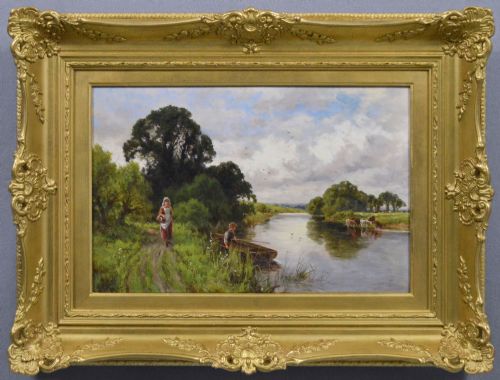


Thames River Landscape Art
Thames river landscape art captures the changing light and commerce of London's historic waterway across centuries.
Thames River Landscape Art
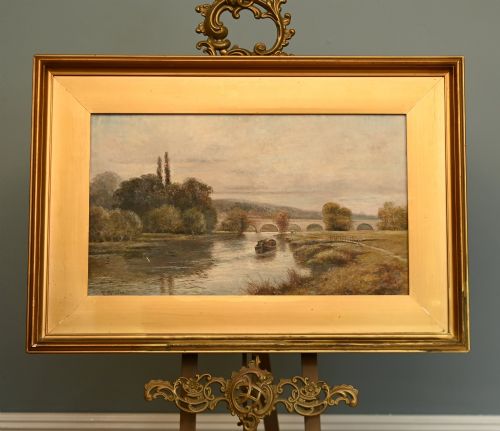
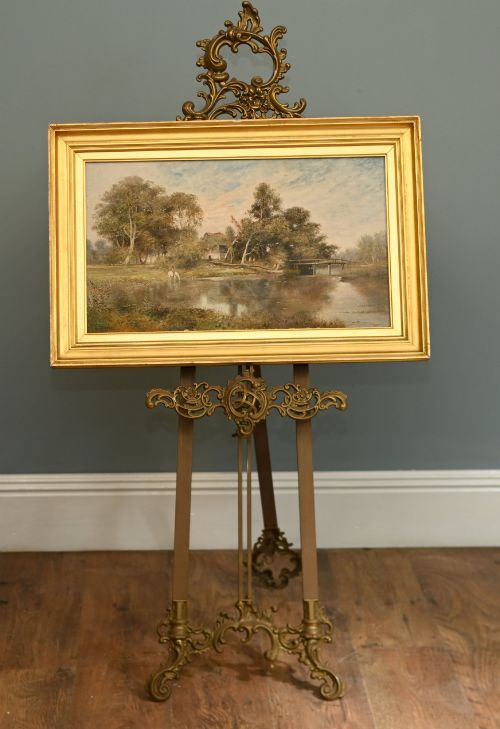
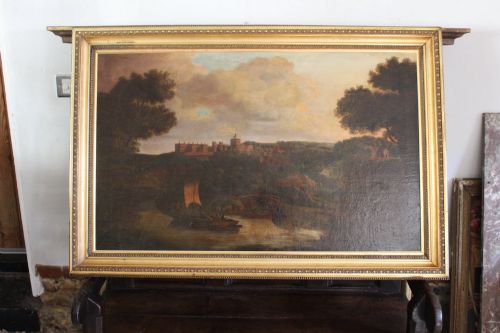
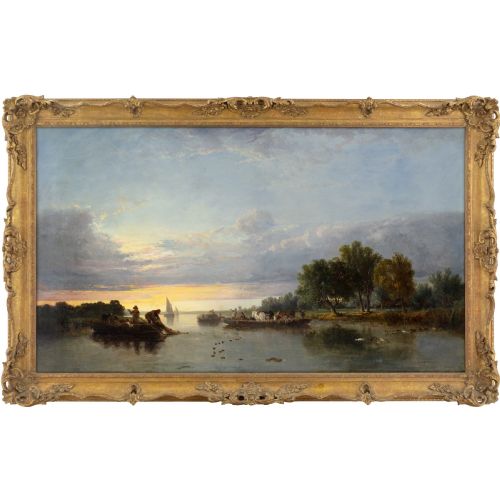
Thames river landscape art brings together oil paintings, watercolours, and prints depicting the tidal stretches from Windsor down to the Pool of London. These works record city bridges, quiet reaches, maritime traffic, and royal castles along the banks.
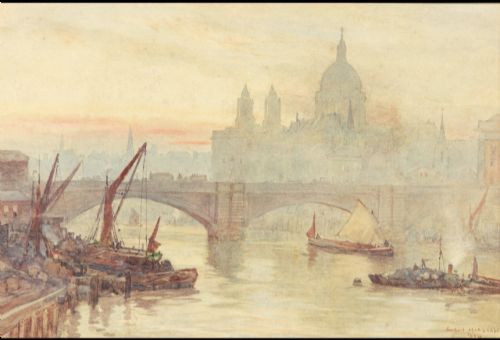
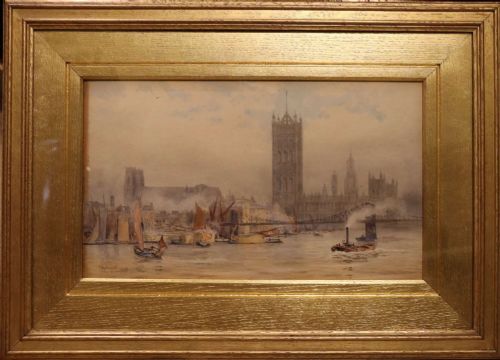
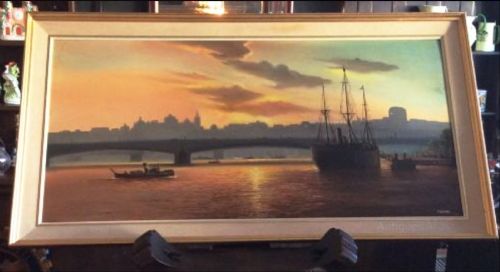
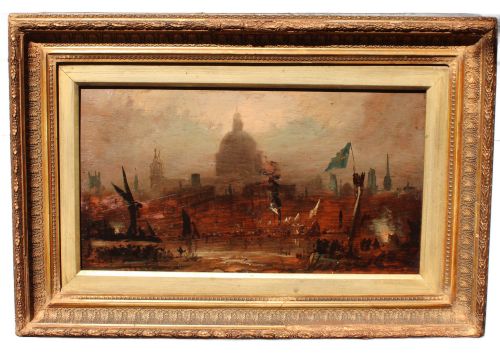
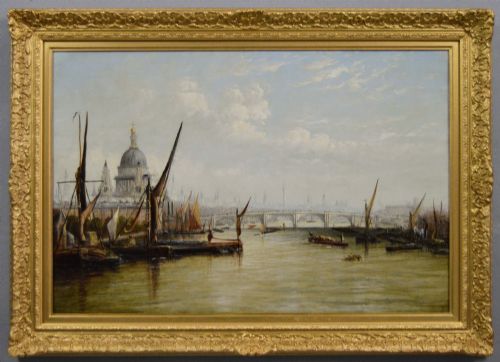
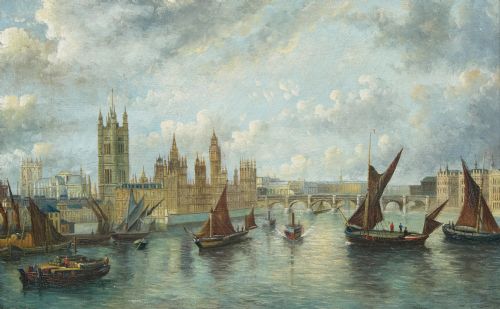
The version a buyer meets most frequently on this page is the 19th-century or early 20th-century watercolour or oil painting. Artists rendered familiar city landmarks such as St Pauls, the Houses of Parliament, and Waterloo Bridge alongside rural villages.
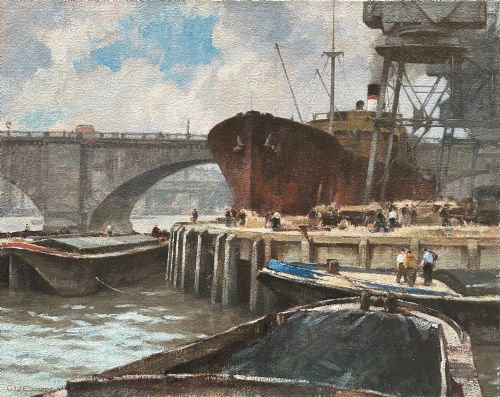
The selection extends from Georgian studies and Victorian marine scenes to mid-century depictions of tug boats and industrial wharves. Pieces range from intimate paper watercolours to large canvas oils framed in gold leaf.
Materials and Technique
Painters utilised oil on canvas or board to build rich atmospheric depths, capturing the heavy smoke and atmospheric haze of the capital alongside reflections on the water. These works often carry textured brushwork that defines the movement of river traffic and shipping.
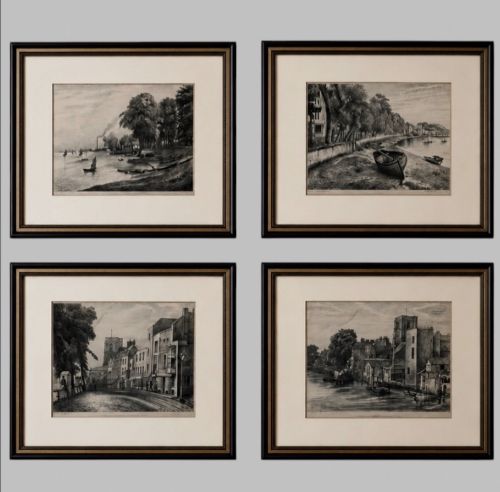
Watercolour on paper served artists recording topographical views and rural lock scenes upstream, allowing for luminous washes of colour and fine pencil detail. Lithographs and hand-coloured aquatints provided accessible multi-plate printed views for collectors of topographical subjects.
Several Victorian artists evidently spent long damp hours watching tug boats and fishermen brave the London fog.
Quality and Execution
The success of a river painting rests upon the artist's handling of atmospheric perspective and the management of natural light across water and stone. Stronger pieces display confident draftsmanship in the rendering of architectural detail and vessel rigging.
The distinction between standard topographical recording and superior fine art lies in the vitality of the brushwork and the cohesion of the composition. Works by established exhibited painters demonstrate a surer command of tone than anonymous student studies.
Francis Moltino·Charles William Wyllie·Henry John Kinnaird·Edward Henry Eugene Fletcher·Frank W. Scarborough
The Thames River Landscape Art Glossary
- Aquatint
- A printmaking technique that produces tonal areas resembling watercolour washes. Etched copper plates create graduated shades of grey and colour.
- Topographical
- Representing specific real places with geographical accuracy. These scenes document historical buildings, bridges, and shorelines as they appeared.
- Lithography
- A planographic printing process based on the repulsion of oil and water. Artists drew directly onto limestone blocks to produce multiples.
- Marine Art
- Depictions of ships, harbours, and coastal or river waters. This genre encompasses bustling commercial pools and quiet sailing craft alike.
Thames River Landscape Art: Frequently Asked Questions
What periods do these river paintings cover?
The works span from the Georgian era through Victorian and Edwardian times up to the mid-twentieth century. Earlier pieces often reflect romantic topography, while later works embrace impressionistic handling.
Changes in artistic style mirror the industrial development of the capital and the changing appearance of its bridges and wharves over the decades.
How do watercolours differ from oil paintings here?
Watercolour paintings on paper offer delicate, transparent washes and are typically smaller in scale. They frequently capture rural stretches, locks, and atmospheric morning light.
Oil paintings on canvas provide heavier textures and deeper pigments, suiting bustling urban scenes, shipping activity, and dramatic skies above the bridges.
Where were these river scenes usually painted?
Subjects range from rural Berkshire villages and Windsor Castle to central London landmarks like Westminster and London Bridge. Artists worked both plein air along the towpaths and from riverside balconies or boats.
Commercial hubs like Billingsgate and the Pool of London appear alongside quiet backwaters at Goring and Wargrave.
How should I display framed paper art?
Works on paper require mounting behind glass and protection from direct sunlight to prevent fading of watercolours and prints. Acid-free materials within the frame preserve the paper support over time.
Positioning pieces away from damp walls and direct heat sources ensures the longevity of both the original pigments and the antique frames.