


Terracotta Pottery Vase
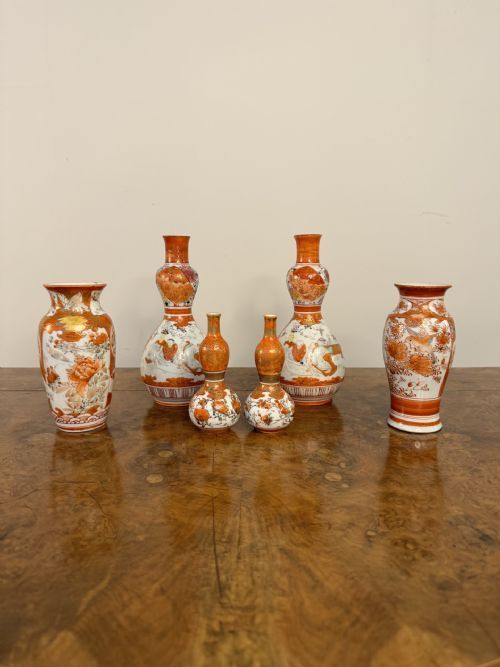
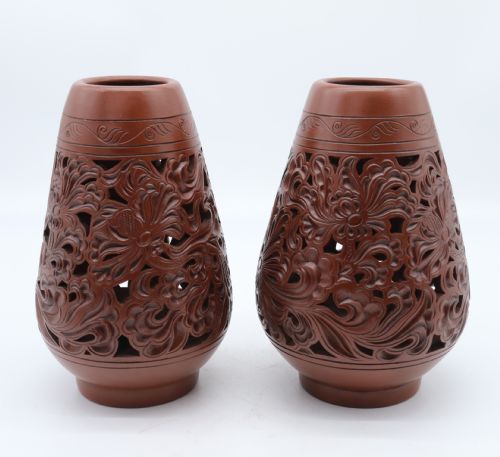
These pieces of terracotta pottery vase range from ancient vessels to Victorian interpretations, offering tactile clay surfaces for your interior.
Terracotta Pottery Vase
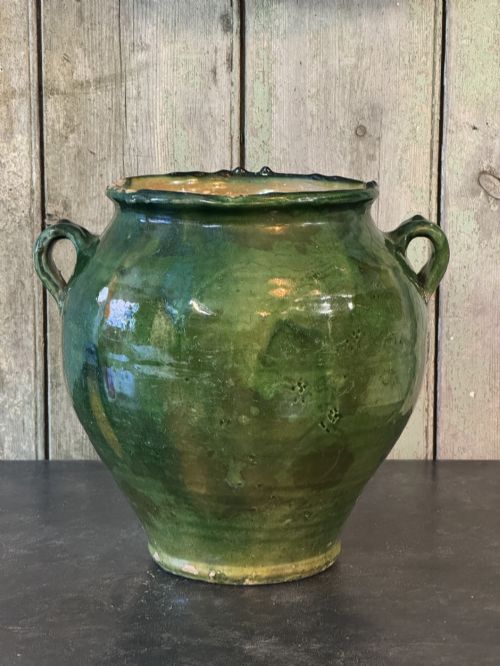
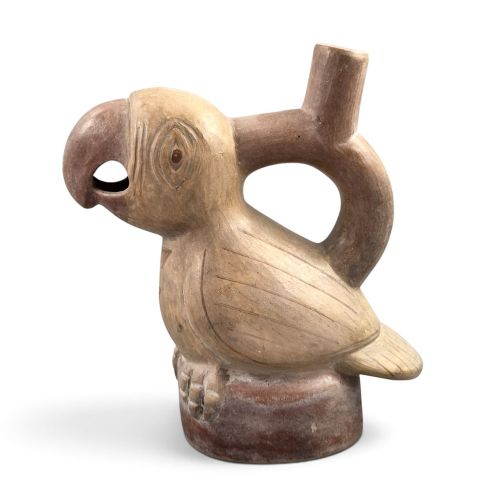
When you search for a terracotta pottery vase, you encounter a broad chronological span, from ancient pre-Columbian and Chinese Neolithic examples to nineteenth-century European revivals and Japanese earthenware. The selection spans utilitarian storage vessels, such as Mediterranean amphorae and French confit pots, alongside decorative nineteenth-century majolica and art pottery.
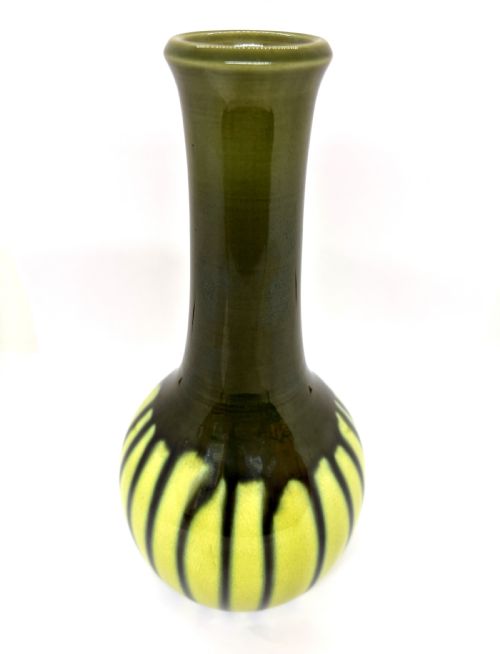
Nineteenth-century items dominate the selection, heavily influenced by the Victorian taste for classical revivals, Grand Tour souvenirs, and Arts and Crafts experimentation. You will frequently find works originating from English potteries like Burmantoft's and Doulton, alongside continental makers and Japanese kilns producing red clay and Sumida Gawa wares.
How they were made
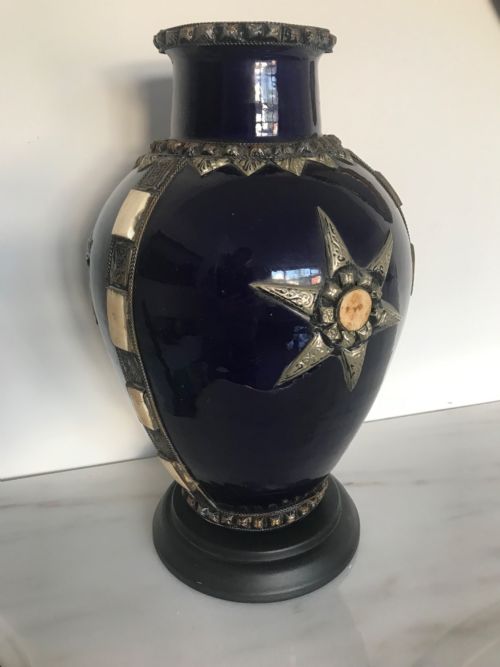
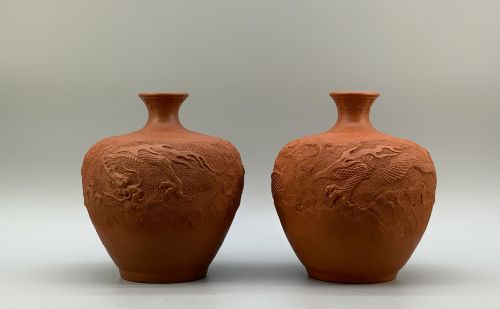
The primary material across these objects is earthenware and terracotta, ranging from porous, untreated red clay to heavily potted bodies designed for functional storage. Potters utilised throwing wheels or hand-building techniques, often applying sculptural elements such as applied figures, dragons, or raised silver mounts directly to the damp clay body.
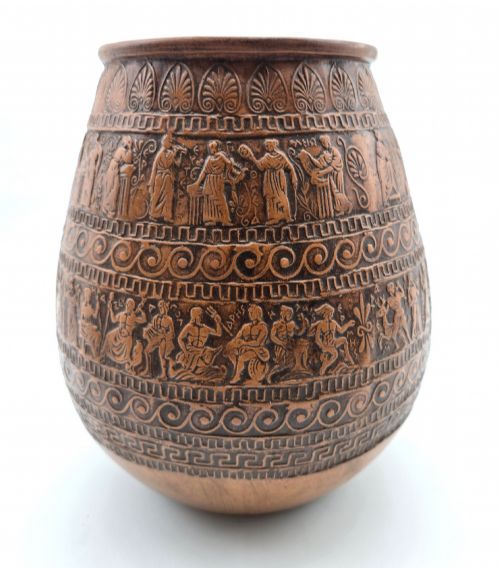
Surface treatments vary widely, incorporating glossy glazes, enamel, gold leaf, and deliberate craquelure or flambe effects. Many nineteenth-century and Japanese works employ detailed hand-painting, incised geometric patterns, or reticulated piercing, while earlier archaeological examples rely on natural firing marks and minimal slip decoration.
Listings span from ancient pre-Columbian and Chinese Neolithic vessels to nineteenth-century European majolica and Japanese Meiji period earthenware.
What varies in quality
The distinction between standard commercial output and superior examples lies in the precision of the modelling and the depth of the glaze chemistry. Hand-sculpted applied motifs, distinct signature marks, and controlled kiln reactions elevate specific studio and factory pieces above ordinary production items.
Condition and originality dictate the standing of a piece within its period. Intact glazes, original mounts, and well-preserved surface detailing without heavy restoration maintain the integrity of the maker's original intention.
Burmantoft's Pottery·P. Ipsens Enke·Doulton Slater's Patent·Bernhard Bloch·William Moorcroft
The Terracotta Pottery Vase Glossary
- Terracotta
- A porous, brownish-red earthenware clay that is fired at relatively low temperatures and left unglazed or finished with a surface coating. It has been utilised for millennia across diverse cultures for both sculptural and utilitarian vessels.
- Majolica
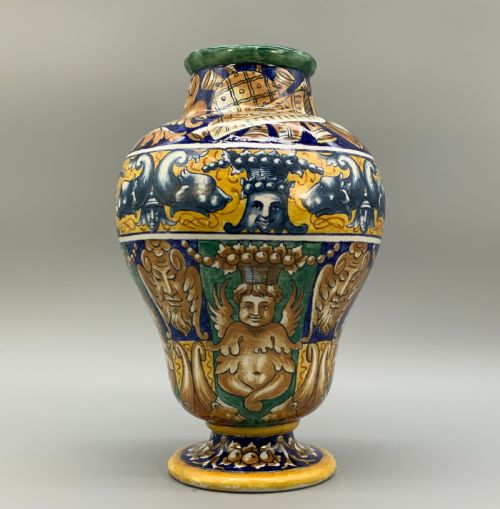
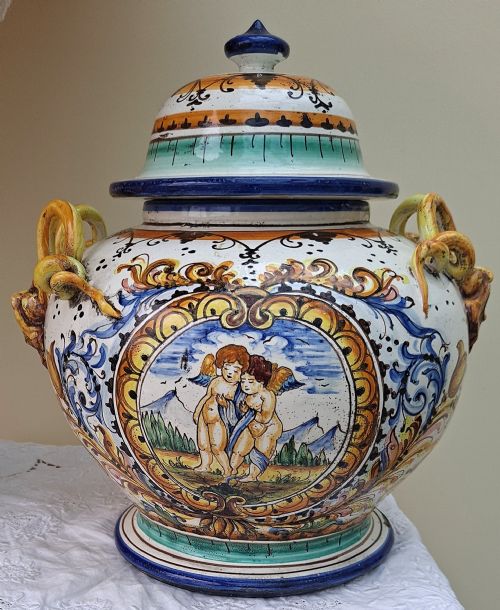
- A type of earthenware covered with an opaque tin-glaze and painted with coloured metal oxides. Victorian iterations of this style often mimic Renaissance Italian ceramics.
- Confit pot
- A traditional French earthenware vessel featuring a glazed interior and upper collar, originally designed for preserving food. These utilitarian jars display organic irregularities from regional kilns.
- Sumida Gawa
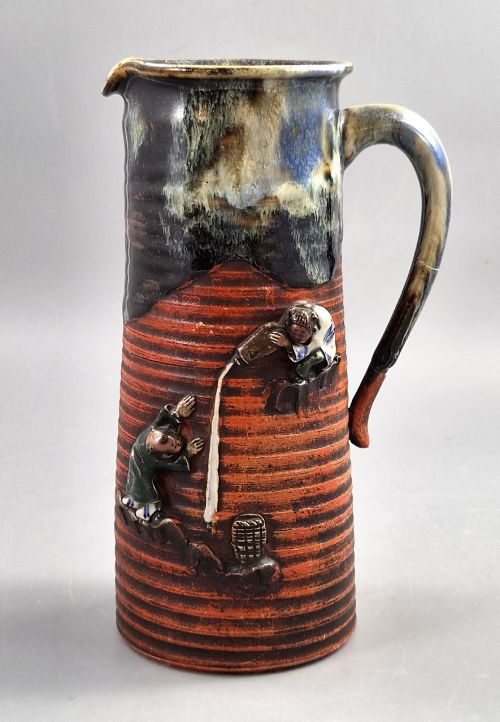
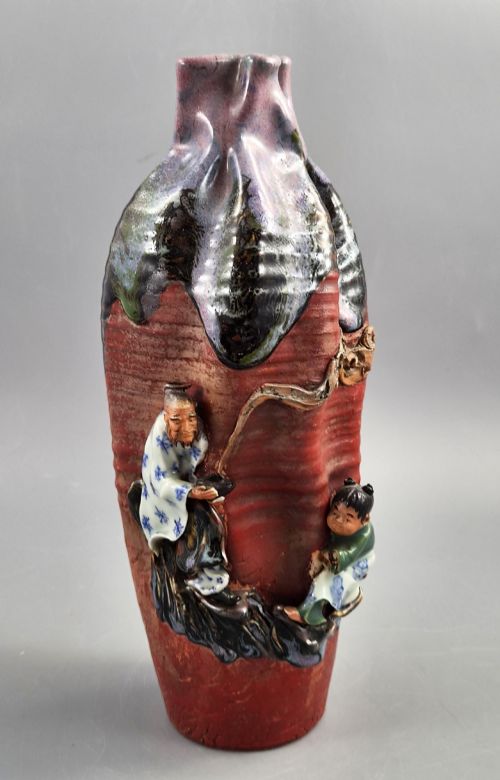
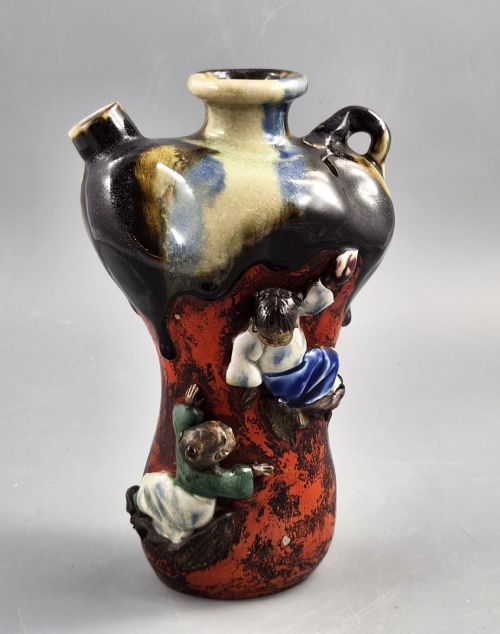
- A style of Japanese pottery originating in Tokyo around the turn of the twentieth century, characterised by heavily textured, melting flambe glazes and high-relief figures modelled directly onto the clay.
- Slip
- A liquid mixture of clay and water applied to pottery before firing to smooth the surface or create decorative linear patterns.
Terracotta Pottery Vase: Frequently Asked Questions
How do I clean an antique terracotta vase?
Dust the surface gently with a soft, dry brush to prevent dirt accumulation within the porous clay body.
Avoid using water or liquid cleaners on unglazed terracotta, as moisture can penetrate the clay and cause internal staining or structural weakening over time.
What is the difference between terracotta and majolica?
Terracotta refers specifically to the fired red clay body itself, which can remain porous and unglazed.
Majolica involves an earthenware body that is completely coated in an opaque tin-glaze, providing a smooth white canvas for painted polychrome decoration.
How do I identify a Sumida Gawa vase?
These Japanese pieces are instantly recognizable by their thick, dripping flambe glazes and distinctive high-relief figures of sages, children, or animals clambering up the exterior.
Many examples bear signature plaques impressed into the wet clay near the base, indicating the individual artist or workshop.