
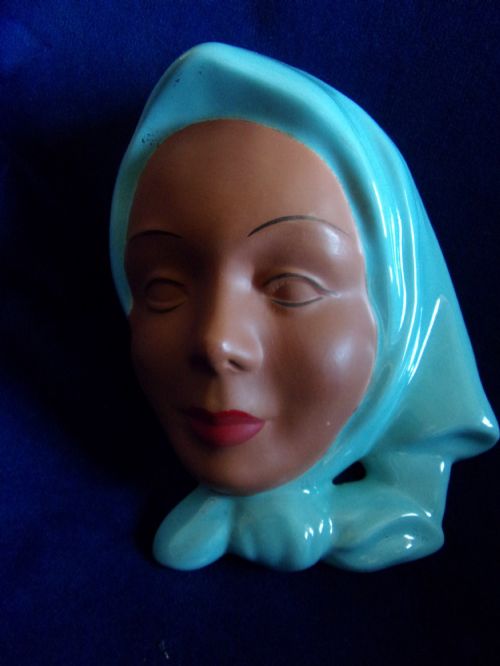


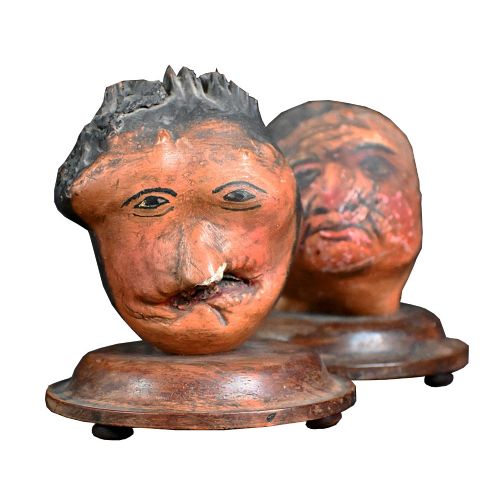

Terracotta Head Bust
A terracotta head bust brings immediate character to a room, spanning classical portraits, folk art figures and sleek twentieth-century wall masques.
Terracotta Head Bust
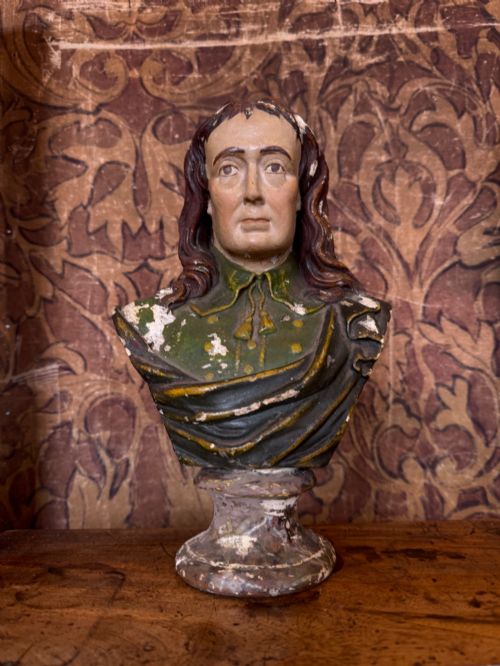
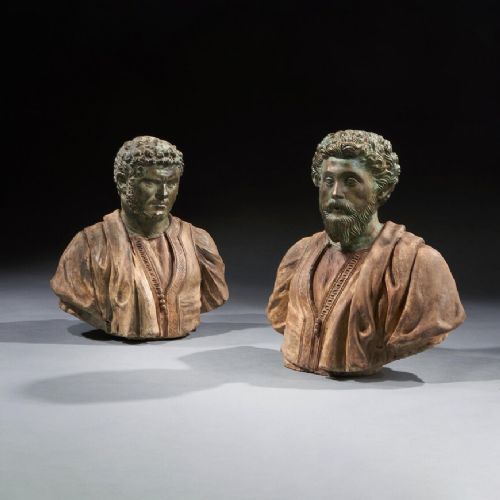
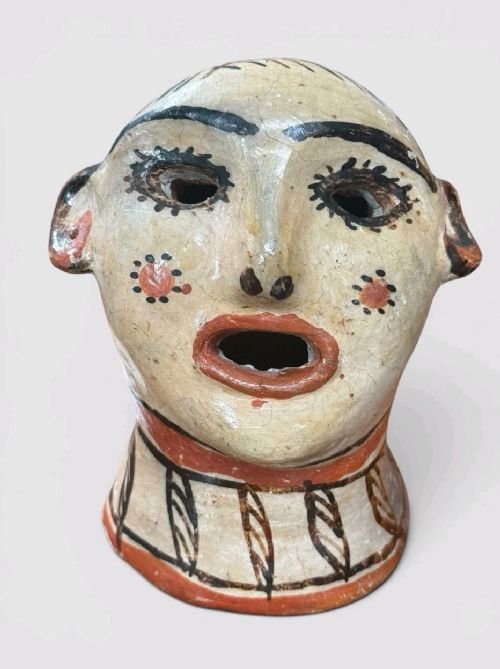
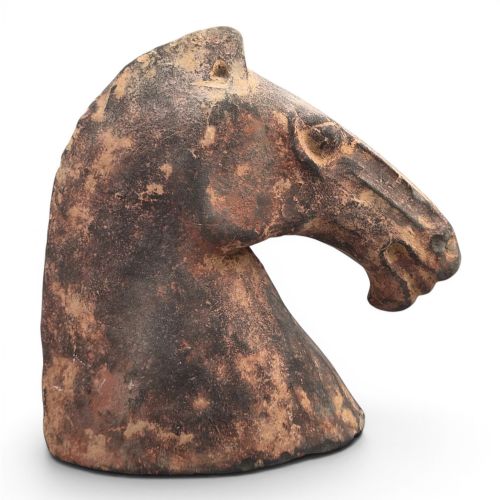
A terracotta head bust captures human or animal likenesses in fired earth across centuries, ranging from classical Roman emperors and Renaissance revivals to distinct Art Deco studies and tribal folk art pieces. When you search for a terracotta head bust, you encounter everything from grand nineteenth-century portrait sculptures on stands to vibrant painted tomb figures and decorative wall masques.
The selection here draws heavily from the nineteenth and early twentieth centuries, alongside earlier tomb figures and mid-century folk pieces. You will find single portrait subjects like classical women, naval gentlemen and literary figures such as Sappho, alongside balanced pairs representing historic emperors or rustic types.
Materials and methods
These pieces rely primarily on shaped clay and terracotta, often finished with applied paint, pigment, plaster, or a verdigris patina to simulate aged bronze or stone. Makers shaped the earth by hand or pressed it into moulds before firing, occasionally mounting the finished sculpture on wooden supports.
Surface treatments define the visual weight of each piece, distinguishing raw earthenware from pigmented or bronzed variations. Some sculptures integrate contrasting materials like glass paste or wood to form integrated stands and wall mounts.
Materials across the selection include terracotta, clay, earthenware, plaster, wood, paint, pigment, and verdigris patina.
Assessing quality
Quality rests in the expressive power of the modelling and the crispness of the surface detail, whether capturing the austere gaze of a Roman emperor or the stylized curves of an Art Deco woman. Stronger works demonstrate confident anatomical observation and deliberate handling of the clay, while simpler folk pieces rely on bold character and charm.
The sophistication of the surface finish and the integrity of the material dictate distinction. Pieces bearing clear signatures from known modellers or specific regional workshops carry greater documentary interest than unsigned commercial outputs.
Gilbert Privat·Antonio Rossellino·Georges Morin·Bohumil Rezl·HL Blasche for Reps & Trinte
The Terracotta Head Bust Glossary
- Terracotta
- Fired clay used for sculptural works. This unglazed earthenware ranges in tone from pale buff to deep reddish-brown depending on the minerals in the local clay.
- Mingqi
- Chinese burial goods placed in tombs to serve the deceased in the afterlife. These painted pottery figures and animal heads date to early dynastic periods.
- Verdigris patina
- A green coating formed naturally on copper alloys or applied artificially to plaster and terracotta. It mimics the aged surface of ancient bronzes.
- Wall masque
- A decorative sculptural relief designed to hang directly on a wall. These stylized faces often emerge from Art Deco and modernist traditions.
Terracotta Head Bust: Frequently Asked Questions
How do I clean a terracotta bust?
Dust these sculptures gently with a soft, dry brush to protect the porous surface and any applied pigments.
Avoid using water or liquid cleaners, as unglazed earthenware absorbs moisture easily and can suffer permanent staining or surface damage.
Are these pieces suitable for outdoor display?
Most antique and vintage portrait busts are designed strictly for interior environments.
Frost and dampness will penetrate fired clay and plaster, causing the material to flake, crack or lose its original surface finish over time.
How can I tell an older bust from a modern reproduction?
Examine the base and interior surfaces for tool marks, wear patterns, and the natural ageing of the clay and pigments.
Nineteenth-century and earlier works display authentic handling marks and dry, stable patination that modern castings struggle to replicate accurately.
How do I display a wall masque safely?
Ensure the wall hanging utilises the original mount or a secure, weight-distributed bracket designed for heavy ceramics.
Keep the piece away from direct sunlight and areas of high foot traffic where it might be accidentally brushed against.