


Terracotta Geometric Kilim
When choosing a terracotta geometric kilim, you examine flatwoven tribal textiles that combine earthy terracotta tones with sharp rectilinear motifs.
Terracotta Geometric Kilim
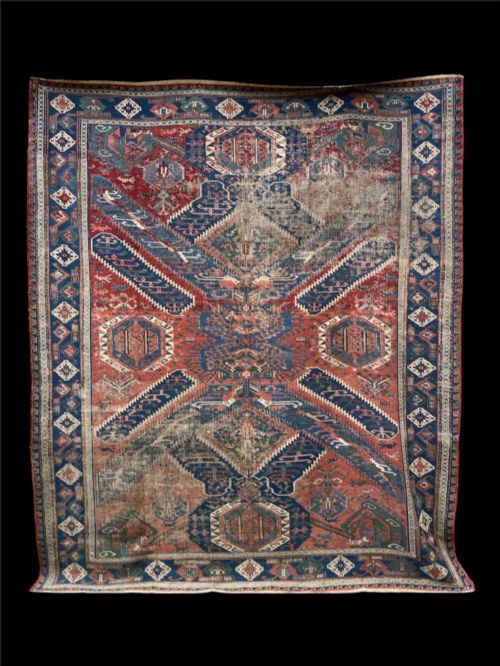
A terracotta geometric kilim brings together flatwoven carpets, runner rugs, panels, and cushions originating from nomadic and village weaving traditions. These pieces span from the mid-nineteenth century through the early twentieth century, reflecting the utilitarian output of tribal makers across Anatolia, the Caucasus, Persia, and Central Asia.
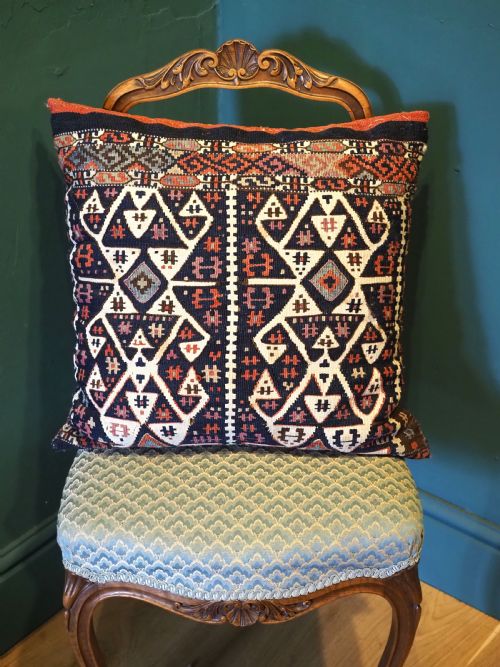
The most common formats encountered on this page are kilim rugs and cushion conversions made from repurposed storage bags, such as mafrash and saddle bags. Makers structured these textiles with strong banded layouts, medallions, and repeat patterns that translate native folk motifs into striking floor coverings and soft furnishings.
How They Were Made
Weavers utilised natural wool and hand-spun wool, often combined with cotton foundations, yielding a durable textile structure built for daily use. The predominant technique relies on slit-weave flatweaving, where discontinuous weft yarns wrap around warp threads to form crisp linear boundaries between colour blocks.
Makers achieved complex surface patterns through supplementary weft wrapping and brocaded flatweave methods, resulting in flat surfaces without pile. Artisans dyed their materials with organic substances that settled into the soft, muted terracotta hues seen across the surviving corpus.
Certain nineteenth-century weavers slipped small superstitious motifs into their utilitarian storage bags to ward off the evil eye.
What Varies in Quality
The level of execution in a piece depends on the tightness of the weave and the precision of the geometric layout. Examples with very fine weaves display intricate pattern shifts and careful handling of border systems that demand advanced skill from the weaver.
Integrity of design and originality of composition separate standard utility textiles from exceptional regional works. Pieces retaining long original kilim ends, complete structural panels, and well-preserved organic dye palettes hold greater design clarity.
The Terracotta Geometric Kilim Glossary
- Kilim
- A flatwoven carpet or rug produced without a pile by tightly interweaving warp and weft strands. These textiles function as floor coverings, wall hangings, and functional storage covers.
- Warp
- The stationary vertical threads stretched across a loom that form the structural foundation of the textile. Weft yarns are passed horizontally over and under these baseline threads.
- Weft
- The horizontal threads threaded through the warp to create the visible design and colour fields. In flatweaves, these yarns pack tightly to conceal the vertical foundation completely.
- Mafrash
- A large rectangular storage chest panel or bag face traditionally used by nomadic groups for bedding and household goods. These pieces are frequently repurposed into cushions and flat panels.
- Sumak
- A supplementary weft wrapping technique that produces a textured, braided surface effect resembling embroidery. This method adds structural weight and defined outlines to geometric motifs.
Terracotta Geometric Kilim: Frequently Asked Questions
Where were these flatweaves made?
The textiles originate from nomadic and village communities across Anatolia, the Caucasus, Persia, and Central Asia. Weavers in these regions produced functional items for domestic use and transport.
Production centres included tribal groups such as the Shahsavan, Yomut, Baluch, and various Caucasian workshops. Each group maintained distinct structural habits and regional design vocabularies.
How do I care for a flatwoven rug?
Regular gentle vacuuming without a rotating brush roll prevents dust accumulation within the tight wool weave. Keeping the textile away from direct, harsh sunlight protects natural dyes from fading.
Professional specialist cleaning is recommended for heavier maintenance rather than home washing. Using a suitable underlay prevents sliding and reduces friction against hard flooring.
What is the difference between a kilim and a carpet?
A kilim is constructed entirely through flatweaving techniques without any raised pile surface. This makes the textile lighter, reversible, and thinner than traditional knotted pile carpets.
Carpets feature vertical pile tufts knotted individually to the warp foundation. Flatweaves rely on the interlacing of the coloured weft yarns themselves to form the visual patterns.