







Red Pirot Carpet
A red pirot carpet brings rich Balkan folk art traditions into a room, offering warm floor coverings woven with classic patterns.
Red Pirot Carpet
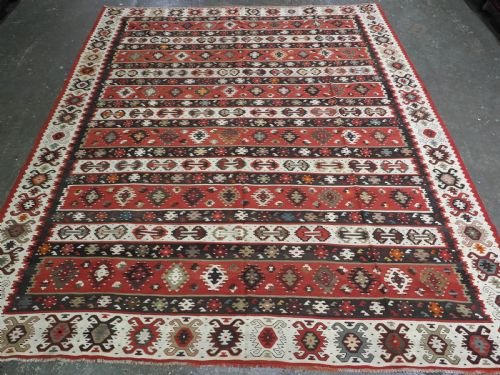
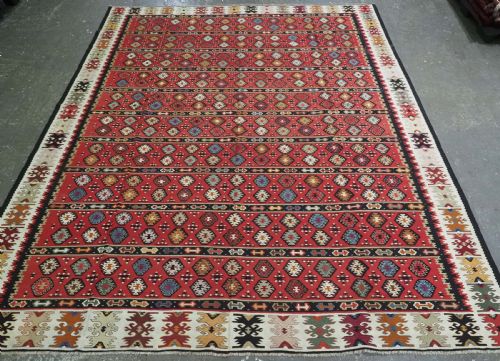
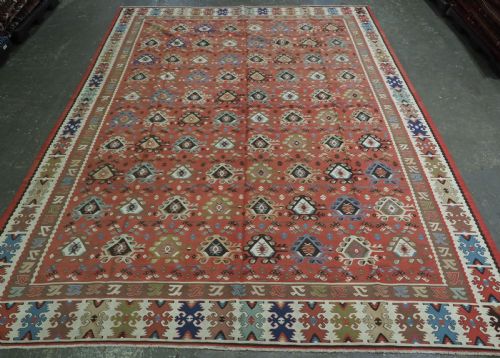
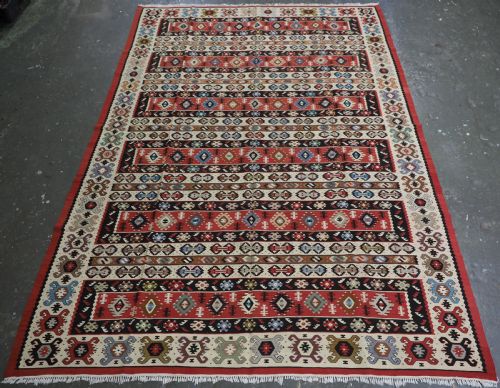
When you search for a red pirot carpet, you encounter flatwoven textiles rooted in Balkan folk art traditions. The examples found here typically date from the early decades of the twentieth century, specifically spanning the nineteen-tens through to nineteen-thirty.
These floor coverings often carry alternative designations linking them to Sarkoy kilims alongside Pirot origins. Most specimens present distinct visual schemes, ranging from classic patterns and flowering trees to banded layouts and repeat medallions.
What varies in quality
Quality differences emerge through the complexity of the design and the preservation of the textile. Pieces displaying scarce lattice work or intricate flowering tree motifs often demonstrate superior artistic ambition.
The vibrancy and depth of the colour palette also distinguish individual examples. Items retaining warm, soft tones or outstanding pigmentation provide a stronger visual presence on the floor.
The pieces demonstrate Balkan traditional styles, including banded designs and repeat medallions.
The Red Pirot Carpet Glossary
- Kilim
- A flatwoven carpet or rug produced without a pile. These textiles rely on interlocking weft threads to create sharp geometric patterns.
- Pirot
- A traditional centre for rug production situated in the Balkans. It lends its name to flatwoven kilims known for distinctive regional designs.
- Sarkoy
- A regional designation often associated with flatwoven kilims sharing stylistic traits with Pirot examples. These textiles frequently display banded or repeat medallion layouts.
- Banded design
- A decorative arrangement featuring horizontal stripes or bands of pattern across the surface of the textile. This layout creates a structured visual rhythm.
Red Pirot Carpet: Frequently Asked Questions
How do I place a red pirot carpet in my room?
These flatwoven rugs suit areas with moderate foot traffic where their flat profile remains undisturbed.
They pair well with wooden flooring and neutral interiors, allowing the rich wool and cotton textures to anchor the space.
What periods do these carpets come from?
The available pieces originate primarily from the early twentieth century, specifically between nineteen-ten and nineteen-thirty.
This era represents traditional Balkan folk weaving before mid-century industrial shifts altered local textile production.
Are these rugs suitable for large spaces?
Several examples are documented as large room sizes designed to cover substantial floor areas.
These larger formats often incorporate repeat medallions or extensive banded designs to suit expansive rooms.
How do I distinguish between Pirot and Sarkoy styles?
Both terms appear together because these regional traditions share overlapping techniques, motifs, and flatwoven wool construction.
Distinctions rely on subtle variations in the border arrangements and the specific execution of classic Balkan folk patterns.