
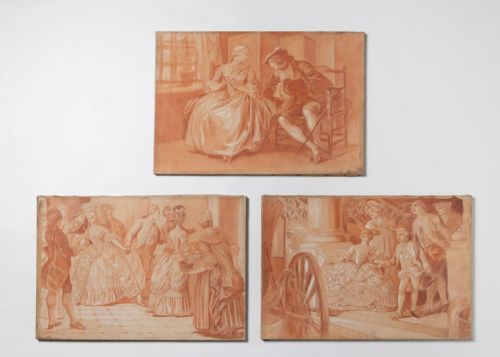


Terracotta Canvas Art
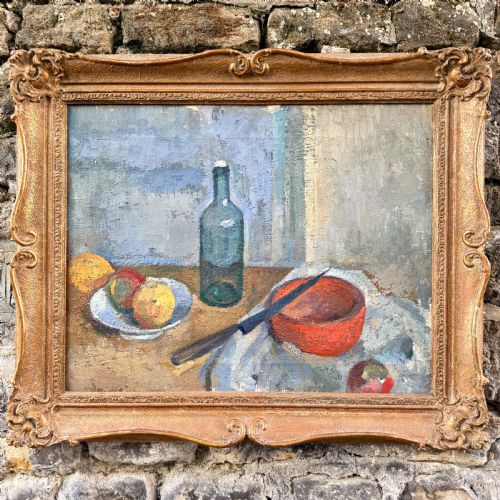
When you search for terracotta canvas art, you are exploring oil paintings on canvas depicting earthen tones, warm masonry, and sun-baked pots.
Terracotta Canvas Art
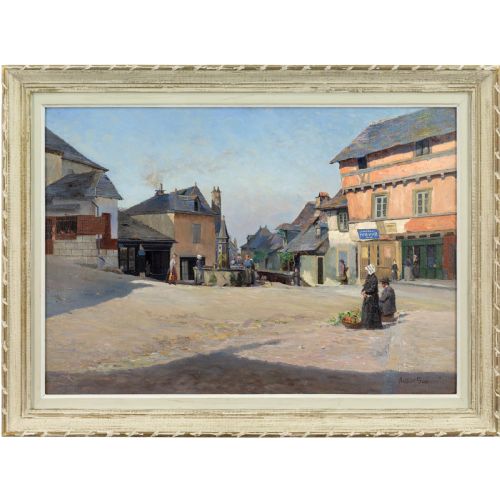
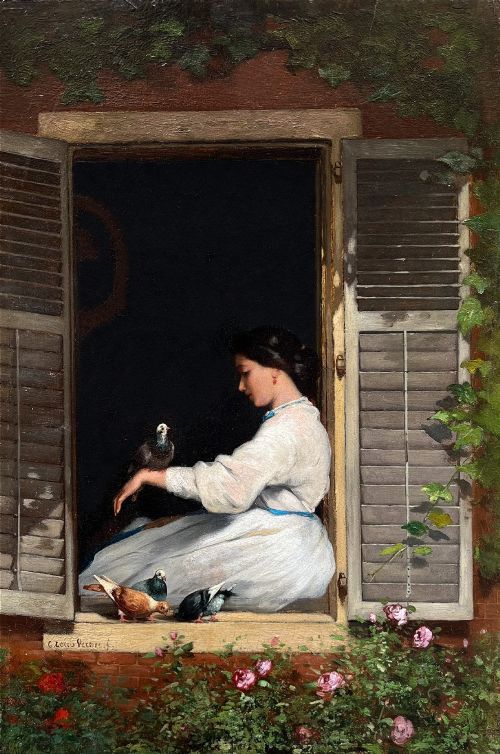
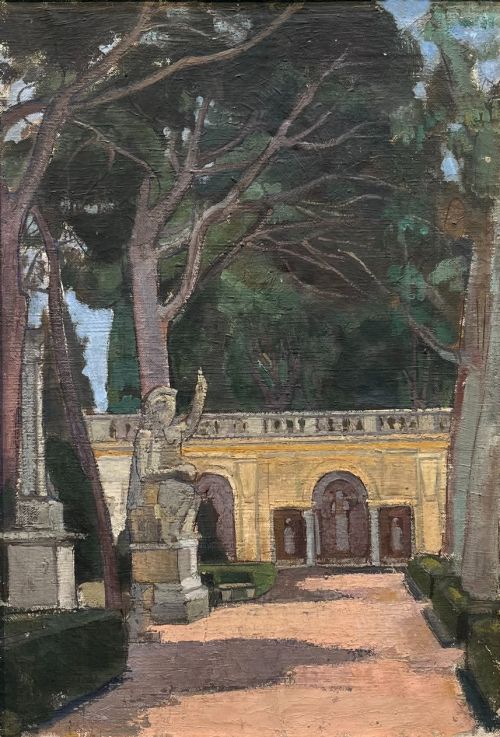
Terracotta canvas art encompasses oil paintings on canvas featuring warm earth colours, rustic buildings, and pottery subjects from various periods. These works span from the Victorian era and the nineteenth century through to mid-century modern and twentieth-century movements.
You will encounter still life compositions displaying terracotta pots alongside floral arrangements, alongside landscape views of Mediterranean architecture and sunlit masonry. The selection ranges from British impressionism and Post-Impressionism to French impressionism, fauvism, and mid-century abstraction.
Works appear on traditional stretched canvas, board, and gesso surfaces, executed by named artists and regional schools alike. The subject matter centres on natural textures, rustic structures, and domestic interiors rendered in oil paint.
Materials and Technique
These pieces rely primarily on oil paint applied to canvas, wood panels, board, or gessoed grounds. Artists manipulate pigment to capture the matte texture of terracotta and the atmospheric light of southern landscapes.
Brushwork varies from smooth nineteenth-century academic application to thick impasto and bold fauvist strokes in twentieth-century examples. Support materials typically consist of woven canvas stretched over wooden frames or rigid boards suited to oil media.
The inventory records works from British and French impressionists, fauvist masters, and mid-century European artists.
Assessing Quality
Quality rests in the handling of pigment, the cohesion of composition, and the artist's command of light across earthen surfaces. Stronger works demonstrate confident brushwork and balanced tonality, whether in a detailed Victorian study or a mid-century abstract composition.
The distinction between standard decorative pieces and finer works lies in the depth of colour, spatial clarity, and the vitality of the paint layer. Condition of the canvas, original framing choices, and the preservation of the oil surface further influence the standing of each piece.
Arthur Gué·Louis Charles Verwee·Herbert Royle·Owen Bowen·Claude Jousset·James Clark·Armand Guillaumin·Abraham Hulk Junior·John Sanderson Wells·Eugene Battaille·Samuel Lawrence·Maurice Sijs
The Terracotta Canvas Art Glossary
- Canvas
- A heavy woven fabric used as a surface for oil painting. It is typically stretched tightly over a wooden frame before application.
- Impasto
- A technique where paint is laid onto a canvas in very thick areas, usually thick enough that the brush or painting-knife strokes are visible.
- Gesso
- A plaster mixture used as a paint substrate on a flat surface to create a smooth base for oil paint.
- Fauvism
- An early twentieth-century style of painting characterised by vivid colours and bold brushwork over realistic values.
Terracotta Canvas Art: Frequently Asked Questions
What periods do these paintings come from?
The inventory spans from the Victorian era and the nineteenth century through the early twentieth century, including the nineteen-tens, twenties, thirties, and forties. Mid-century examples extend into the nineteen-fifties and sixties.
These dates reflect movements such as British and French impressionism, Post-Impressionism, fauvism, and mid-century modernism.
What subjects are common in these works?
Common subjects include still life arrangements featuring flowers, fruit, and terracotta pottery, alongside architectural studies of Mediterranean buildings and Venetian canals. Landscapes capture rural farmhouses, coastal views, and olive trees.
Artists also depict figurative studies, portraits, and abstract cityscapes executed in oil paint.
How should I care for an oil painting on canvas?
Keep the artwork away from direct sunlight, extreme temperature fluctuations, and high humidity to protect the canvas and oil paint layer. Dust the surface gently with a soft, dry brush without applying pressure.
Avoid using water or chemical cleaners on the paint or gesso surface.
How do I identify different artistic styles here?
Nineteenth-century and Victorian pieces often show realistic detail and subdued palettes, whereas impressionist and fauvist works use looser brushwork and vibrant, non-naturalistic colours. Mid-century modern pieces favour abstraction and simplified forms.
Examining the application of paint and the treatment of light helps distinguish between academic traditions and modernist departures.