
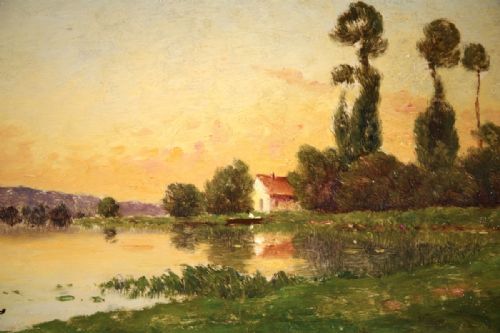


French Country Scene Painting
When you handle a french country scene painting, you meet a rustic rural record created in oil on canvas.
French Country Scene Painting
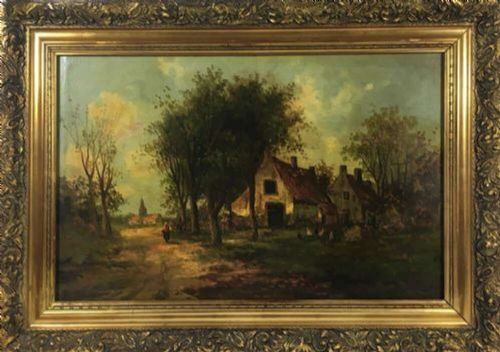
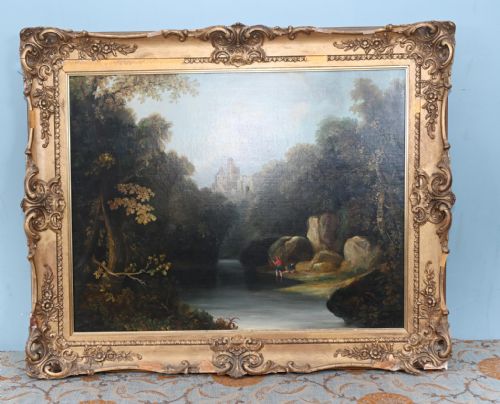
A french country scene painting captures rural life, agricultural labour, and pastoral landscapes across the French countryside. These works record farmyards, riverbanks, and village lanes through the eyes of artists working in regional settings.
The pieces on this page span the nineteenth century and the early decades of the twentieth century. They range from Barbizon school landscapes to post-impressionist plein air panels and later pastoral oils.
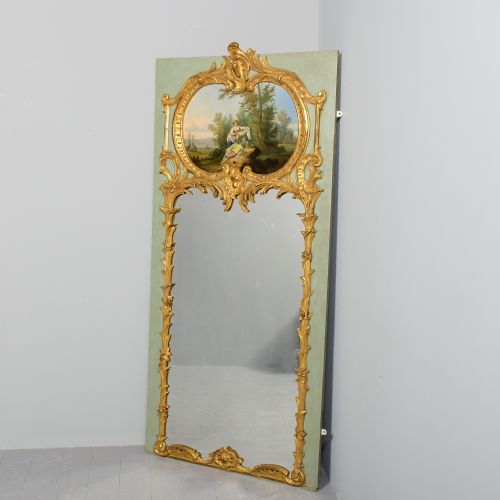
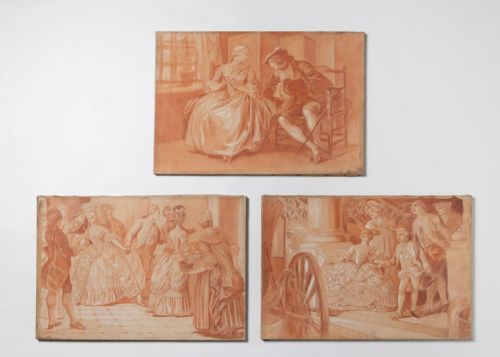
Rural subjects dominate the available forms, showing farmhouses, haystacks, and riders in the countryside. Alongside canvas paintings, buyers encounter trumeau mirrors, faience posy vases, and oil lamps from the same period.
Assessing Quality and Execution
Quality rests in the handling of light, brushwork confidence, and compositional balance. Stronger works display assured command of atmosphere, whether depicting a sunlit river or a busy farmyard.
The integration of the frame contributes to the presentation of period works, especially where original gilding and gesso remain intact on trumeau mirrors or canvas frames.
The documented periods span across the nineteenth century through the nineteen-sixties.
Henri Jaques Delpy·Jean baptiste Joseph Pater·Guillaume Urban Régamey·Robert McGregor·Antoine Bouvard·Charles Edmond Rene His·Rene His
The French Country Scene Painting Glossary
- Barbizon School
- A nineteenth-century art movement focussed on realistic landscape painting rooted in the forest and fields of Fontainebleau. Artists of this circle emphasised direct observation of nature.
- Plein Air
- Painting outdoors to capture natural light and atmospheric conditions directly onto the canvas. This technique gained widespread use among late nineteenth and early twentieth-century artists.
- Trumeau Mirror
- An antique decorative wall mirror set into a carved or painted wooden panel, frequently incorporating pastoral artwork above the glass plate. These pieces adorned period French interiors.
- Faience
- Tinned-glazed earthenware produced in France, often formed into decorative posy vases and household objects. The glaze provides a smooth white surface for painted decoration.
- Giltwood
- Wood carved and coated with gold leaf or metallic powder to create a lustrous decorative finish. It appears extensively on period picture frames and mirror surrounds.
French Country Scene Painting: Frequently Asked Questions
What periods do these paintings come from?
The works span from the early nineteenth century through to the mid-twentieth century. Most examples date from the nineteenth century and the nineteen-twenties or nineteen-thirties.
Styles shift from Barbizon school realism and rococo revival influences toward impressionist and post-impressionist plein air approaches in later decades.
How do I distinguish a painting's style?
Barbizon and mid-nineteenth-century works focus on earthy tones, pastoral realism, and careful attention to natural light in rural settings. Later post-impressionist pieces employ looser brushwork and brighter palettes.
Subject matter also guides identification, as agricultural scenes, riverbanks, and farm animals recur frequently across the regional French landscapes.
Are these works painted on canvas?
Canvas serves as the primary support for the majority of these oil paintings. Artists also utilised wood panels and board for smaller plein air studies.
Archival pieces additionally include reverse glass painting techniques alongside the standard oil on canvas format.
What objects accompany the paintings here?
The selection includes related decorative arts such as painted trumeau mirrors, earthenware posy vases, and period oil lamps. These items share the rural French aesthetic of the listings.
Frames made of giltwood and gesso frequently accompany the canvas paintings to complete the visual presentation.