
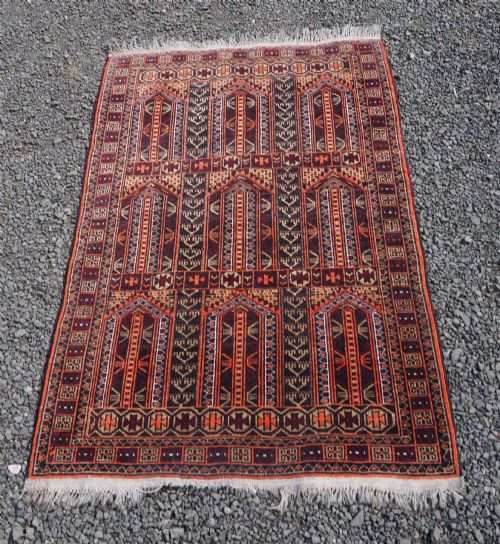
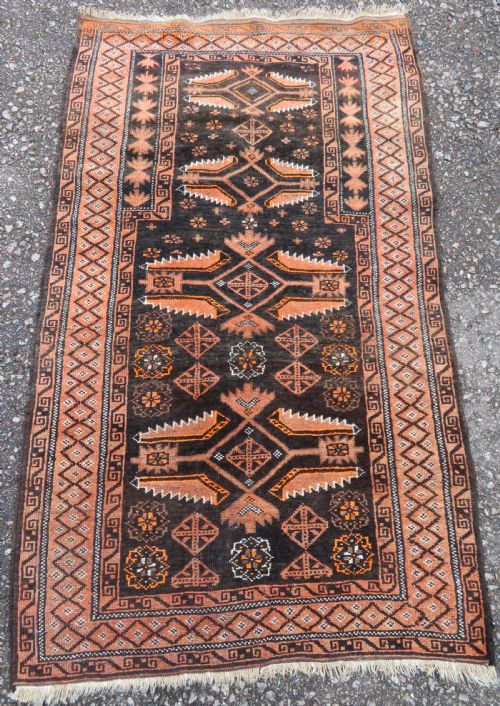


Terracotta Baluch Carpet
A terracotta baluch carpet brings tribal warmth and intricate geometric motifs into a room, offering tactile history woven by nomadic makers.
Terracotta Baluch Carpet
When searching for a terracotta baluch carpet, collectors encounter hand-knotted tribal and nomadic floor coverings originating primarily from Afghanistan, Khorasan, and surrounding regions. These works span the late nineteenth century and the early decades of the twentieth century, reflecting traditional weaving practices.
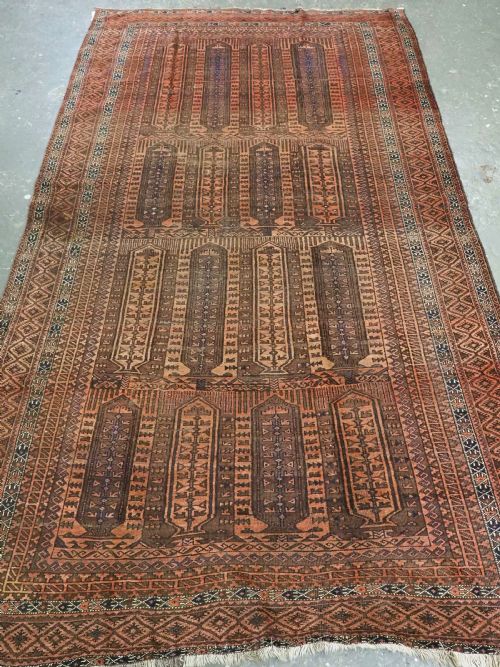
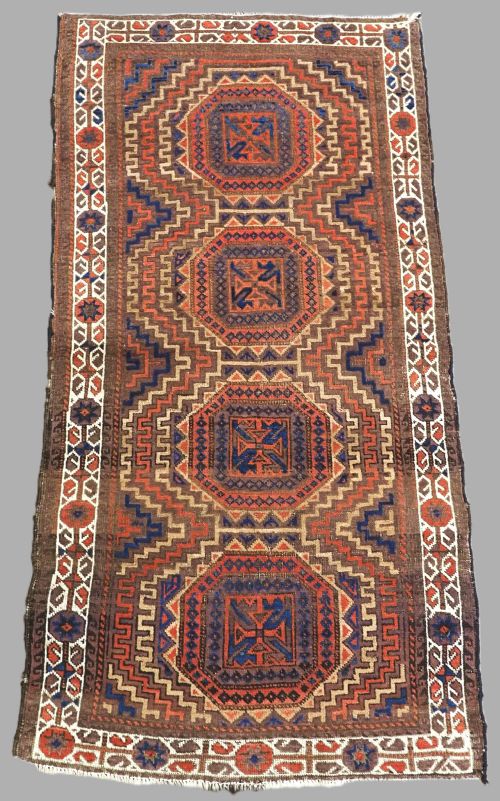
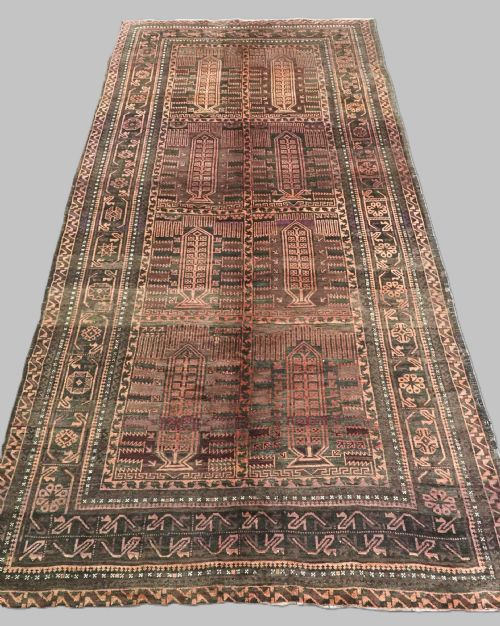
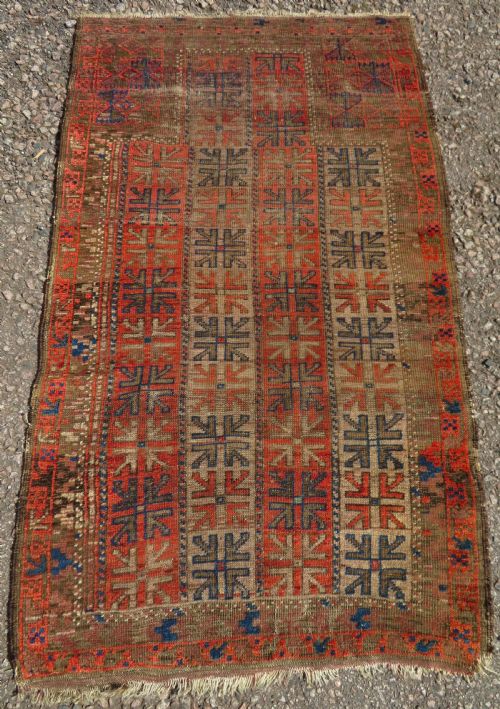
The format ranges from main carpets and area rugs to specialised prayer rugs featuring mihrab arches and smaller utility pieces like salt bags. Designs include repeated guls, pencil box patterns, and lattice variations executed with distinct tribal character.
What varies in quality
The standard of a piece depends heavily on the fineness of the knotting, the complexity of the geometric lattice or gul motifs, and the clarity of the natural dye palette. Finer wool preparation and tighter packing of the weft create a more resilient structure.
Listings span the late nineteenth century to the 1920s, showcasing wool, camel hair, and natural dye palettes.
Mahdad Khani Tribe·Timuri Nomads·Bahluli Baluch·Salar Khani·Yaquab Khani
The Terracotta Baluch Carpet Glossary
- Gul
- A medallion motif repeated across the field of many tribal rugs. These octagonal or rounded forms often indicate the specific weaving group.
- Kilim
- A flat-woven textile produced without a pile by tightly interlacing warp and weft strands. These frequently appear in bands of decorative weaving.
- Kalam Donneh
- A specific recurring motif resembling a pencil box or stylized shrub. It forms structured diagonal rows across the carpet field.
Terracotta Baluch Carpet: Frequently Asked Questions
Where did these carpets originate?
These pieces were woven by nomadic and semi-nomadic groups inhabiting the borderlands of western Afghanistan, eastern Persia, and the Khorasan region.
Weavers worked within tribal traditions that spanned generations, passing down specific border patterns and colour preferences.
What is a prayer rug?
A prayer rug is a smaller format textile featuring a mihrab niche design that was traditionally used for daily devotions.
These portable carpets were easy for nomadic weavers to roll up and transport during seasonal migrations.
How do I identify natural dyes?
Natural dyes present subtle tonal variations within a single field of colour, a characteristic known as abrash. Over decades, these vegetable and insect-derived pigments soften into harmonious earthy terracotta hues.
Synthetic dyes, introduced later, tend to age with a uniform flatness.
How should I care for an antique rug?
Protect the hand-spun wool pile by placing the rug in a low-traffic area and using a breathable underlay to prevent slipping. Regular gentle vacuuming without a rotating brush roll helps remove embedded dust.
Professional cleaning tailored for antique textiles ensures the natural wool and dyes remain preserved.